Protect the Vegetable Garden in a Heatwave: Shade, Mulch, Watering
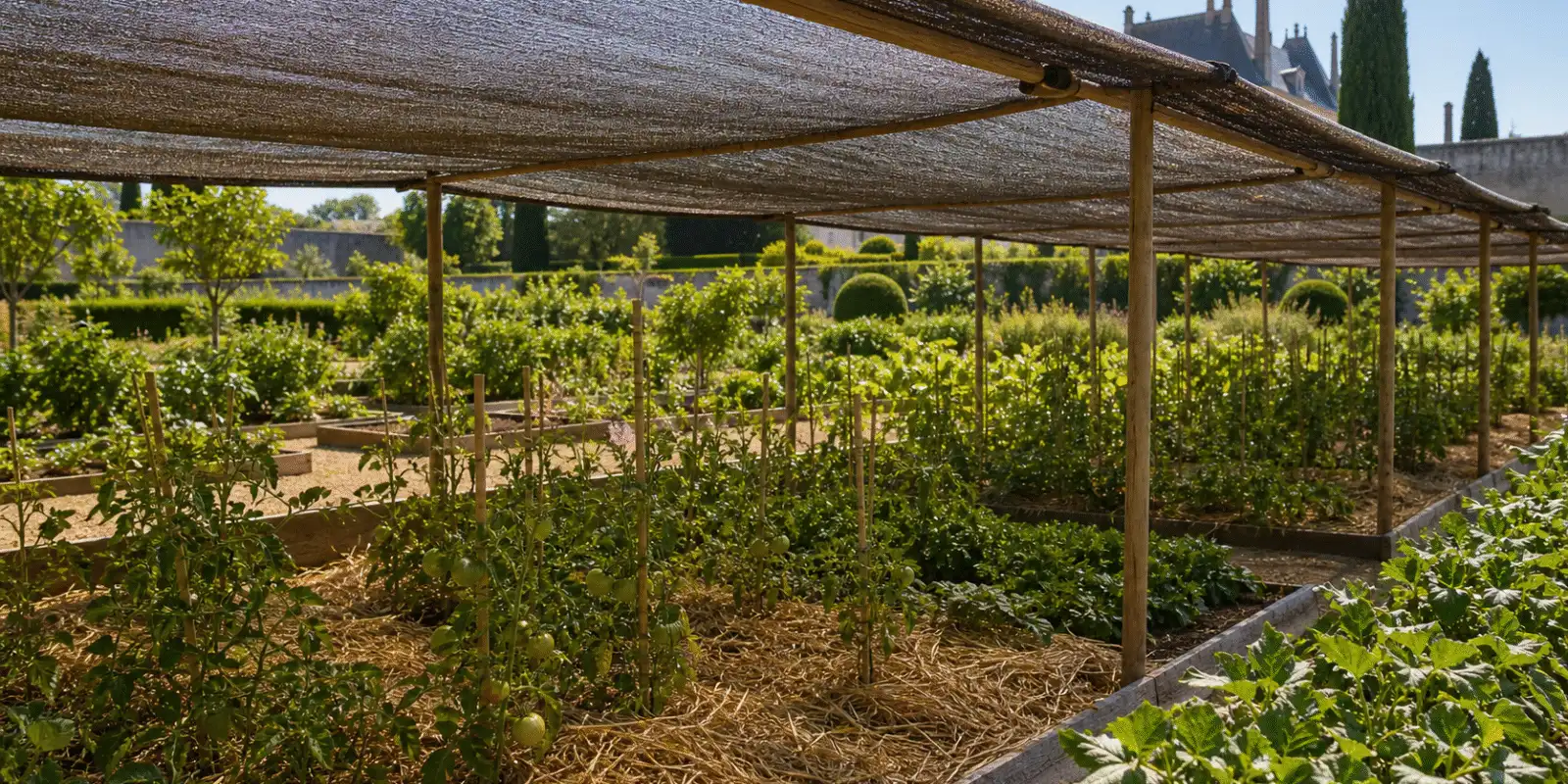
The estate vegetable garden is the first to suffer in a heatwave: water-filled vegetables, shallow roots, total exposure. Three levers save it — shade during the hottest hours, thick mulch (7-10 cm) and watering at the base early in the morning. Add a golden rule: sow and transplant nothing at the height of a heat spell. This guide is part of the garden and heatwave guide.
The Chatelain Method in the vegetable garden
We observe the vegetables during the hottest hours (wilting, dropping flowers); we diagnose the most fragile; we correct with shade and mulch; we prevent with covered soil and thrifty watering.
The three levers, in order
1. Mulch thickly
This is the foundation. A layer of 7 to 10 cm (straw, dry clippings, ramial wood, flax straw) keeps the soil cool, slows evaporation and sharply cuts water needs — trials cited by extension services put the drop in surface evaporation at 50 to 70 %. For the material, see the best mulch and ramial chipped wood in the garden.
2. Shade during the hottest hours
A breathable shade cloth (aim for 40-50 % shade) stretched above the beds clearly lowers the felt temperature and protects leafy vegetables and young plants. Keep the cloth off the plants and banish plastic film, which creates an oven. To integrate this shading elegantly, see shade sails and shade structures.
3. Water at the base, in the cool hours
Water at the base, never on the foliage (especially tomatoes, prone to blight), early in the morning, deeply and spaced out. The full method is in watering in a heatwave, and to water without waste, nothing beats terracotta ollas.
The Chatelain’s rule of thumb. A well-fitted shade cloth can drop the temperature under it by several degrees, and mulch halves water needs. Combined, these two passive gestures « work » without a watering can and turn a thirsty vegetable garden into a bed that rides out the heatwave.
Which vegetables suffer most
| Vegetable | Effect of the heatwave | Priority action |
|---|---|---|
| Tomato | Above ~35 °C, fruit set stalls, flowers drop | Light shade, regular watering at the base |
| Lettuce | Bolts to seed, turns bitter | Shade, mulch, delayed sowing |
| Courgette | Aborted flowers, drying fruit | Watering at the base, mulch |
| Leafy vegetables (spinach, chard) | Wilting, burns | Shade essential |
| Mediterranean herbs | Cope well (thyme, rosemary) | Little intervention |
The right complementary habits
- Harvest early in the morning: vegetables are full of water, firm and keep better.
- Do not sow or transplant at the height of a heatwave: wait for cooler weather.
- Do not prune or fertilise: you would stimulate fragile growth.
- Companion-plant so the tallest shade the lowest (see companion planting in the vegetable garden).
- Hoe before watering to help the water soak in.
FAQ
How do you protect a vegetable garden from a heatwave?
Combine three levers: thick mulch (7-10 cm) to keep the soil cool, breathable shade during the hottest hours for sensitive vegetables, and watering at the base early in the morning, deep and spaced. Avoid sowing or transplanting during the episode.
Should you shade tomatoes in strong heat?
Yes, light shade helps: above about 35 °C tomato fruit set stalls and flowers drop. Shade without smothering and water at the base, never on the foliage, to avoid blight.
Can you water the vegetable garden in the middle of the day during a heatwave?
Better avoided: evaporation wastes much of the water. Water early in the morning preferably, at the base of the plants, deeply and spaced out.
Should you harvest vegetables during a heatwave?
Yes, preferably early in the morning: the vegetables are then full of water, firm and keep better. Harvested in full heat, they wilt faster.