Best Mulch to Keep Moisture Around Fruit Trees
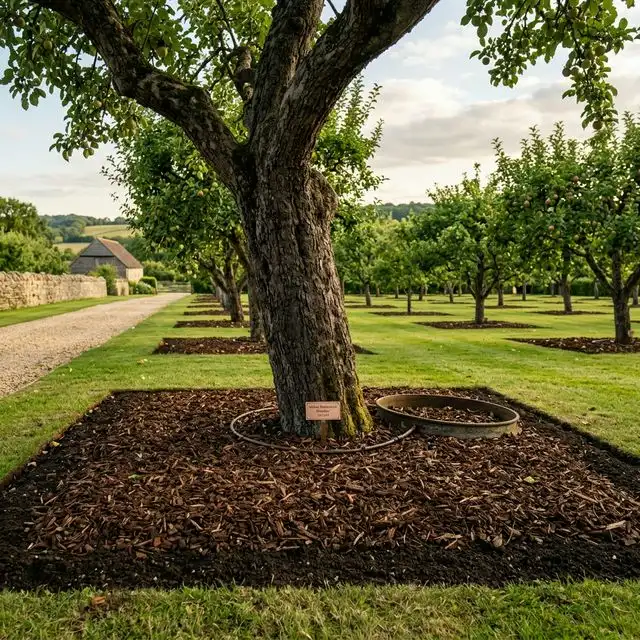
Bare soil under a July sun crusts over and loses water fast; mulch recreates the protective litter layer a forest floor never goes without. But not all mulches suit fruit trees — pine bark, the most widely sold garden mulch, is more acidic than most gardeners realise, and wood chip from deciduous prunings (ramial chipped wood, or RCW) offers a genuinely better all-round option for orchards and rose beds.
The Chatelain Method for choosing a mulch
You observe what the bed actually needs (moisture retention, weed suppression, soil feeding); you diagnose whether the plant tolerates a slightly acidic mulch or not; you correct by choosing the right material; you prevent rot by keeping mulch clear of the trunk collar.
The pine bark question: less clear-cut than the label suggests
For decades, pine bark chippings have been the best-selling mulch in garden centres, prized because it doesn’t blow away in wind. The received wisdom is that it acidifies soil, but the research is more nuanced than that: several studies have found no measurable drop in soil pH even after years of surface mulching with pine bark, because its own pH rises as it decomposes. What is true is that pine bark itself starts on the acid side, and repeated annual applications over the same beds can gradually acidify already-acidic soils over several years — a real effect for ericaceous beds (rhododendrons, azaleas, blueberries), but a much smaller risk for a single or occasional application near fruit trees than folklore suggests.
The Chatelain note. If your fruit trees or roses need a mulch and pine bark is what’s available, an occasional light layer is unlikely to cause harm — the real risk is repeated, heavy, year-after-year applications on the same bed. When in doubt, a simple soil pH test kit settles the question.
Ramial chipped wood (RCW): the all-round choice
RCW is made by chipping young, freshly cut branches from deciduous trees (ash, oak, maple, hazel) while they still hold their nutrient-rich sapwood. Spread 5-8cm deep at the base of fruit trees (never touching the trunk collar, to avoid bark rot), it offers three real benefits:
- Temperature buffering: mulch moderates extremes at soil level, keeping roots cooler in summer and better insulated in winter.
- Moisture retention: mulch traps morning dew and light rain, slowing evaporation and reducing how often you need to water.
- Long-term fertility: as fungi break the wood down, it builds genuinely rich forest-type humus over time.
Alternative: cocoa shell mulch
Without access to a chipper, cocoa shell mulch is a popular premium alternative in UK garden centres — it darkens attractively with rain, smells faintly of chocolate when fresh, forms a crust that suppresses weed germination, and feeds the soil potassium as it breaks down, which benefits fruit development.
FAQ
Does pine bark mulch harm fruit trees?
An occasional light application is unlikely to cause real harm. The genuine risk is repeated, heavy applications year after year on the same bed, which can gradually acidify already-acidic soils.
What is ramial chipped wood (RCW)?
Chipped young branches from deciduous trees, spread as mulch. It buffers soil temperature, retains moisture, and builds humus as it decomposes — a strong all-round choice for fruit trees.
How thick should mulch be?
Around 5-8cm, kept clear of the trunk or stem to avoid bark rot.