Ramial Chipped Wood in the Garden: Feed the Soil
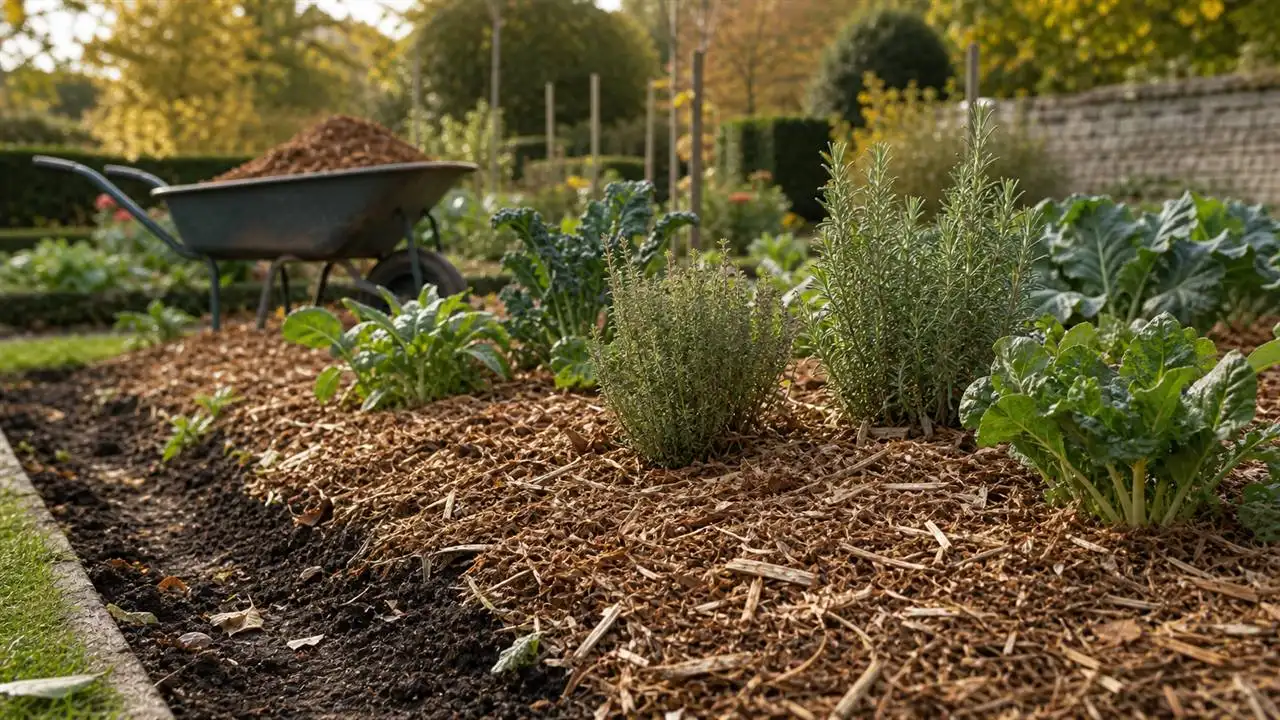
Ramial chipped wood (RCW, known in French as BRF) is made solely from young, freshly cut branches under 7cm in diameter. Applied on the surface, it feeds the soil sustainably, provided you understand the key difference between mulching on top and digging it in.
The Chatelain Method for ramial wood
You observe the pruning material available; you diagnose the quantity and timing needed; you correct for temporary nitrogen drawdown; you prevent problems by leaving the chips on the surface rather than digging them in.
Why ramial wood feeds the soil
Young branches concentrate sap, nutrients and lignin. As fungi break them down, they form stable humus that:
- improves soil structure and water retention;
- feeds earthworms and soil life;
- reduces watering and weeding.
| Good material | Avoid |
|---|---|
| Young deciduous branches (< 7cm) | Too much conifer (acidifying) |
| Freshly chipped, spread thin | Large wood (breaks down poorly) |
The Chatelain note. How you apply it matters most: spread on the surface as a mulch, it decomposes gradually and causes no meaningful nitrogen deficiency in the soil below. Mixed into the soil, it does cause a real, temporary nitrogen drawdown. If planting straight into freshly chipped beds, add a nitrogen-rich feed underneath first.
How to use it
- Chip fresh branches under 7cm in diameter.
- Spread a layer 5 to 8cm thick on the surface, without digging it in.
- Be patient: fungal breakdown works over months to a couple of years.
A layer typically lasts 2 to 3 years before needing a top-up — well suited to established beds, fruit trees and shrub borders.
FAQ
What exactly is ramial chipped wood?
Chipped young branches (under 7cm diameter), spread on the surface to feed the soil and build a forest-like humus.
Does it really cause nitrogen deficiency?
Only when dug into the soil. Left on the surface, it breaks down without meaningful drawdown — the myth applies to the mixed-in scenario, not surface mulching.
Can I use conifer branches?
Only in small amounts: conifers acidify the soil. Deciduous branches are preferable.