Lemon Tree Losing Leaves: 7 Causes and Solutions
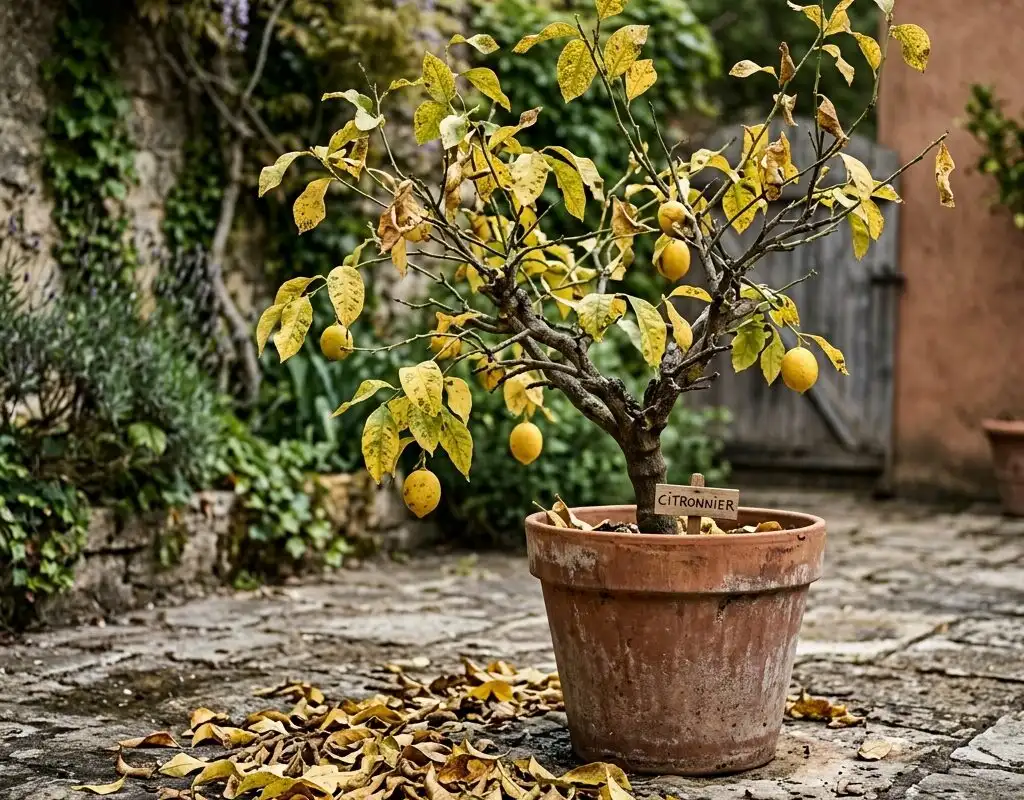
A lemon tree drops leaves mainly from overwatering (root suffocation), a cold shock below about 5°C, or iron chlorosis from a too-alkaline soil or water. In the vast majority of indoor cases, watering is the culprit: before anything else, check that the rootball isn’t waterlogged and that water drains freely. Here’s the full diagnosis, following our Chatelain Method.
The mistake to avoid. The most common — and most damaging — reflex is to water more when a citrus yellows. Nine times out of ten, the opposite is needed: too much water suffocates the roots and worsens the leaf drop. Diagnose before acting, never the other way round.
The Chatelain Method in 4 steps
- Observe — the colour, the pattern of yellowing, the state of the substrate and the branches.
- Diagnose — cross-reference symptoms with the grid below to isolate THE cause.
- Correct — one priority action at a time, so you don’t add a new stress to an existing one.
- Prevent — put in place the routine that stops it recurring.
Why does a citrus react so fast?
The lemon tree (Citrus × limon), like orange or kaffir lime, belongs to the Rutaceae, evergreen trees that keep their foliage year-round and renew it only gradually. A sudden, massive leaf drop is therefore never normal — it’s a distress signal. The tree sacrifices its foliage, its photosynthesis factory, to protect itself from stress. Identifying that stress within 48 to 72 hours often saves the tree.
- Leaves yellow then fall → root, water or deficiency problem.
- Leaves fall while still green → sudden shock (cold, draught, house move).
- Leaves sticky, spotted or misshapen → pest.
The Chatelain diagnostic grid
| Symptom observed | Most likely cause | Priority correction |
|---|---|---|
| Yellow, soft leaves, waterlogged compost | Overwatering / root suffocation | Stop watering, repot into free-draining substrate |
| Yellowing between veins, veins stay green | Iron chlorosis (alkaline soil) | EDDHA iron chelate, lime-free water |
| Green leaves falling suddenly | Cold shock / draught | Move somewhere stable between 5-10°C |
| Dry, curled leaves, hard compost | Prolonged lack of water | Rehydrate by gradual soaking |
| Pale general yellowing, weak growth | Nitrogen deficiency | Citrus feed in spring |
| Cottony white clusters, sticky honeydew | Mealybugs | Black soap + oil spray (see below) |
| Drop after recent repotting | Repotting shock | Wait, don’t overwater |
The 7 causes in detail
1. Overwatering: killer number one
By far the most common cause in pots. Drowned roots lack oxygen, rot, and can no longer feed the tree: leaves yellow and drop. A citrus prefers slight water stress to excess. Water only when the top 2-3cm of substrate are dry, and never let water sit in the saucer for more than 30 minutes.
2. Cold shock
Below about 3-5°C, a lemon tree suffers; a sudden shift from warm to cold (or a draught near a door) causes still-green leaves to drop. The ideal overwintering range is 5-10°C, in a bright spot.
3. Iron chlorosis
When leaves yellow between the veins while the veins stay green, it’s an iron deficiency, almost always linked to overly alkaline soil or water (pH above 7). Iron becomes unavailable to the plant. The lasting fix: an EDDHA iron chelate, the only form effective above pH 7, plus watering with rainwater. Ideal citrus substrate pH sits around 6-6.5.
4. Lack of water
Conversely, a substrate that dries out completely, especially in summer or near a radiator in winter, dehydrates the tree: dull, curled leaves, then drop. Rehydrate by soaking the pot in a basin of water for 20 minutes rather than watering compost that has become hydrophobic.
5. Nutrient deficiencies
Pale, uniform yellowing with slow growth often signals a lack of nitrogen or magnesium. Citrus are hungry feeders: a citrus fertiliser from March to September covers most needs.
6. Pests
Mealybugs (cottony white clusters) and aphids weaken the tree and cause sticky honeydew. Treat with a black soap spray (1 tablespoon of pure liquid soap per litre of lukewarm water), optionally with added vegetable oil.
7. Repotting or house-move shock
A citrus hates change. After repotting, bringing indoors or even just turning it round, it may sulk and drop a few leaves. The right response is to do nothing: no extra watering « to help, » a stable bright spot, and 2-3 weeks of patience.
The routine that avoids 90% of problems
- Water on demand, never by habit — test the substrate with a finger.
- Rainwater where possible, especially in hard-water areas.
- Light: as much as possible, even during overwintering.
- Overwintering between 5-10°C, sheltered from frost and draughts.
- Citrus feed from April to September, never in winter.
- Monthly inspection of leaf undersides to catch pests early.
FAQ
My lemon tree is dropping leaves in winter — is that serious?
A moderate loss during overwintering is common if the room is too warm, too dark or draughty. As long as the wood stays green and supple under the bark, the tree will recover in spring.
Should I cut branches after a leaf drop?
No, not immediately. Wait for spring regrowth to distinguish dead wood (brittle, brown inside) from living wood, then prune only the dead parts.
How long does it take for a lemon tree to regrow leaves?
Once the cause is corrected, new growth generally appears within 3-6 weeks during the growing season.
How do I know if it’s too much water or not enough?
Touch the substrate: waterlogged and heavy = excess (let it dry); dry and pulling away from the pot edges = shortage (soak it). When in doubt, underwatering is the safer error.