Size the Pump and Filtration for a Garden Pond
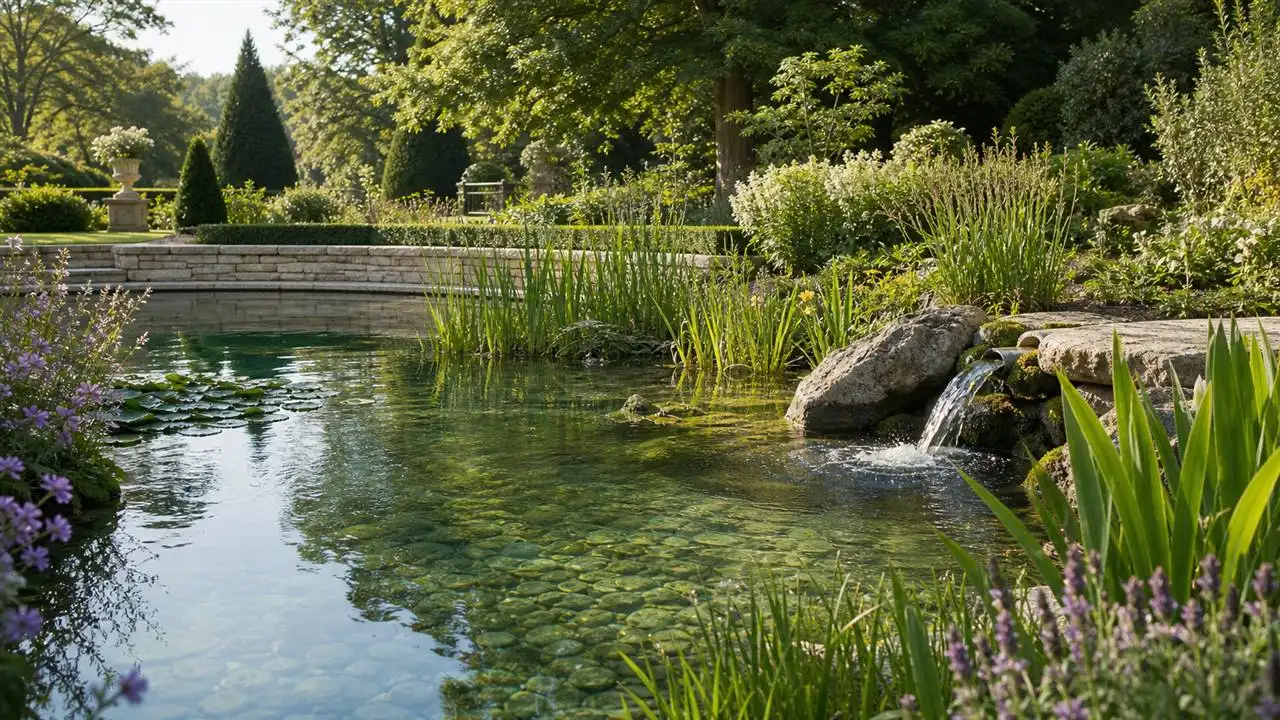
To size the pump and filtration for a garden pond, the basic rule is to circulate the entire volume of water at least once per hour. With fish in the pond, the required flow rises significantly. Here is how to calculate it properly, without overspending on power you don’t need.
The Chatelain Method for filtration
You observe the real volume and the fish population; you diagnose the flow rate needed; you correct with a matching pump and filter; you prevent overspending by aiming for the right flow, not the maximum available.
Calculating volume and flow
- Volume (litres) = length × width × average depth (m) × 1,000.
- Pump flow rate = full volume circulated at least once per hour.
- With fish: increase the flow significantly and choose a filter rated for a larger pond than yours actually is — koi in particular are far heavier waste producers than goldfish.
The Chatelain note. Watch the head height: a pump loses output as it lifts water higher. The figure that matters is the flow rate at your actual waterfall or filter height, not the pump’s theoretical maximum.
Do you always need a pump?
No: a well-planted pond with no fish can balance itself without one. A pump becomes essential with a waterfall, with fish stocked, or with UV clarification against green water.
The oversizing trap
When a pond turns green, the instinctive reaction is often to buy a stronger pump. That sounds logical but rarely solves the problem on its own. Filtration does not fix everything — it supports a balance between volume, shade, plants, fish and sun exposure.
A common pattern: a small, shallow pond in full sun with a few fish and little planting stays unstable even with aggressive filtration. A more generous pond, planted at the margins, gently circulated and cleared of leaves, needs far less intervention.
| Symptom | Likely cause | Priority fix |
|---|---|---|
| Green water in full sun | Too much light and nutrients | Shade, plants, remove debris |
| Sediment on the bottom | Organic matter build-up | Vacuum, reduce leaves and feeding |
| Clear water but a smell | Low oxygen | Gentle circulation, oxygenating plants |
| Pump clogs quickly | No pre-filtration | Basket, coarse pre-filter, regular cleaning |
FAQ
What pump do I need for a 3,000-litre pond?
Roughly 3,000 litres per hour without fish (one full turnover an hour), significantly more with fish — always check the manufacturer’s rated flow at your actual head height.
Is an oversized pump a problem?
Yes: it wastes electricity and creates excessive current that stresses fish and plants. The right flow beats the maximum every time.
Should the pump run at night?
With fish, yes — for continuous oxygenation. In a planted ornamental pond, you can switch it off overnight to save energy.