Companion Planting in the Vegetable Garden That Works
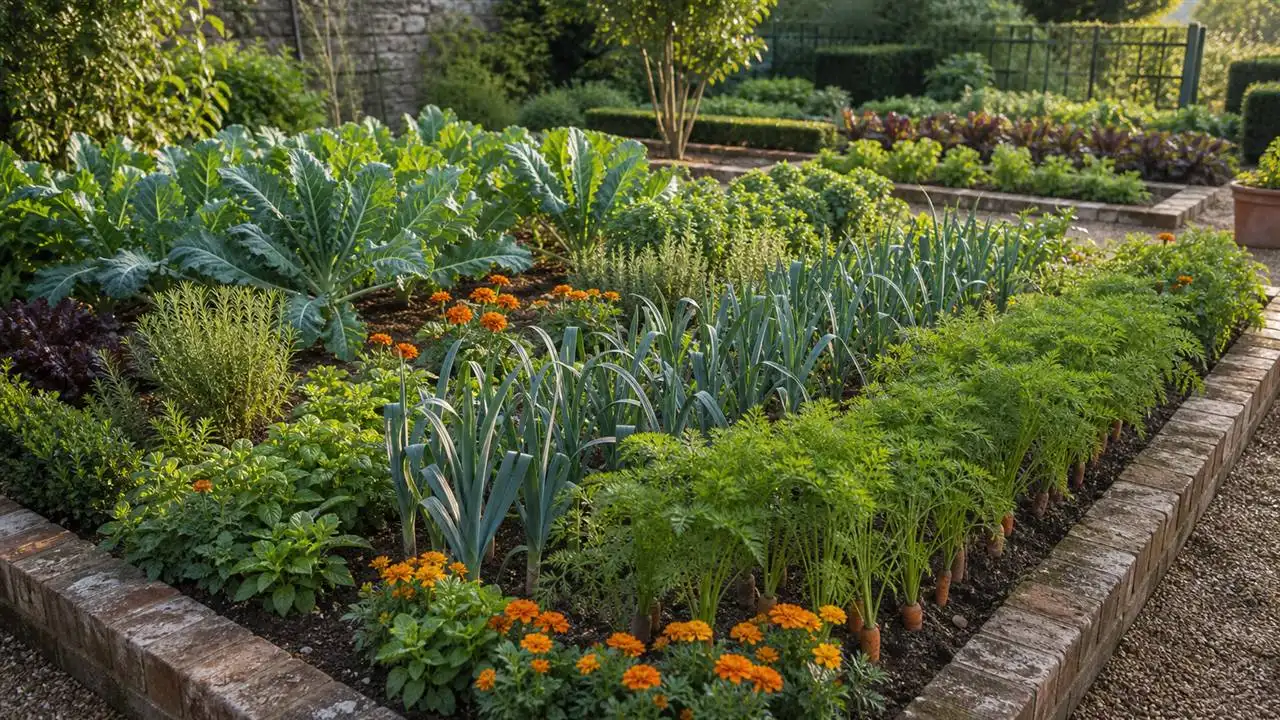
Companion planting means growing vegetables side by side so they help each other: carrot and leek each mask the scent that draws the other’s pest fly, herbs deter pests, legumes enrich the soil with nitrogen. Done well, it cuts down on treatments and makes better use of space. Here are the pairings that work, and the ones to avoid.
The Chatelain Method for companion planting
You observe vegetable families and their pests; you diagnose which plants complement each other (root depth, height, needs); you correct the planting plan; you prevent competition by avoiding poor combinations.
Pairings that work
| Vegetable | Good companions |
|---|---|
| Carrot | Leek, onion, chives — the onion family generally |
| Tomato | Basil, French marigold, parsley |
| Brassicas (cabbage) | Herbs (mint, thyme), celery |
| French beans | Sweetcorn, squash |
The Chatelain note. Carrot and leek together is the textbook example: the smell of leeks confuses carrot root fly, while carrots deter leek moth. A successful pairing plays first on scent and different plant families.
Combinations to avoid
- Tomatoes and potatoes (share the same blight).
- Onions or garlic with legumes (beans, peas): both inhibit growth.
- Cucumber and courgette planted too close: encourages disease.
Basil: more than a flavour pairing
Basil grown alongside tomatoes helps protect both cucumbers and tomatoes from powdery mildew and repels whitefly and other pests. RHS trials found French marigolds (Tagetes) growing among greenhouse tomatoes measurably reduced whitefly too — a well-tested combination, not just folklore.
FAQ
Which vegetables should I plant together?
Carrot with leek, tomato with basil and French marigold, beans with sweetcorn and squash. Mix plant families and use deterrent scents to your advantage.
Which combinations should I avoid?
Tomatoes near potatoes (shared blight), and onions or garlic near legumes (slower growth).
Does companion planting replace pest treatments?
It significantly reduces the need for them by limiting pests and disease, especially combined with beneficial insects and living soil.