Tango mandarin
Citrus reticulata ‘Tango’ — an irradiated-bud selection of W. Murcott
A late, sweet, smooth-rinded mandarin that stays very low-seeded among other flowering citrus. Its seed response comes from mutation breeding, and Tango is diploid, not triploid.
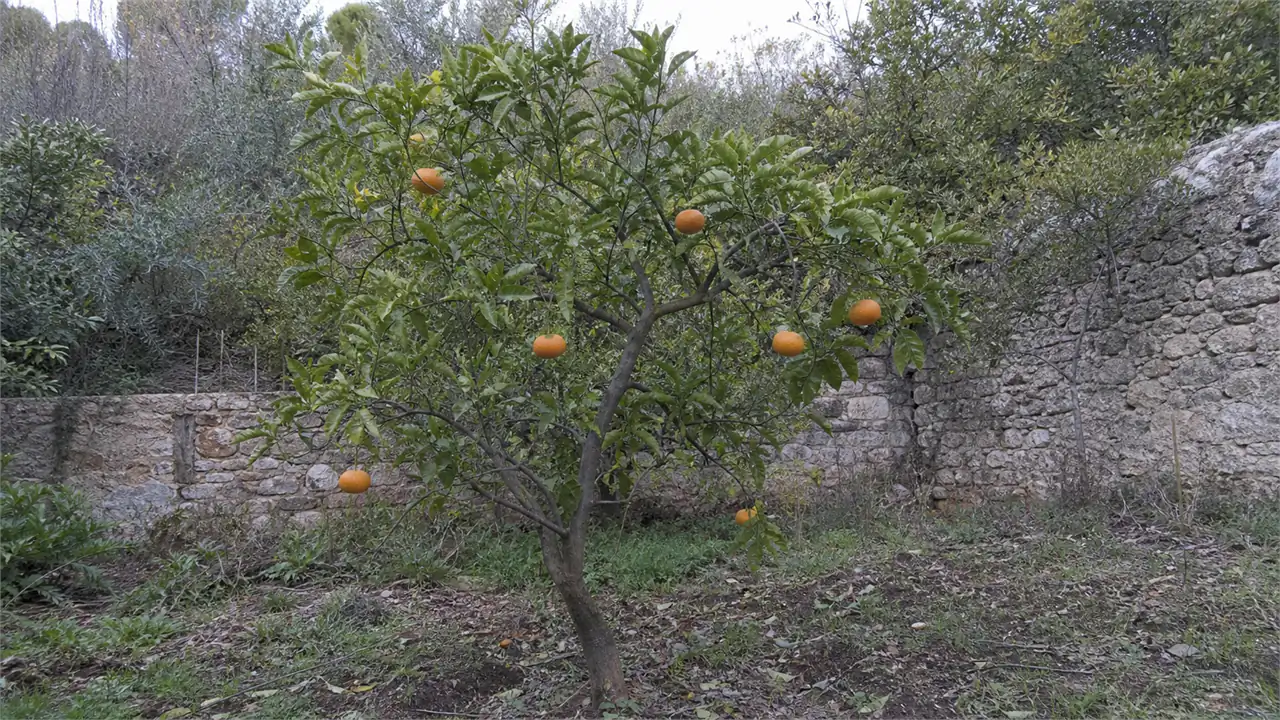
Tango was selected to solve the seed problem associated with W. Murcott and Nadorcott in mixed citrus plantings. Universeity of California Riverside developed it from an irradiated bud of the diploid cultivarA variety produced through selection or cultivation, distinct from the wild original plant. W. Murcott. The selection retained rich sweetness, a smooth deep-orange rind and easy peeling, while showing very low seed formation after cross-pollination. Two corrections matter: say “very low-seeded”, not “guaranteed seedless”; and Tango is diploid. Its low seed count comes from an induced mutation, not from triploidy.
Its practical counterpart is Nadorcott, which develops seeds when compatible pollen reaches its flowers. Compare Tango too with the common clementine and Willowleaf mandarin.
Reliable points to check before buying
Very low-seeded even in a mixed citrus collection
This is Tango’s defining advantage. Nadorcott can become seedy when a compatible citrus blooms nearby; Tango remained uniformly very low-seeded in UCR mixed-block trials. The UCR information sheet reported fewer than 0.16 seeds per fruit on average in 2005 and 2006 samples from its trial trees, while control W. Murcott fruit averaged 8–15. Those are Californian trial observations, not a promise that every individual fruit will contain zero seeds.
The mechanism also needs accurate language. Tango is a diploid mutation selection, not a triploid hybrid. Its ovules showed very low fertility and its pollen germinated poorly in the cited work; accordingly, the UCR trials recorded very few seeds after cross-pollination. This supports a low-seed expectation, not a universal rule about every British mixed collection.
Tango through the year: open ground or container
In Britain, container culture with bright, frost-free winter shelter is the dependable option; open-ground culture is exceptional and experimental. Riverside’s late January–April window is evidence for California, not a British calendar. Judge maturity by taste, not rind colour alone.
| Jan | Feb | Mar | Apr | May | Jun | Jul | Aug | Sep | Oct | Nov | Dec | |
|---|---|---|---|---|---|---|---|---|---|---|---|---|
| Plant outdoors (exceptionally mild sites) | ||||||||||||
| Overwinter container in frost-free shelter | ||||||||||||
| Harden off and move container outdoors | ||||||||||||
| Fragrant spring flowering | ||||||||||||
| Late harvest (site-dependent) | ||||||||||||
| Citrus feed |
A sweet late mandarin with very few seeds
Confirm the cultivar identity
Buy a labelled grafted Tango from a traceable nursery. “Seedless mandarin” alone does not establish the cultivar or its behaviour.
Soil, light and winter shelter
Test the pH, assess summer warmth and secure a bright frost-free winter place: these factors govern tree health and fruit quality.
Match the rootstock and steady the water
Use a nursery-verified rootstock for the soil and avoid swings between dry compost and saturation while fruit is sizing.
Prune lightly and pick by taste
Avoid hard pruning and excessive crop load. Let this late fruit mature, then taste a representative fruit before picking.
Observe first; treat only after identification
The same symptom can have several causes. This grid gives a first check, not a remote diagnosis or pesticide prescription.
| Observation | First check | Decision boundary |
|---|---|---|
| Leaves turning yellow | Check moisture, drainage, water quality and changes in young leaves | Have the cause confirmed before applying an amendment |
| Insects, cottony clusters or sticky deposits | Isolate the plant and identify the organism accurately | Use only a method or product authorised for that use, following the local label |
| Coloured fruit with disappointing flavour | Sample one fruit and check internal maturity before generalising | Rind colour alone cannot diagnose maturity or disease |
Seek professional or plant-health advice if decline is rapid, symptoms are unusual or regulatory status is uncertain.
The convenient late mandarin
Tango is primarily a fresh-eating mandarin: the smooth rind peels readily, the flesh is rich and sweet, and seeds are uncommon. Fully ripe fruit makes a rounded juice, while unwaxed peel suitable for culinary use supplies fragrant zest. Its distinction is practical rather than theatrical — late-season W. Murcott character with far fewer interruptions from seeds.
What the current standard — and plant rights — mean
Under the current EU citrus marketing standard, Tango sits among “other varieties of mandarins and their hybrids”. The normal minimum size is 45 mm; 43 mm is only the floor allowed within the 10% size tolerance. Minimum juice content is 33% and the sugar-to-acid ratio at least 7.5:1. These are marketing thresholds, not a home-garden ripeness test.
In the UCR patent trials, fruit averaged about 59 mm and 90 g, with fewer than one seed per fruit under cross-pollination; the UCR information sheet reported below 0.16 in its 2005–06 samples. These Californian trial values are not universal yield or fruit promises. The US plant patent expired in 2026, but UC states that international protection continues. Before budding, grafting or taking cuttings in Britain or the EU, check the live APHA/CPVO registers and the supplier’s licence rather than inferring local freedom from US expiry.
What growers most often ask
Is Tango completely seedless?
No absolute claim is justified. UCR trials found very few seeds — below 0.16 per fruit on average in the cited 2005–06 samples — even with cross-pollination, but an occasional seed remains possible.
Is Tango triploid?
No. The plant patent describes Tango as diploid. Its low seed formation comes from an irradiated-bud mutation of diploid W. Murcott, not from triploidy.
How does Tango differ from Nadorcott?
Compatible cross-pollen can make Nadorcott seedy. Tango formed far fewer seeds in the cited UCR cross-pollination trials, but an occasional seed and site-to-site variation remain possible.
May I propagate Tango myself?
Do not infer UK or EU permission from the expired US patent. Check current APHA or CPVO rights and any licence covering your plant, territory and intended use before propagating.
Sources and checks
Target-language review: 30 July 2026. UCR primary records establish origin, diploidy and trial measurements; RHS localises British culture; EUR-Lex supplies the current EU marketing thresholds. Rights must be checked in the live register for the territory.
- UCR — Tango mandarin information sheet: selection method, diploidy and observed seed counts under cross-pollination.
- US plant patent PP17863: trial design, fruit measurements and the original US legal record.
- Universeity of California — 22 January 2026 patent update: US expiry and possible protection in other territories.
- RHS — how to grow citrus: British container practice and frost-free overwintering.
- GOV.UK — Citrus fruit marketing standard: 45 mm nominal minimum, 43 mm only within the 10% size tolerance, 33% juice and a 7.5:1 minimum ratio.
- GOV.UK — plant breeders’ rights: protected acts and the need to check current territorial rights before propagation.
- CPVO — variety databases: official access to the public register and Variety Finder for a dated territorial check.
- IVIA — mandarin and rootstock evaluation programme: Spanish official evidence used only for the experimental boundary that a combination is assessed against site, climate, soil and growing system; no universal ranking is transferred.