Willowleaf mandarin
Citrus reticulata / Citrus deliciosa, Willowleaf Group — common Mediterranean mandarin
The old-fashioned mandarin: exceptional fragrance and loose peel, with the honest trade-off that the fruit normally contains pips.
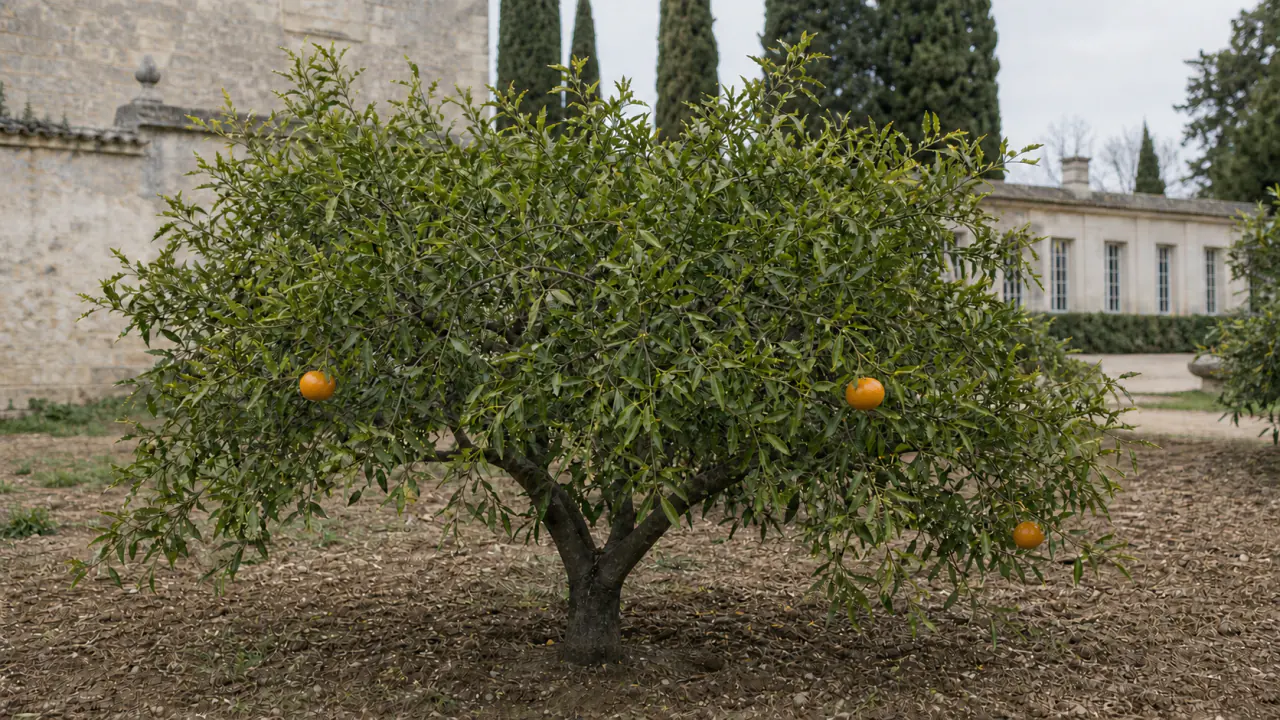
Mandarins and clementines are often confused. Willowleaf — the common Mediterranean mandarin — is distinguished by narrow leaves, intensely fragrant rind oil, tender flesh and a loose skin that peels readily. Unlike the clementine, it is normally fertile and seedy. The choice is flavour versus convenience: a deeper mandarin aroma in exchange for pips.
Compare it with the common clementine and Clemenules. Willowleaf is an aromatic parent behind several later hybrids.
Reliable points to check before buying
How to recognise the tree and fruit
The broadly spreading, drooping tree bears small, narrow, lance-shaped leaves reminiscent of willow. Its medium, flattened fruit has smooth, loose orange rind rich in fragrant oil. The tender, juicy flesh tastes sweet and distinctly aromatic. Numerous small, round pips are a normal cultivarA variety produced through selection or cultivation, distinct from the wild original plant. trait.
Exceptional fragrance in exchange for pips
Do not buy Willowleaf expecting seedless clementine convenience. Choose it for classic mandarin perfume, accepting its seeds.
Pick promptly at maturity: if held too long, acidity falls, the rind puffs and eating quality declines.
Willowleaf through the year: in the ground or in a pot
Plant outdoors in mild districts; use a container elsewhere. Pick in winter and judge ripeness by taste, not peel colour alone.
| Jan | Feb | Mar | Apr | May | Jun | Jul | Aug | Sep | Oct | Nov | Dec | |
|---|---|---|---|---|---|---|---|---|---|---|---|---|
| Plant outdoors (mild areas) | ||||||||||||
| Protect from cold / overwinter pot | ||||||||||||
| Move pot outdoors | ||||||||||||
| Fragrant flowering | ||||||||||||
| Pick winter fruit | ||||||||||||
| Citrus feed |
Preserving true mandarin fragrance
Accept the fruit’s nature
Willowleaf is fertile and seedy; aroma is the reason to grow it.
Soil and winter
Check pH and winter exposure before selecting the rootstock and position.
Match roots and shelter
Use a suitable rootstock and frost protection.
Pick by taste
Taste before harvesting the whole tree; do not rely on colour.
Observe first; treat only after identification
The same symptom can have several causes. This grid gives a first check, not a remote diagnosis or a pesticide prescription.
| Observation | First check | Decision boundary |
|---|---|---|
| Leaves turning yellow | Check moisture, drainage, water quality and changes in young leaves | Have the cause confirmed before applying an amendment |
| Insects, cottony clusters or sticky deposits | Isolate the plant and identify the organism accurately | Use only a method or product authorised for that use, following the local label |
| Coloured fruit with disappointing flavour | Sample one fruit and check internal maturity before generalising | Rind colour alone cannot diagnose maturity or disease |
Seek professional or plant-health advice if decline is rapid, symptoms are unusual or regulatory status is uncertain.
A mandarin grown for flavour
Eat Willowleaf fresh for its perfume and melting flesh. Its aromatic zest flavours sugar, desserts and infusions; the mild juice suits drinks and fruit salads. The pips are the small price of that aroma.
What the current UK marketing standard says
Willowleaf belongs to other mandarin varieties, not the clementine subgroup.
- Nominal marketing thresholds: diameter ≥ 45 mm, juice content ≥ 33% and sugar-to-acid ratio ≥ 7.5:1. A size tolerance limited to 10% of the lot by number or weight may include fruit below 45 mm, but never below 43 mm.
- Maturity: judge by taste and balance, not colour alone.
There is no universal yield; clone, rootstock, soil and crop-load management all matter.
What growers most often ask
How does a mandarin differ from a clementine?
Willowleaf is more intensely aromatic but normally seedy; clementines are generally milder and seedless when isolated.
Why does my Willowleaf contain pips?
Because plentiful seeds are a normal trait of this fertile Mediterranean mandarin.
Is it hardier than a lemon?
Slightly, but it is not fully hardy; protect it and overwinter pots frost-free.
Why are the leaves so narrow?
The narrow, lance-shaped leaves create the “willowleaf” name and are a key identification feature.
Sources and evidence
Evidence reviewed on 31 July 2026. Each source is limited to the claims stated; garden guidance remains a cautious editorial adaptation.
- UC Riverside — Willowleaf mandarin, CRC 3843: accession identity, fruit, seediness, observed season, puffing and alternate bearing; one accession informs but does not exhaust the group.
- GOV.UK — marketing standard for citrus fruit: nominal thresholds and size tolerance for other mandarins and hybrids; these figures describe marketed lots, not tree hardiness or yield.
- Royal Horticultural Society — grow your own citrus: UK guidance for container growing, drainage and winter protection; it does not establish cultivar-specific performance.
- IVIA — mandarin and rootstock evaluation programme: a combination is assessed against site, climate, soil and growing system; this Spanish source is used only for that experimental boundary.