Nadorcott (Afourer) mandarin
Citrus reticulata ‘Nadorcott’ — also marketed under the name Afourer
A late, intensely sweet, aromatic mandarin with a thin, easy-peel rind. Its seedless reputation has one crucial condition: compatible pollen carried to its flowers can produce numerous seeds.
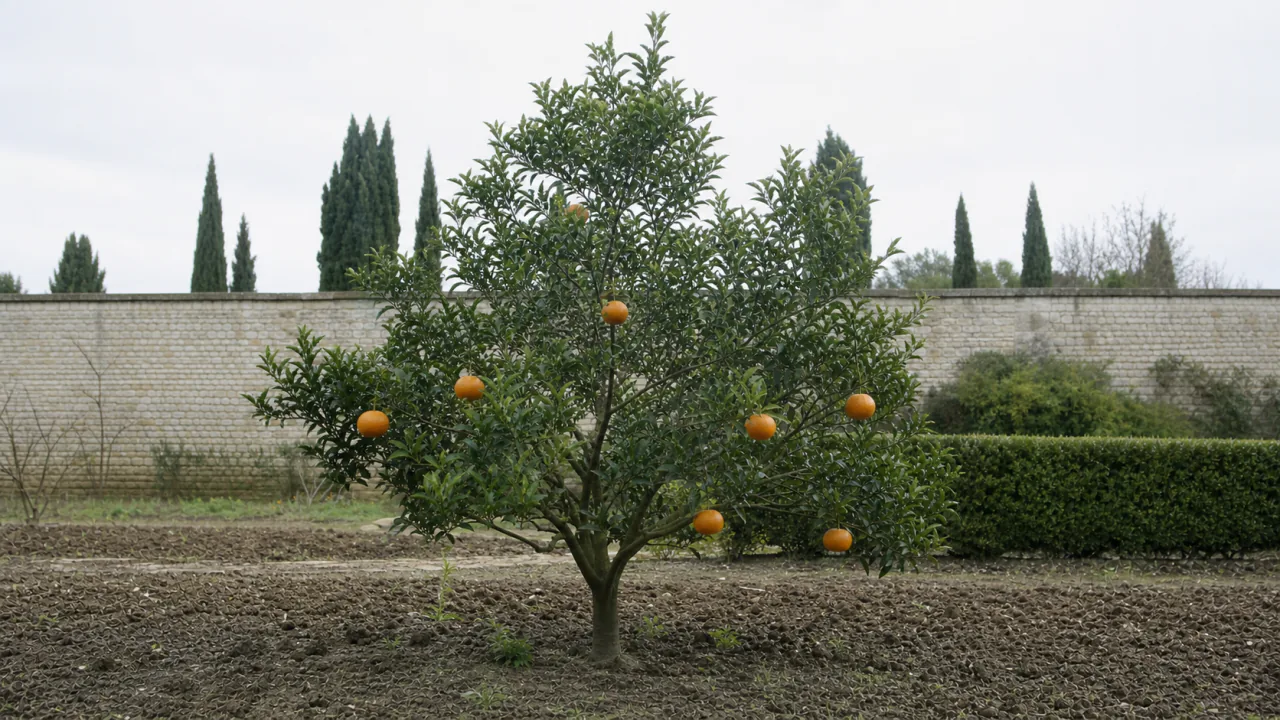
Nadorcott, also sold as Afourer, is a late mandarin selected in Morocco from Murcott descent. The fruit is deep orange, richly sweet and aromatic, with a thin rind that peels readily. Its most useful trait is also the easiest to misunderstand: the cultivarA variety produced through selection or cultivation, distinct from the wild original plant. is self-incompatible and facultatively parthenocarpic. It can set seedless or very low-seeded fruit without fertilisation, but compatible cross-pollen carried by bees can make fruit distinctly seedy. This differs from Tango, a selection bred to remain very low-seeded even when exposed to cross-pollen.
Compare it with the common clementine and Willowleaf mandarin. Trade and horticultural use of the names Afourer and W. Murcott is not fully consistent; confirm the actual cultivar on the nursery label rather than treating every name as automatically interchangeable.
Reliable points to check before buying
Seedless only when compatible pollen is excluded
This is the decision to understand before buying. Nadorcott is self-incompatible: its own pollen does not normally fertilise it. Its facultative parthenocarpy lets fruit set without fertilisation, so a tree with no compatible pollen source can produce fruit with few or no seeds. If another compatible citrus flowers at the same time, however, bees can carry its pollen to Nadorcott and seed numbers rise sharply. Moving a pot a few metres is not dependable isolation, and insect-proof netting is not a casual garden solution: research has found that excluding pollinators can also reduce fruit set and yield.
This is where Tango differs. Tango was selected for a much weaker seed response to cross-pollination. In a mixed citrus collection where very low seed counts matter, it is the more dependable choice; with Nadorcott, accept some seeds unless meaningful pollination isolation is possible.
Nadorcott through the year: open ground or container
In Britain, container culture with a bright, frost-free glasshouse, conservatory or glazed porch is the dependable option; open ground is exceptional and experimental. The late picking window is site-dependent, so taste the fruit instead of using rind colour alone.
| Jan | Feb | Mar | Apr | May | Jun | Jul | Aug | Sep | Oct | Nov | Dec | |
|---|---|---|---|---|---|---|---|---|---|---|---|---|
| Plant outdoors (exceptionally mild sites) | ||||||||||||
| Overwinter container in frost-free shelter | ||||||||||||
| Harden off and move container outdoors | ||||||||||||
| Spring flowering and pollination watch | ||||||||||||
| Late harvest (site-dependent) | ||||||||||||
| Citrus feed |
A sweet late mandarin with a balanced crop
Flowering neighbours
List every citrus flowering at the same time. Compatible pollen, carried by bees, determines whether Nadorcott develops seeds.
Crop load and alternate bearing
A heavily laden tree may produce smaller fruit, then a light crop the following year. Judge fruit number against canopy strength.
Thin and keep moisture steady
Thin an excessive crop early, feed to measured need and avoid swings between dry compost and saturation during fruit sizing.
Prune lightly and pick by taste
Avoid hard pruning that triggers soft growth and worsens crop swings. Let this late fruit mature, then taste before picking.
Observe first; treat only after identification
The same symptom can have several causes. This grid gives a first check, not a remote diagnosis or pesticide prescription.
| Observation | First check | Decision boundary |
|---|---|---|
| Leaves turning yellow | Check moisture, drainage, water quality and changes in young leaves | Have the cause confirmed before applying an amendment |
| Insects, cottony clusters or sticky deposits | Isolate the plant and identify the organism accurately | Use only a method or product authorised for that use, following the local label |
| Coloured fruit with disappointing flavour | Sample one fruit and check internal maturity before generalising | Rind colour alone cannot diagnose maturity or disease |
Seek professional or plant-health advice if decline is rapid, symptoms are unusual or regulatory status is uncertain.
The sweetness of a late mandarin
Nadorcott is at its best fresh: richly sweet and aromatic, with a thin rind and easy-to-separate segments. Fully ripe fruit makes a rounded juice, while unwaxed peel suitable for culinary use supplies fragrant zest. Its practical advantage is a late picking season, extending the mandarin calendar after many earlier cultivars have finished. Seed count reflects pollination, not eating maturity.
What the current standard — and plant rights — mean
Under the current EU citrus marketing standard, Nadorcott sits among “other varieties of mandarins and their hybrids”. The normal minimum size is 45 mm; 43 mm is only the floor allowed within the 10% size tolerance. Minimum juice content is 33% and the sugar-to-acid ratio at least 7.5:1. These are marketing thresholds, not a home-garden ripeness test: taste still matters.
Before propagating, check the live CPVO and relevant UK registers as well as any supplier licence and trade-mark conditions. Nadorcott/Afourer has been managed under plant-variety rights and commercial licences, but legal status depends on territory, date and the act proposed. Buying a certified plant does not itself grant permission to bud, graft or take cuttings for multiplication. Do not publish a generic yield: record the crop from your own tree.
What growers most often ask
Why does my Nadorcott contain seeds?
A compatible citrus flowered within bee range and supplied cross-pollen. Nadorcott can set seedless fruit without fertilisation, but compatible cross-pollination can produce many seeds.
How does Nadorcott differ from Tango?
Tango was selected for a much lower seed response when cross-pollinated. In a mixed citrus collection it is the more dependable very-low-seed option, although no biological outcome should be presented as an absolute guarantee.
May I graft my own Nadorcott?
Do not assume that buying a tree includes propagation rights. Check the current register status and the licence covering your territory and intended use before budding, grafting or taking cuttings.
When should I pick it?
It is a late mandarin, commonly maturing from winter into early spring depending on climate and protected conditions. Taste a representative fruit: rind colour alone does not prove internal maturity.
Sources and checks
Target-language review: 30 July 2026. UCR and the peer-reviewed pollination study establish the cultivar and seed response; RHS localises British cultivation; EUR-Lex supplies the current EU thresholds. Rights must be rechecked in live registers before propagation.
- UC Riverside — W. Murcott (Afourer) mandarin: naming, Moroccan introduction, tree, fruit, season, seed response to cross-pollination and alternate bearing.
- PLOS ONE — pollination networks and Nadorcott seed formation: primary field evidence for compatible pollen, bee-mediated crossing and the trade-off associated with pollinator exclusion.
- Royal Horticultural Society — grow your own citrus: British container culture, summer placement, hardening off and frost-free overwintering.
- GOV.UK — Citrus fruit marketing standard: 45 mm nominal minimum, 43 mm only within the 10% size tolerance, 33% juice and a 7.5:1 minimum ratio.
- GOV.UK — plant breeders’ rights: official guidance on protected acts and the need to check current rights before propagation.
- CPVO — variety databases: official access to the public register and Variety Finder for a dated, territorial status check.
- IVIA — mandarin and rootstock evaluation programme: Spanish official evidence used only for the experimental boundary that a combination is assessed against site, climate, soil and growing system; no universal ranking is transferred.