Navelate navel orange tree
Citrus × sinensis ‘Navelate’ — the late Spanish navel orange
A navel for the end of the season: its fruit can retain fine eating quality late on the tree in a mild citrus climate, but a British winter puts that fruit at risk.
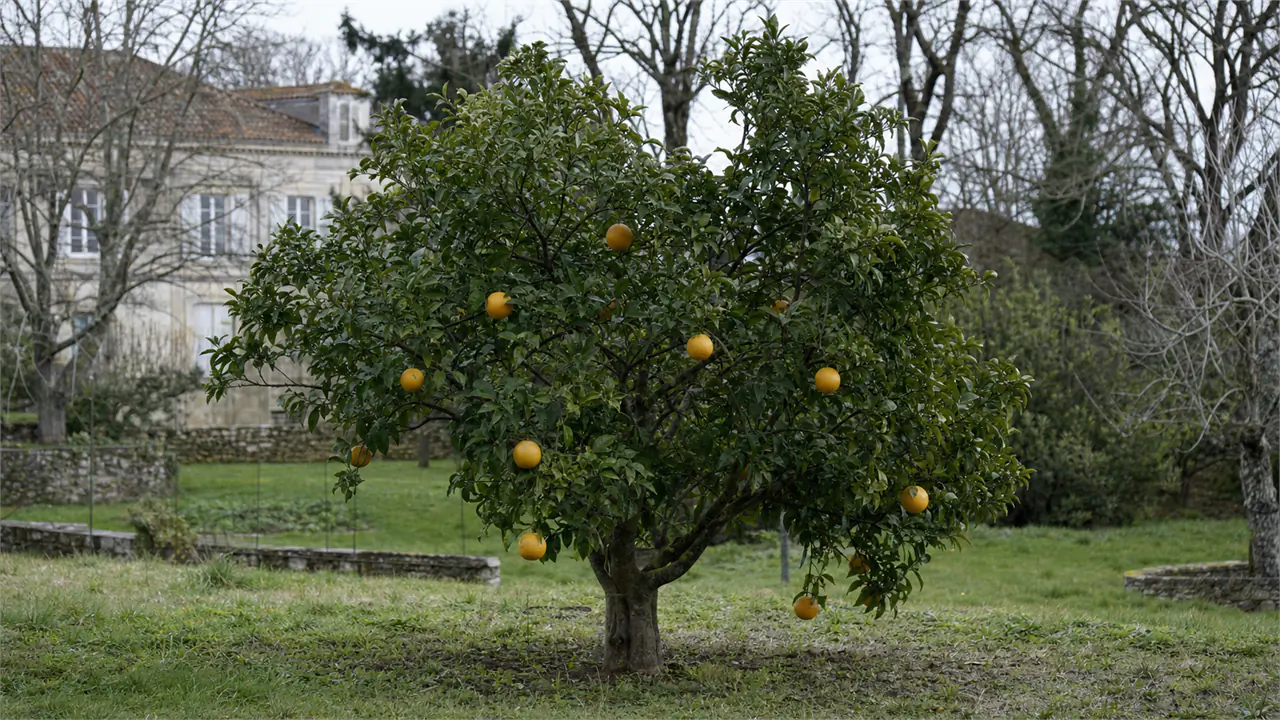
Navelate is a late bud sport of Washington Navel, selected in Spain. It takes the opposite role to early Naveline: its purpose is to extend the navel season. UCR reports fruit somewhat smaller than Washington, with a small, often concealed navel and good eating quality held late on the tree. The crucial limit is winter: late fruit must remain frost-free. IVIA also records low stalk adhesion at maturity, so holding quality means not every fruit will stay attached indefinitely.
It completes this encyclopedia’s navel sequence: early Naveline, benchmark Washington Navel and pink-fleshed Cara Cara. The same timing lesson applies to late Imamura satsuma: a later crop spends longer exposed to winter.
Reliable checks before you buy
Extend the season only if winter protection is ready
Navelate is chosen to extend the navel season. In a suitable citrus climate, UCR reports that the fruit can preserve eating quality on the tree for months. That is useful, but it is not frost protection. In Britain the same late timing means the crop must pass through winter, so a bright, frost-free place and a movable container are the realistic default. Harvest before a damaging cold spell and watch the stalk: IVIA notes that mature fruit can have low peduncle adhesion.
The fruit is usually seedless, with a small, often concealed navel, and is primarily a dessert orange. Navel juice can develop delayed bitterness on standing, but the risk is not identical in every fruit or cultivarA variety produced through selection or cultivation, distinct from the wild original plant.: taste it fresh and drink it promptly if the flavour is clean. Ask the nursery to identify the exact rootstock; no name in the table below overrides local soil, water or container conditions.
| Your conditions or aim | Rootstock point to check | Reason — and limit |
|---|---|---|
| Carrizo or C-35 offered | Confirm the nursery label | These are the UCR accession rootstocks, not a blanket UK recommendation. ⚠️ Match them to soil and water. |
| Movable, compact plant | Trifoliate or Flying Dragon only if locally supported | A compact tree is easier to shelter. ⚠️ Rootstock hardiness does not protect the grafted crown or fruit. |
| High-pH or saline conditions | FA5 only after professional matching | Ask what the sold combination tolerates. ⚠️ Do not treat one rootstock as universal. |
| Key point | Winter protection comes first | No rootstock can make exposed late fruit frost-proof; plan the winter space before buying. |
Navelate through the year: shelter the late crop
The British rhythm is container-led. Keep fruit frost-free through winter, acclimatise the plant gradually outdoors in late spring, and judge harvest by flavour and attachment rather than a copied overseas date.
| Jan | Feb | Mar | Apr | May | Jun | Jul | Aug | Sep | Oct | Nov | Dec | |
|---|---|---|---|---|---|---|---|---|---|---|---|---|
| Repot or renew the surface compost | ||||||||||||
| Keep late fruit frost-free; monitor stalks | ||||||||||||
| Acclimatise the plant outdoors | ||||||||||||
| Main flowering period (conditions vary) | ||||||||||||
| Harvest protected late fruit when ready | ||||||||||||
| Feed with a citrus fertiliser |
Bring a late Navelate crop safely to harvest
Start with your winter space
Assess light, frost protection and the weight of the container before buying: the fruit, not just the wood, has to survive winter.
Separate cold injury from fruit drop
Soft or discoloured flesh after cold points to frost; sound fruit loosening at the stalk points instead to mature-fruit attachment.
Shelter or harvest in time
Move the container before frost, protect the crop in bright quarters, and cut ready fruit with secateurs before it drops.
Choose earliness when protection is limited
If a safe winter place is unavailable, an earlier navel such as Naveline is more realistic than forcing Navelate through winter.
Read the sign, trace the cause, correct, prevent
Navelate shares the usual orange-tree problems. Its distinctive management issue is a late crop exposed to winter while mature fruits may loosen at the stalk.
| Observed sign | Likely cause | Correct | Prevent |
|---|---|---|---|
| Damaged flesh or rind after a cold spell | Late fruit exposed to frost or cold wind | Harvest sound fruit; move the plant to protected quarters | Act on forecasts before damage occurs |
| Fresh juice becomes bitter on standing | Delayed bitterness possible in the Navel group | Taste and drink it promptly if clean | Press only what will be used at once |
| Yellow leaves with greener veins | Iron chlorosisYellowing of the foliage caused by poor iron uptake, often linked to chalky soil. linked to high pH, hard water or poor drainage | Check watering and root zoneThe area of soil occupied by a plant's roots, where water and nutrients matter most. before using an appropriate iron chelate | Use free-draining compost and suitable water |
| Cottony masses or fixed scales on stems and leaf undersides | Mealybugs or scale insects | Isolate, remove by hand and use a currently authorised treatment only if needed | Inspect before moving into winter quarters and keep air moving |
| Silvery winding mines in young leaves | Citrus leaf miner | Remove only badly damaged soft growth and conserve beneficial insects | Avoid excess nitrogen that drives repeated soft flushes |
Keep treatment proportionate: diagnose first, ventilate winter quarters and avoid excess feeding. For a regulated plant-health concern, follow current official guidance.
A late dessert orange with more than one use
Navelate is valued first as a dessert orange: its small, often concealed navel and late season distinguish it from early Naveline. Use the aromatic zest to perfume food, and the peel’s pectin and texture for marmalade or candied peel. Juice is possible, but delayed bitterness is a risk across the Navel group rather than a certainty for every Navelate fruit: taste it immediately and keep it only if the flavour remains clean.
What the commercial standard says for Navel oranges
Navelate belongs to the Navels group in the official citrus marketing framework.
- Commercial minima: oranges normally measure at least 53 mm; the Navels group requires at least 33% juice and a 6.5:1 sugar-to-acid ratio.
- Not a ripeness test: these are dispatch criteria, not a Navelate average or a reason to leave a home-grown fruit through frost.
No generic yield is given. Winter protection, rootstock, container volume, light, age, crop load and pre-harvest drop all change the result; record your own tree and season.
What gardeners ask most often
Why grow Navelate?
It is a late Navel that can extend the dessert-orange season where fruit remain frost-free. In Britain, that benefit usually depends on protected container culture.
Can Navelate stay outside through a British winter?
Do not plan on it. RHS guidance says citrus does not reliably survive UK winters outdoors; Navelate adds the extra problem of fruit that must remain unharmed until a late harvest.
Naveline or Navelate?
Naveline is early and can finish before the worst winter weather. Navelate is late and extends the season only where frost-free protection and timely harvesting are practical.
Is Navelate seedless?
It is generally described as seedless and its flowers lack functional pollen, but no home-grown fruit should be sold with an absolute zero-seed guarantee.
Sources and verification
Last evidence check: 2026-08-01. Cultivar observations, British winter practice and commercial minima are kept in separate evidence lanes.
- UC Riverside — Navelate navel orange, CRC 4022: exact accession and reported Citrus × sinensis fruit characters.
- UK Government — marketing standard for citrus fruit: orange size and Navel-group commercial maturity minima.