Satsuma ‘Imamura’
Citrus unshiu ‘Imamura’ — a late satsuma selection also known as Imamura unshu
A late satsuma that can extend the season, with one decisive caution: its fruit remains outdoors longer. Surviving wood does not prove that a late crop will escape frost, and no cultivarA variety produced through selection or cultivation, distinct from the wild original plant.-specific frost threshold is documented here.
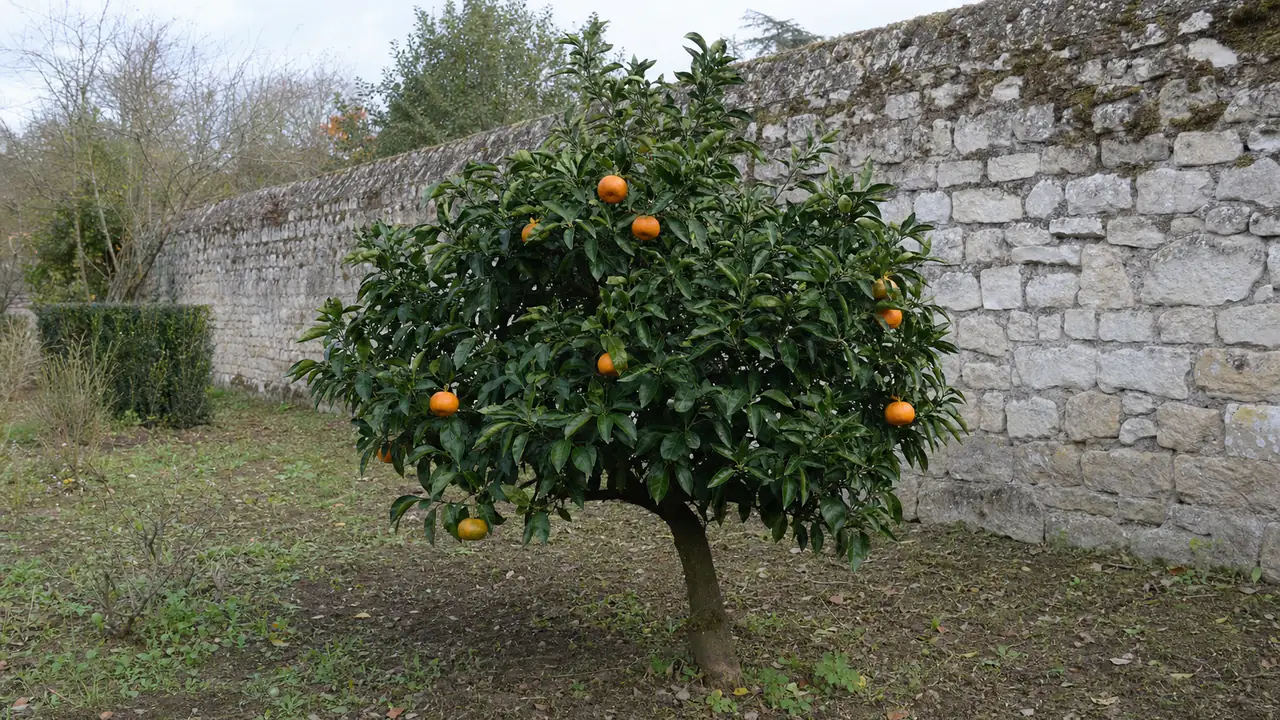
Imamura is a late Japanese satsuma. A 2026 DNA-marker study places ‘Imamura unshu’ among mutations of the Owari line; it does not establish an embellished discovery story. The cultivar can extend the season, but its fruit remains exposed to local cold for longer, and no transferable cultivar-specific frost threshold is documented here. Strong parthenocarpy allows fruit set without a pollinizer. Fruit is generally seedless, with occasional seeds possible.
It extends our encyclopedia’s coverage of satsumas, complementing early selections (Iwasaki, Okitsu, Miyagawa) and the dependable standard Owari. It shares the same late-season exposureThe amount of sunlight a spot in the garden receives (full sun, part shade, shade). profile found in late mandarins such as Hernandina.
Reliable points to check before buying
“Hardy” does not mean “protected fruit”
This is the central lesson of ‘Imamura’. Published sources establish its late position in the satsuma season, but do not provide a cultivar-specific cold limit for the wood. Because this cultivar is late, its fruit remains exposed outdoors for longer than that of early selections. A healthy-looking framework can therefore coexist with cold-damaged fruit; neither tree survival nor peel colour alone proves that the crop is ready.
Success depends on the late-season local climate: ‘Imamura’ can extend the harvest where fruit has time to finish ripening, but is less dependable where frost arrives early. It is generally seedless through strong parthenocarpy, although occasional seeds have been recorded. Treat every rootstock claim as site-specific and have the exact graft combination confirmed by the nursery supplier.
‘Imamura’ through the year: managing late fruit
In Britain, container culture with a bright, frost-free winter position is the dependable default. Open-ground planting is an exceptional microclimate decision, not a general recommendation; the calendar below is weather-led.
| Jan | Feb | Mar | Apr | May | Jun | Jul | Aug | Sep | Oct | Nov | Dec | |
|---|---|---|---|---|---|---|---|---|---|---|---|---|
| Plant outdoors (exceptionally mild sites) | ||||||||||||
| Protect late fruit from frost (fleece / move container) | ||||||||||||
| Move container outdoors for summer | ||||||||||||
| Fragrant spring flowering | ||||||||||||
| Harvest window (late autumn to winter) | ||||||||||||
| Apply citrus feed during growing season |
Indicative calendar for a favourable site: region, microclimate, rootstock, crop load and season shift the dates. Confirm internal maturity by tasting and protect the plant in line with local weather warnings.
Harvesting ‘Imamura’ before frost strikes
Assess late-season climate
The crucial question is not whether the tree survives cold, but whether your fruit has time to ripen before freezing weather arrives. Monitor local first frosts.
Damaged fruit on an intact tree
Ruinous, water-soaked fruit on a perfectly healthy tree is the signature of late maturity. Frost has affected the harvest, not the wood.
Protect or harvest in time
Cover fruit with horticultural fleece, move containers under shelter, or harvest before hard frosts — even if fruit is slightly less mature.
Reserve for mild districts
In colder regions, choose an early satsuma; ‘Imamura’ performs best where late autumn conditions remain moderate.
Observe first; treat only after identification
The same symptom can have several causes. This grid gives a first check; it is neither a remote diagnosis nor a pesticide prescription.
| Observation | First check | Decision boundary |
|---|---|---|
| Leaves turning yellow | Check moisture, drainage, water quality and changes in young leaves | Have the cause confirmed before applying an amendment |
| Insects, cottony clusters or sticky deposits | Isolate if necessary and identify the organism accurately | Use only a method or product authorised for that use, following the local label |
| Coloured fruit with disappointing flavour | Sample one fruit and check internal maturity before generalising | Rind colour alone proves neither maturity nor disease |
Seek professional or plant-health advice if decline is rapid, symptoms are unusual or regulatory status is uncertain.
The late-season satsuma
Sweet when ripe, generally seedless and easy to peel, ‘Imamura’ offers the pleasure of satsumas later in the season, to be enjoyed fresh after early varieties have finished. Fully ripe fruit produces a pleasant juice, while unwaxed peel suits marmalade and individual segments lend themselves to drying. Its primary advantage is timing on the calendar, provided the fruit is saved from frost.
Satsuma marketing standard: figures and limits
These figures apply to marketed citrus lots under the cited official standard. They measure neither garden eating maturity, cultivar hardinessA plant's ability to survive winter cold without protection. nor cultivar yield.
- Nominal minimum diameter: 45 mm.
- Absolute floor within the size tolerance: 43 mm, only within a total tolerance capped at 10% of the lot by number or weight.
- Minimum satsuma juice content: 33%.
- Minimum sugar-to-acid ratio: 6.5:1.
- Colour: typical of the variety on at least one third of the surface within the commercial scope of the standard.
Official source — GOV.UK marketing standard for citrus fruit. No generic yield is published: observe the tree, crop load and local conditions.
What growers most often ask
If the tree is hardy, is my fruit protected?
Not necessarily: a hardiness rating primarily describes woody tissue survival. In a late variety like ‘Imamura’, fruit matures late and can freeze even while the tree survives.
What is the main benefit of ‘Imamura’?
It extends the satsuma season into late autumn and winter. It is particularly rewarding where autumn conditions remain mild.
Should it be avoided in colder regions?
Its maturation carries higher risk there, as late fruit is more exposed to frost. In cold districts, an early satsuma is more dependable.
Does it contain seeds?
It is generally seedless through strong parthenocarpy, but “seedless” is not an absolute guarantee: occasional seeds have been reported in a published cultivar trial.
Sources, scope and checks
Foreign evidence is retained only for identity and cultivar traits; no foreign harvest date, climate performance, dose, yield or legal rule is transferred to the United Kingdom.
- J-STAGE / Breeding Science — DNA marker study listing Imamura unshu among Owari-line mutations : a result from a defined study or site, retained with its protocol, region and period.
- Royal Horticultural Society — How to grow citrus : general growing guidance for the target market; no cultivar-specific performance is inferred.
- Citrus Research International — Imamura Satsuma cultivar fact sheet : bounded cultivar identity and traits; the foreign observation is neither a UK calendar nor UK performance evidence.
- J-STAGE — Seasonal Changes in the Titratable Acids of Satsuma Mandarin Fruit : a result from a defined study or site, retained with its protocol, region and period.
- SA Fruit Journal — Satsuma selections for Citrusdal : a result from a defined study or site, retained with its protocol, region and period.
- UNECE — Citrus cultivar nomenclature, Imamura in the satsuma mandarin group : a general satsuma-group principle; it does not guarantee every fruit of this cultivar.
- Universeity of Florida IFAS — The Satsuma Mandarin : a general satsuma-group principle; it does not guarantee every fruit of this cultivar.
- GOV.UK — Marketing standards for citrus fruits : requirements for a marketed lot; neither cultivar measurement nor a garden-ripeness test.
- IVIA — mandarin and rootstock evaluation programme : evidence that the combination must be assessed by site, climate, soil and system; no universal ranking.