Cara Cara orange tree
Citrus × sinensis ‘Cara Cara’ — pink-fleshed Navel
A sweet, mild Navel with salmon-pink flesh. The useful distinction is precise: it is not a blood orange, and its perfectly ordinary orange rind does not reveal the colour within.
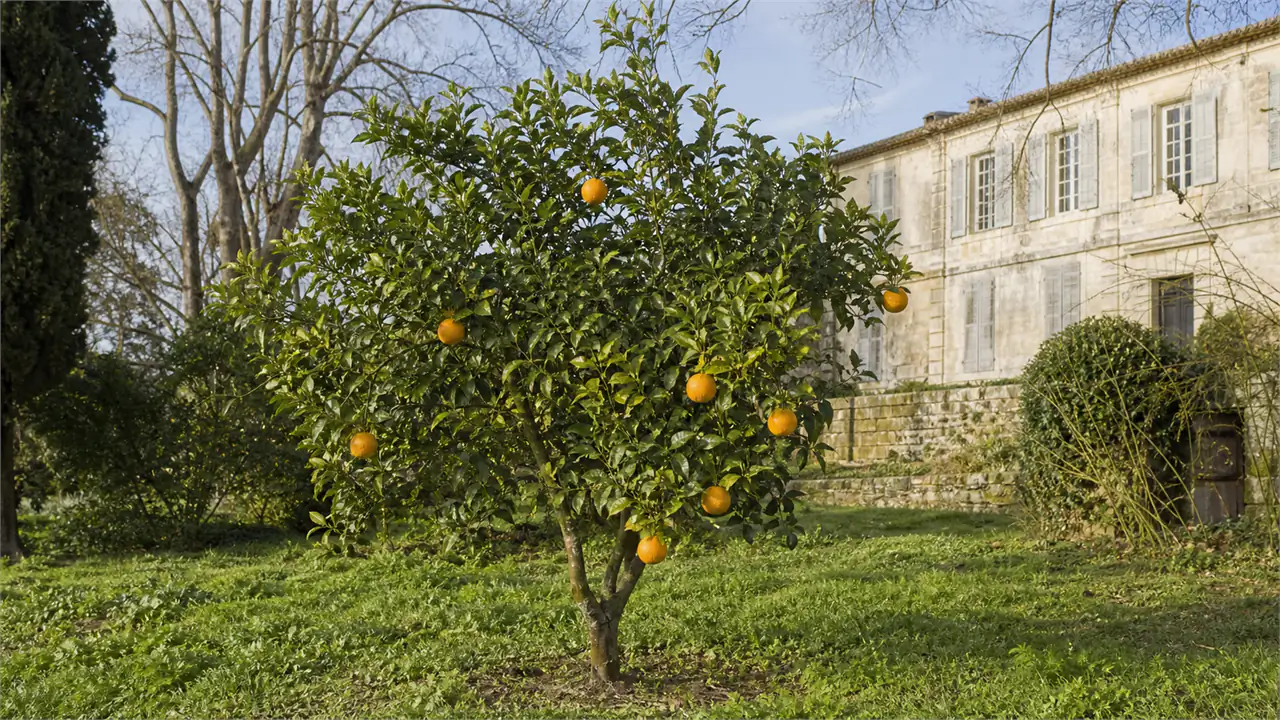
Cara Cara is a Washington Navel bud mutation found in Venezuela. It kept the familiar orange peel and Navel form, while its flesh accumulates lycopene and turns pink to salmon. That does not make it a blood orange: those cultivars are defined by anthocyanin pigmentation in the flesh, with expression influenced by genetics and ripening conditions. Compare the blood-orange group on its own terms. A whole Cara Cara can look externally ordinary like its parent, so rind colour and a photograph are not proof of pink flesh. Buy labelled, traceable stock and assess a mature fruit only after cutting it.
Its cultivation follows the Navel pattern: use the Washington Navel page for the shared framework. Compare the distinct anthocyanin-bearing profiles of Tarocco and Moro when a true blood orange is the goal.
Reliable checks before buying
Pink, but not blood: two pigments, two identities
Cara Cara pulp contains lycopene and other linear carotenes. In the cultivarA variety produced through selection or cultivation, distinct from the wild original plant.-specific study, the peel remained orange and was externally indistinguishable from the parent. Blood oranges instead accumulate anthocyanins; their expression varies with genetics and ripening conditions, and an outside blush is not universal. The orange peel is not a cultivar test: the sound buying checks are a correct cultivar label, traceable nursery material and, later, the cut flesh of a mature fruit.
Choose Cara Cara for a mild, pink-fleshed dessert Navel. Choose a blood orange when anthocyanin pigmentation and its different flavour profile are the objective. The basic growing decisions remain those of Washington Navel, but rootstock, growing medium and winter space still need to suit the actual plant and site.
| Your constraint | Rootstock options | Why — and the trade-off |
|---|---|---|
| Documented nursery combination | C-35, Carrizo | Can support Navel quality and vigour. ⚠️ performance depends on the growing medium, water and the scion–rootstock combination sold. |
| Calcareous or saline constraint | Forner-Alcaide 5 (FA5) | Relevant evidence exists for lime and salinity contexts. ⚠️ not a universal British choice. |
| Freely drained, non-calcareous medium | Trifoliate orange, Swingle citrumelo | May help contain vigour and can influence quality. ⚠️ avoid wet, poorly drained or active-lime conditions. |
| Uncertain identity | Certified grafted plant | Ask the nursery to name both scion and rootstock and to explain why the combination suits your conditions. |
An indicative Cara Cara rhythm for Britain
Treat this as a container-care sequence, not a promised harvest calendar. Move the plant only when conditions are safe, keep winter quarters bright and frost-free, and judge mature fruit by taste rather than by a red exterior.
| Jan | Feb | Mar | Apr | May | Jun | Jul | Aug | Sep | Oct | Nov | Dec | |
|---|---|---|---|---|---|---|---|---|---|---|---|---|
| Plant or repot under protection | ||||||||||||
| Keep in bright, frost-free quarters | ||||||||||||
| Move the container outdoors gradually | ||||||||||||
| Main flowering window, conditions permitting | ||||||||||||
| Taste mature fruit; timing varies | ||||||||||||
| Feed citrus during active growth |
Four checks for a distinctive Navel
Look past the peel
An intact fruit may have the same orange exterior as Washington Navel. Do not expect a blood-orange blush or use the hero image as proof of pink flesh.
Check light, water and roots
Read pale leaves, stalled growth and fruit drop through growing-medium pH, drainage, watering regularity, winter light and the declared rootstock.
Match the root zone and shelter
Use a free-draining medium, a documented graft combination and bright frost-free winter quarters; change one diagnosed constraint at a time.
Squeeze just before serving
As with other Navels, the juice may develop delayed limonin bitterness. Drink it promptly instead of assigning a guaranteed number of minutes.
Read the sign, find the cause, correct, prevent
Cara Cara shares the common problems of container-grown sweet oranges; poor drainage, high-pH water and winter pests deserve more attention than cultivar myths.
| Observed sign | Likely cause | Correct | Prevent |
|---|---|---|---|
| Yellow leaves with greener veins | Iron chlorosisYellowing of the foliage caused by poor iron uptake, often linked to chalky soil. favoured by high pH, lime or impaired roots | Check drainage and water pH first; use an appropriate chelated iron only for a confirmed deficiency | Use a structured medium, suitable water and a compatible rootstock |
| Cottony clusters or fixed scales on stems and leaf undersides | Mealybugs or scale insects | Isolate, remove by hand and use only an authorised treatment according to its label | Inspect before moving into winter quarters and keep plants spaced |
| Sticky honeydew with black surface growth | Sooty mould growing on honeydew from scale, mealybugs or aphids | Control the sap-feeding insect before cleaning the residue | Check young shoots and leaf undersides early |
| Silvery winding mines in young leaves | Citrus leaf miner | Remove only badly damaged tender growth and follow current local guidance | Avoid forcing repeated soft flushes; encourage natural enemies |
| Flower or young-fruit drop | Erratic watering, low light, root stress or a cold shock | Stabilise moisture and conditions without leaving roots waterlogged | Acclimatise moves and plan winter protection early |
Start with prevention: light, airflow, balanced feeding and regular but not waterlogged moisture. For a regulated pest or pesticide decision, use current official British guidance and the authorised label.
Pink flesh, gentle acidity
Cutting the mature fruit reveals the feature that the peel concealed: pink to salmon flesh. Serve it fresh in segments or thin slices where the colour is visible, use the zest only from suitable untreated fruit, or turn the peel into preserve. The flavour is generally sweet and mild. If juicing, squeeze shortly before drinking, because delayed Navel bitterness can occur but is not inevitable in every fruit.
What the commercial standard actually says
Cara Cara belongs to the Navel orange group; the figures below are commercial references for oranges, not promises about a home-grown fruit.
- Commercial reference: under the England-and-Wales marketing standard, normal minimum diameter is 53 mm; for Navels, juice content is at least 33% and the sugar-to-acid ratio at least 6.5:1.
- Home maturity: taste the fruit; an orange rind neither reveals the pink flesh nor authenticates the cultivar.
No generic yield is published. Record the crop from your own tree alongside rootstock, container volume, light and growing conditions.
What growers ask most often
Is Cara Cara a blood orange?
No. Its pink flesh accumulates lycopene and related carotenes; blood oranges are characterised by anthocyanins. Colour intensity may vary, so keep the distinction factual rather than promising an identical shade everywhere.
Why is my Cara Cara not red on the outside?
That is expected. The peel can remain conventionally orange and may be indistinguishable from Washington Navel. External colour does not prove or disprove the pink flesh.
Does Cara Cara have pips?
It is characteristically seedless like other Navels, but avoid guaranteeing every individual fruit. Pollination and growing circumstances can occasionally change what is found inside.
Can I grow it like an ordinary orange tree?
Its basic needs are those of a Navel, but in Britain the practical default is a container with a sunny sheltered summer position and bright, frost-free winter quarters. Confirm the rootstock before choosing the medium.
Sources and verification
Last scientific and local-source check: 2026-08-01. Cultivar identity, pigment and orange-peel boundary were checked separately from British cultivation and commercial grading.
- UC Riverside — Cara Cara accession CRC 3994: exact identity of Citrus × sinensis ‘Cara Cara’, Venezuelan Washington-Navel mutation, pink lycopene-bearing flesh and absence of skin blush.
- Royal Horticultural Society — Citrus: grow your own: British container culture and protected wintering; numeric commercial references were checked against current GOV.UK guidance.