Satsuma ‘Miyagawa Wase’
Citrus unshiu ‘Miyagawa Wase’ — the reference early satsuma
An early, usually seedless and juicy reference satsuma, documented as a breeding parent of several later selections. Understanding Miyagawa helps place the early satsuma group in context.
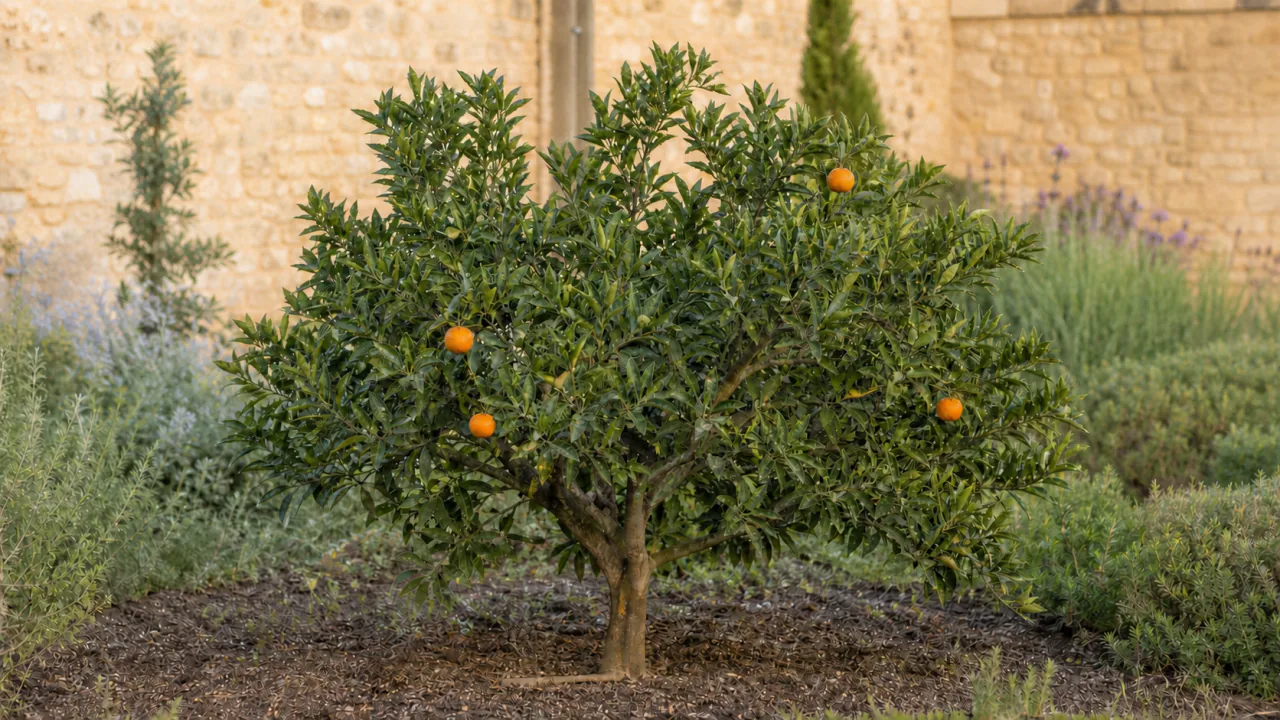
The ‘Miyagawa Wase’ is a distinguished Japanese early satsuma: a historic reference point and documented parent of several later selections. When comparing early satsumas — Okitsu, Miho and others — growers often use Miyagawa as a benchmark. Its fruit is oblate, juicy and usually seedless; tree vigour varies with clone, rootstockThe root and base onto which a variety is grafted to give it vigour or resistance. and growing conditions. Historic UCR notes describe it as more vigorous than many old Wase clones. It is strongly parthenocarpic, so no pollinizer is needed for fruit set. In Britain, provide bright, frost-free winter shelter.
Other satsumas in the encyclopedia include the reference Owari, the very early Iwasaki and Okitsu Wase, which is directly compared with Miyagawa.
Reliable points to check before buying
The benchmark satsuma, balanced and reliable
Growers choose Miyagawa for its reliability: it is a long-established early satsuma and the documented parent or comparator of several selections. It balances earliness, juiciness and general seedlessness; vigour depends on clone, rootstock and conditions. Where Iwasaki emphasises extreme earliness, Miyagawa remains a dependable, well-balanced choice.
Like all satsumas, it is usually seedless and requires no pollinizer. Rootstocks should be selected according to soil conditions, with the exact combination confirmed with your nursery — trifoliate orange remaining a common choice for cool climates in non-calcareous soils.
Miyagawa rhythm: open ground or container
British conditions dictate container culture with bright frost-free winter shelter; open-ground planting is exceptional. The harvest window varies with site and season, so judge readiness by tasting representative fruit.
| Jan | Feb | Mar | Apr | May | Jun | Jul | Aug | Sep | Oct | Nov | Dec | |
|---|---|---|---|---|---|---|---|---|---|---|---|---|
| Plant outdoors (exceptionally mild sites only) | ||||||||||||
| Overwinter container in frost-free shelter | ||||||||||||
| Harden off and move container outdoors | ||||||||||||
| Fragrant spring flowering | ||||||||||||
| Harvest (early; judge by taste) | ||||||||||||
| Citrus feed |
Indicative calendar for a favourable site: region, microclimate, rootstock, crop load and season shift the dates. Confirm internal maturity by tasting and protect the plant in line with local weather warnings.
A balanced and delicious Miyagawa
Read fruit and tree separately
Record growth under your own rootstock and conditions rather than assuming fixed vigour. Sample fruit as the local season advances.
Peel colour is not a ripeness test
In warm early-season conditions, the pulp may mature while the peel is still greenish; conversely, tart flavour shows that balance is not yet right.
Wait for flavour balance
Taste representative fruit before harvesting the crop, while moving a container to frost-free shelter before damaging weather.
Keep records
Note flowering, flavour and harvest dates for your site; steady watering and proportionate feeding support consistent growth.
Observe first; treat only after identification
The same symptom can have several causes. This grid gives a first check; it is neither a remote diagnosis nor a pesticide prescription.
| Observation | First check | Decision boundary |
|---|---|---|
| Leaves turning yellow | Check moisture, drainage, water quality and changes in young leaves | Have the cause confirmed before applying an amendment |
| Insects, cottony clusters or sticky deposits | Isolate if necessary and identify the organism accurately | Use only a method or product authorised for that use, following the local label |
| Coloured fruit with disappointing flavour | Sample one fruit and check internal maturity before generalising | Rind colour alone proves neither maturity nor disease |
Seek professional or plant-health advice if decline is rapid, symptoms are unusual or regulatory status is uncertain.
The everyday satsuma
Oblate, usually seedless and easy to peel, Miyagawa is a versatile and dependable satsuma, ideal fresh in segments. When fully ripe, it yields abundant sweet juice, its peel suits marmalade, and its segments lend themselves to drying. Well-balanced in every respect, it is the everyday satsuma — the reference standard for the group.
Satsuma marketing standard: figures and limits
These figures apply to marketed citrus lots under the cited official standard. They measure neither garden eating maturity, cultivarA variety produced through selection or cultivation, distinct from the wild original plant. hardiness nor cultivar yield.
- Nominal minimum diameter: 45 mm.
- Absolute floor within the size tolerance: 43 mm, only within a total tolerance capped at 10% of the lot by number or weight.
- Minimum satsuma juice content: 33%.
- Minimum sugar-to-acid ratio: 6.5:1.
- Colour: typical of the variety on at least one third of the surface within the commercial scope of the standard.
Official source — GOV.UK marketing standard for citrus fruit. No generic yield is published: observe the tree, crop load and local conditions.
What growers most often ask
Why is Miyagawa considered a reference cultivar?
Because it is an established early satsuma that served as a parent for several modern selections, providing the benchmark against which Okitsu and Miho are compared.
Miyagawa or Okitsu?
Both are closely related early satsumas, with Okitsu frequently compared directly to Miyagawa. Choice depends on local nursery availability and garden performance.
Does it produce seeds?
It is usually seedless and needs no pollinizer for fruit set, but occasional seeds can occur; UCR observations include both seed-free and lightly seeded samples.
Is it cold-tolerant?
Satsumas tolerate cool conditions better than many citrus, but Miyagawa is not reliably winter-hardy outdoors in Britain. Use bright, frost-free winter shelter.
Sources, scope and checks
Foreign evidence is retained only for identity and cultivar traits; no foreign harvest date, climate performance, dose, yield or legal rule is transferred to the United Kingdom.
- UC Riverside Citrus Variety Collection — Miyagawa Satsuma mandarin : bounded cultivar identity and traits; the foreign observation is neither a UK calendar nor UK performance evidence.
- Universeity of Georgia Extension — Comparing Early-Maturing Satsumas to Owari in Southern Georgia : a result from a defined study or site, retained with its protocol, region and period.
- Universeity of Florida IFAS — The Satsuma Mandarin : a general satsuma-group principle; it does not guarantee every fruit of this cultivar.
- Royal Horticultural Society — How to grow citrus : general growing guidance for the target market; no cultivar-specific performance is inferred.
- EUR-Lex — Delegated Regulation (EU) 2023/2429, citrus marketing standard : requirements for a marketed lot; neither cultivar measurement nor a garden-ripeness test.
- The Horticulture Journal — peel colour and internal maturity in Miyagawa-wase : a result from a defined study or site, retained with its protocol, region and period.
- GOV.UK — Marketing standards for citrus fruits : requirements for a marketed lot; neither cultivar measurement nor a garden-ripeness test.
- IVIA — mandarin and rootstock evaluation programme : evidence that the combination must be assessed by site, climate, soil and system; no universal ranking.