Water Garden: Natural Ponds and Pools in the Garden
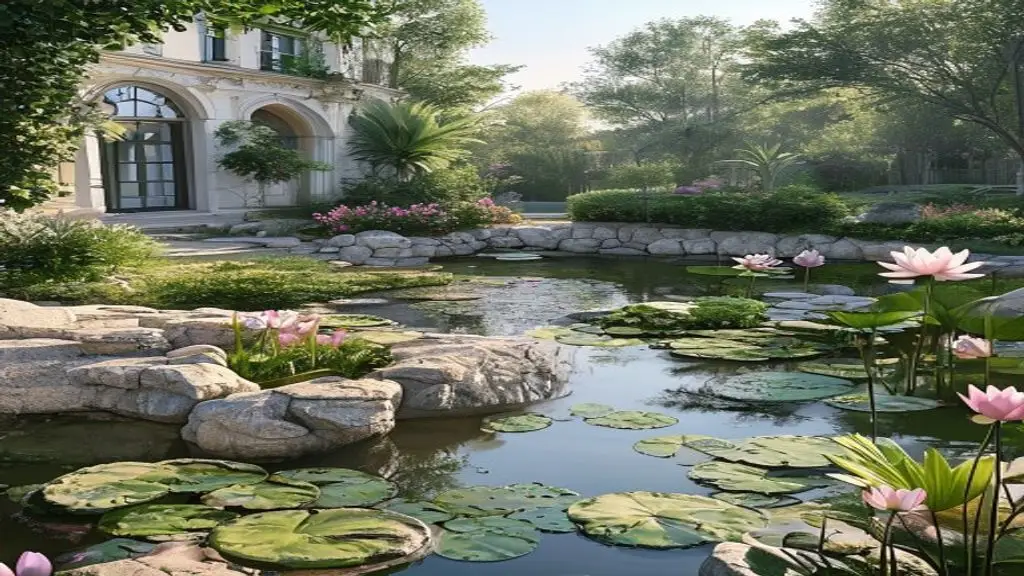
A successful water garden is designed as a living balance, not as a basin that must be constantly corrected. Volume, planting shelves, oxygenating plants, partial shade and clean circulation are what keep the water clear and the scene elegant. This dossier gathers the method, the key decisions and the detailed guides needed to design a pond, a natural pool or a refined water edge.
Dans ce dossier
 Create a Natural Garden Pond Without an Electric Pump
 Poolside Plants That Do Not Drop Leaves Into the Water
 Turn a Pool Enclosure Into a Beautiful Winter Garden
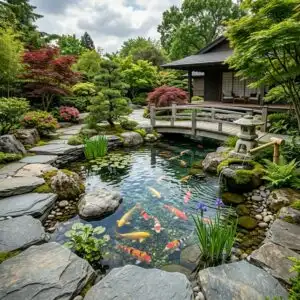 Introducing Koi Carp: Volume, Filtration and Fatal Mistakes
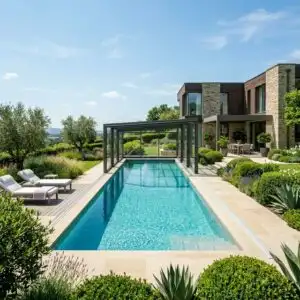 Low, Mid-High or Flat Pool Enclosure: Complete Guide
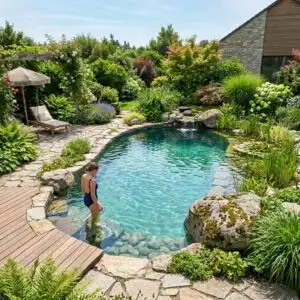 Natural Pool vs Traditional Pool: Budget, Benefits and Care
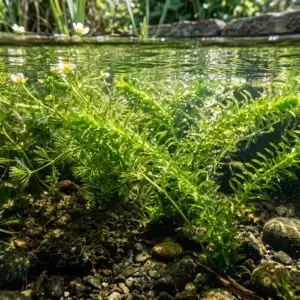 Oxygenating and Purifying Pond Plants for Clear Water
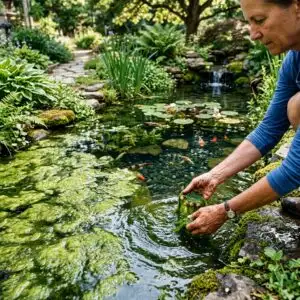 Green Algae in the Pond: Natural Solutions
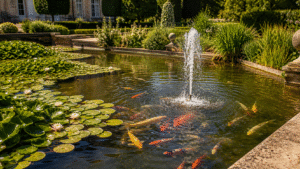 Garden Pond in a Heatwave: Protect Water and Fish
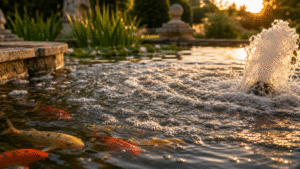 Pond Water Too Warm: Oxygenation and Summer Stress
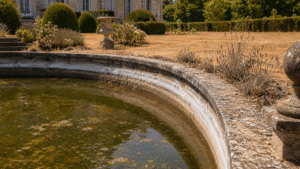 Pond Evaporation in a Heatwave: Water Loss and Compensation
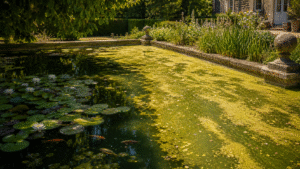 Green Water in Hot Weather: Algae and Heat in the Pond
The Chatelain Method for water
Water rewards order. First, observe the site: sun, wind, falling leaves, slope and the view from the house. Then diagnose the right volume and the role of the water feature: ornamental pond, wildlife pond, swimming pond or pool edge. Next, correct through depth levels, planting and filtration. Finally, prevent imbalance by controlling nutrients, heat, algae and safety risks before they appear.
Pond, water garden or natural pool?
| Project | Main role | Priority |
|---|---|---|
| Ornamental pond | Reflection, sound, biodiversity | Stable volume and beautiful margins |
| Natural pond without pump | Living ecosystem | Plants, shade and restrained fish load |
| Natural swimming pond | Bathing and landscape | Separated swimming and regeneration zones |
| Pool edge | Comfort and visual integration | Clean planting, low debris and safe circulation |
The design rules that keep water clear
Small water features fail when they are treated as decoration alone. A pond needs a thermal buffer, a planted edge and a strategy for organic matter. Avoid placing the basin directly under deciduous trees, in a wind tunnel or in a hidden corner that no one enjoys. A position with several hours of light, some shade and easy access for maintenance is usually more durable.
Chatelain marker. Clear water begins with restraint: fewer nutrients, more plants, measured shade and a volume large enough to absorb temperature changes. Chemical fixes come last, not first.
Plants are the engine of balance
Oxygenating and purifying plants compete with algae for nutrients. Marginal plants soften the edge, floating leaves shade the surface, and submerged plants help the small ecosystem breathe. The exact species and planting density are handled in the dedicated guide to oxygenating and purifying pond plants.
When the water turns green
Green water is usually a message: too much light, too many nutrients, insufficient plant competition or water that is warming too quickly. Before adding a product, check shade, feeding, sludge, evaporation and oxygen. The corrective path is detailed in natural solutions for green algae in ponds.
Build the full water dossier
- Create a natural garden pond without an electric pump
- Natural pool vs traditional pool: budget and maintenance
- Size the pump and filtration for a pond
- Winterize a garden pond and protect fish and plants
- Protect pond water and fish during a heatwave
FAQ
Does a garden pond always need a pump?
No. A sufficiently large, well-planted pond with a low fish load can be balanced without a pump. A pump becomes useful for waterfalls, heavy fish populations, small volumes or natural swimming pools.
What depth should a pond have?
Use several levels: a shallow edge for marginal plants, an intermediate planting shelf and a deeper zone that buffers heat and frost. In cold climates, part of the pond should be deep enough for wildlife or fish to overwinter.
What is the best way to avoid algae?
Reduce nutrients, add plant competition, keep part of the surface shaded and remove decaying organic matter. Algae control is a balance problem before it is a product problem.
Written and verified by the editorial team at Les Jardins d’un Chatelain.