Garden Pond in a Heatwave: Protect Water and Fish
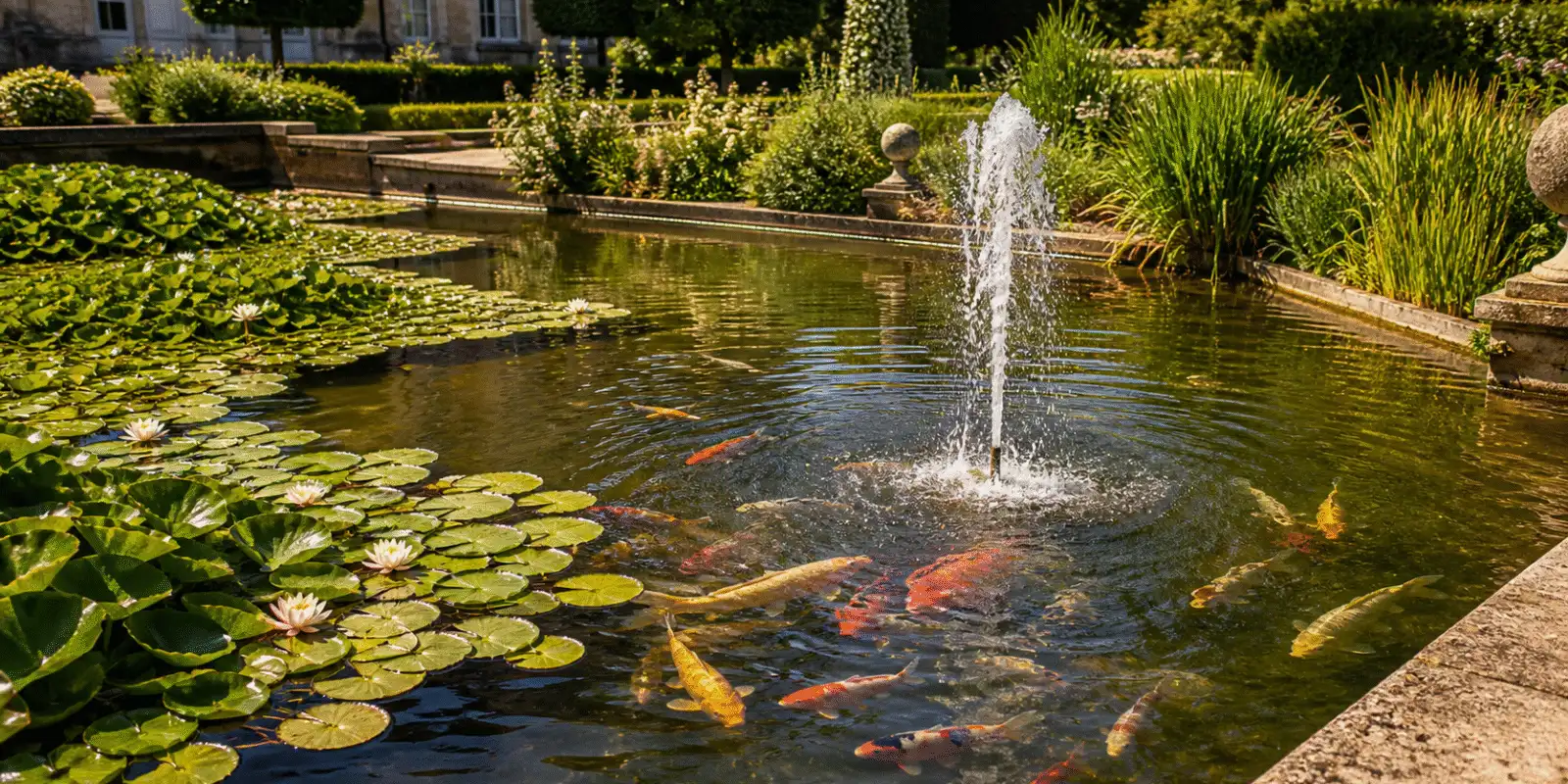
During a heatwave, your garden pond is at risk: warm water holds less oxygen just as fish and bacteria consume more of it in the heat. The absolute priority is to keep the water oxygenated day and night, provide partial shade, cut back on feeding, and top up evaporation losses with small amounts of untreated water.
The Chatelain Method for hot weather
- Observe: water temperature, fish behaviour (especially at dawn), a falling water level, water colour.
- Diagnose: heat acts on three fronts at once — oxygen, evaporation, algae.
- Correct: secure oxygen first, then address evaporation and light.
- Prevent: lasting shade, surface plants, continuous summer aeration, a reasonable fish stock.
Why heat threatens your pond
The physics is unforgiving: the warmer the water, the less dissolved oxygen it holds. Warm pond water naturally holds less dissolved oxygen than cold water, and as temperatures rise, oxygen levels fall — just as fish become more active and demand more of it. Supply drops while demand climbs.
Two further effects compound the problem: evaporation, which lowers the water level, and faster algae growth, driven by light and heat.
The Chatelain note. Fish gathering at the surface gasping for air is the clearest warning sign — usually visible at dawn, when oxygen is at its lowest point after a night without photosynthesis.
Priority actions, in order
| Threat | Cause in a heatwave | Priority action |
|---|---|---|
| Low oxygen | Warm water + active fish | Fountain/waterfall/air pump running continuously |
| Water overheating | Direct sun all day | Partial shading |
| Falling water level | Evaporation | Small top-ups of untreated water |
| Water turning green | Light + nutrients | Less feeding, shade, plants |
- Keep aeration running non-stop. As RHS advises, keep the water well oxygenated in hot weather with a bubble fountain or similar, especially overnight when oxygen is scarcest.
- Shade the surface. Aiming for around 50-70% surface coverage in summer helps keep water temperatures more stable.
- Cut back on food. Avoid feeding heavily on the hottest days — a higher metabolism means higher oxygen demand.
- Top up evaporation gently. Small, regular amounts rather than one large cold dose.
Mistakes to avoid
- Switching off the pump at night « to let it rest » — the opposite is true.
- Feeding as usual: adds unnecessary organic load to the water.
- Topping up with a large volume of cold water at once: the temperature swing stresses fish.
- Covering the pond completely: starves plants of light and suffocates the ecosystem.
FAQ
How do I keep a pond oxygenated during a heatwave?
Continuously, day and night: an air pump, waterfall or fountain agitating the surface. Never switch it off overnight.
Why do my fish come to the surface in hot weather?
Low oxygen. Warm water holds less of it, and levels are lowest at dawn. Fish gasping at the surface is an emergency signal.
Should I top up the pond during a heatwave?
Yes, with small amounts of untreated water to offset evaporation, never a large cold top-up in one go.