Pond Water Too Warm: Oxygenation and Summer Stress
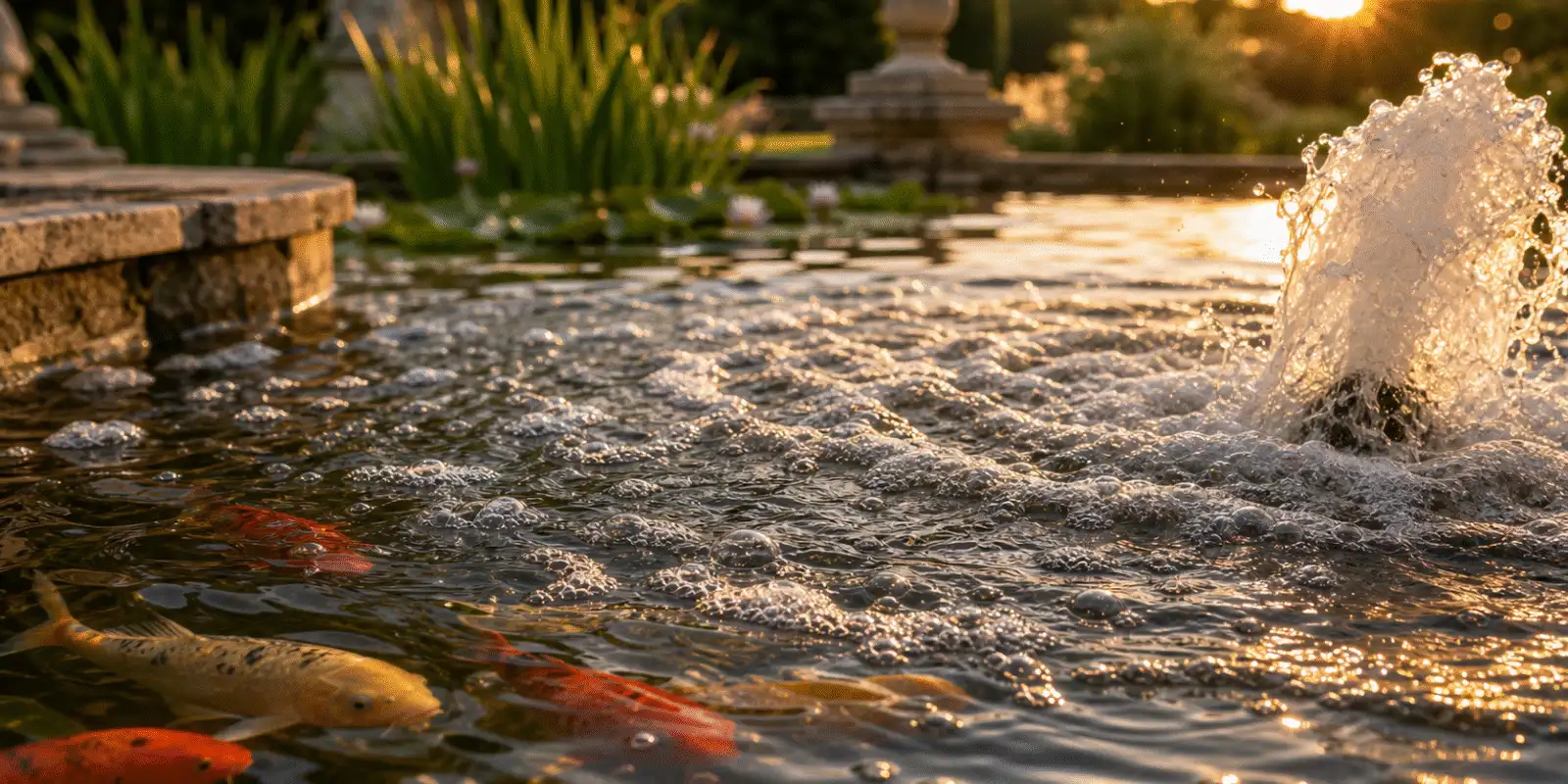
When pond water rises above roughly 24°C, dissolved oxygen drops sharply and fish can suffocate. The response: aerate continuously (air pump and diffuser, waterfall or fountain), shade the surface, and reduce organic load (food, sludge).
The Chatelain Method: diagnosing low oxygen
You cannot see oxygen, but you can see its signs. You observe fish at dawn; you diagnose an oxygen deficit if they gasp at the surface; you correct with immediate aeration; you prevent it with continuous aeration all summer.
Why warm water runs short of oxygen
It is basic physics: oxygen solubility falls as temperature rises. Cold water is oxygen-rich; warm water is oxygen-poor.
| Water temperature | Dissolved oxygen at saturation |
|---|---|
| 15°C | ~10 mg/L |
| 20°C | ~9 mg/L |
| 25°C | ~8 mg/L |
| 30°C | ~7-7.5 mg/L |
In practice a real pond often sits below this saturation figure, since decomposing organic matter uses up oxygen too. For fish such as koi, aim for at least 6 mg/L; below 3-4 mg/L the danger is real.
The Chatelain note. A heatwave hits twice over: warm water carries less oxygen, and more active fish demand more of it. Supply falls as demand rises — which is why suffocation can happen suddenly, often at dawn.
Recognising low oxygen
The telltale sign: fish gathering at the surface and gasping for air, especially at dawn. Overnight, plants stop photosynthesising and start consuming oxygen instead, so levels are at their lowest. Larger fish (koi, sturgeon) struggle first.
Comparing ways to boost oxygen
| Method | Effectiveness | Worth knowing |
|---|---|---|
| Air pump + diffuser | High, day and night | Safest option in a heatwave; run it continuously |
| Waterfall / sheet of water | Good | Agitates the surface; effective at sufficient flow |
| Fountain | Good | Oxygenates and cools; can disturb some surface plants |
| Oxygenating plants | Variable | Produce oxygen by day but consume it at night: useful but not enough alone |
Emergency protocol when oxygen is critically low
- Agitate the surface immediately: switch on the air pump, waterfall or fountain — and leave it running, especially overnight.
- Suspend feeding: digestion uses oxygen, and uneaten food consumes more as it decomposes.
- Add shade to bring the temperature down.
- Add small amounts of fresh, untreated water without shocking the fish.
- Remove organic matter (sludge, leaves, dead algae).
FAQ
At what temperature does pond water become dangerous?
Above roughly 24-28°C dissolved oxygen falls noticeably; at 30°C the water carries only around 7-7.5 mg/L at saturation, often less in practice.
How do I know if my fish are short of oxygen?
They gather at the surface and gasp for air, especially at daybreak. Aerate immediately and suspend feeding.
Are oxygenating plants enough during a heatwave?
No. They produce oxygen by day but consume it at night — exactly when levels are already lowest.