Introducing Koi Carp: Volume, Filtration and Fatal Mistakes
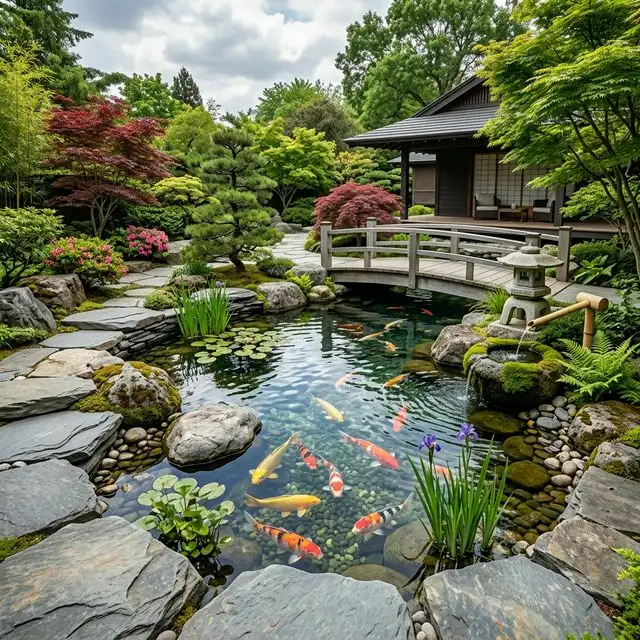
Introducing Koi Carp: Volume, Filtration and Fatal Mistakes is not a general pond topic — it is the care of an animal that can live for over sixty years and can die within days if the system is undersized. Anyone converting an existing garden pond into a koi pond needs to plan volume and filtration first, well before planting or looks.
The Chatelain Method for a koi pond
You observe the existing water volume and available depth; you diagnose whether filtration capacity matches the intended fish stock; you correct by increasing volume or reducing stock, never by adding more chemicals; you prevent disease by quarantining every new fish. With koi, none of these four steps can be skipped.
Volume and depth: the numbers that matter
UK pond suppliers and koi-keeping guides converge on similar figures: keep roughly 1kg of koi per 1,000 litres of water, or as a simpler rule of thumb, 55cm of koi per 1,000 litres once the filtration is properly sized. Depth matters just as much: koi need at least 1.2 metres to overwinter safely and regulate their body temperature through the colder months — shallower ponds put fish at real risk during frost.
| Figure | Minimum | Comfortable |
|---|---|---|
| Stocking density | 1kg koi / 1,000L | Lower density with strong filtration |
| Depth | 1.2m | 1.5m or more |
| Filter turnover | Full pond volume per hour | Higher with heavy stocking |
The filter system: the real build cost
For koi, filtration is not an accessory — it is half the project. A workable setup needs three stages:
- Mechanical pre-filter: traps solid waste before it breaks down and loads the biological stage.
- Biological chamber: media (K1, Hel-X or Japanese matting) hosting bacteria that convert ammonia from the gills into nitrite, then into nitrate. Skip this and the water turns toxic within days.
- UV clarifier: knocks back green water and some pathogens, but does not replace biological filtration.
Rule of thumb from UK koi keepers: filter the whole pond volume at least once an hour — more often with heavy stocking, since koi are prolific waste producers compared with goldfish.
Why koi and lush planting rarely mix
A mature koi digs through substrate and eats water plants methodically. Anyone hoping for water lilies alongside their fish will usually be disappointed. The proven fix is a separate planted lagoon, connected only through the pump: reeds and marginal plants pull nutrients from the circulated water without the fish ever reaching them.
Introducing new koi: the quarantine protocol
A freshly filled pond needs 5 to 7 weeks to build up the bacterial colony (the nitrogen cycle) before it can safely hold fish. Every new koi should then spend at least 4 weeks in a separate quarantine tank with its own filtration before joining the main pond. Skipping this step risks a single sick fish wiping out a collection built up over years, sometimes within days.
Common mistakes with a koi pond
- Stocking too soon, before filtration is proven stable.
- Skipping quarantine for new arrivals.
- Porous substrate (lava rock, gravel) instead of a smooth base — makes waste much harder to remove.
- Undersized filtration, sized for today’s small fish rather than their adult size.
FAQ
How much water does a koi pond need at minimum?
UK guidance points to roughly 1kg of koi per 1,000 litres, with lower stocking densities recommended unless filtration is well oversized.
Why does depth matter so much?
Below about 1.2 metres, koi struggle to find a stable, frost-free layer of water to overwinter safely.
Can koi share a pond with water lilies?
Rarely for long: koi dig and graze on plants. A separate lagoon connected only by the pump keeps both koi and planting healthy.