Exotic Wood Decking vs Composite: Which Should You Choose?
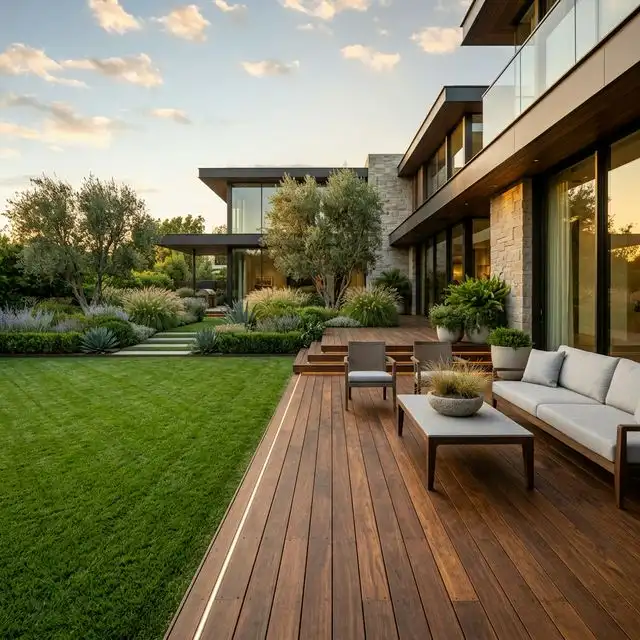
Choosing between hardwood decking and composite comes down to one real trade-off: ipe or balau hardwood gives genuine longevity and a natural grain that composite still can’t quite replicate, but demands regular upkeep — while composite decking asks almost nothing of you once it’s laid, at a higher upfront cost. Here’s an honest breakdown to help you choose without regret.
The Chatelain Method for choosing decking
You observe how the space is actually used (bare feet by a pool, heavy furniture, full sun); you diagnose how much upkeep you’re realistically willing to do each year; you correct by picking the material that matches that answer honestly; you prevent regret by costing maintenance over 10-15 years, not just the purchase price.
Hardwood: real durability, real upkeep
Ipe is the benchmark hardwood decking timber: dense, naturally rot- and insect-resistant, and capable of lasting 30-40 years or more when properly maintained, with some installations reported to reach 75 years. Balau (kayu batu) is a genuine, more affordable alternative — it looks close to ipe at roughly half the price.
The honest cost of that beauty: to keep its warm colour, hardwood decking needs an oil-based UV protectant reapplied regularly, plus occasional cleaning and light sanding to remove scratches or dents. Left untreated, it silvers to a grey patina — attractive to some, a sign of neglect to others.
Composite: engineering, not romance
Composite decking is genuinely low-maintenance: no sanding, staining or sealing, and it resists rot and splintering. Without any upkeep at all, most composite boards remain structurally sound for around a decade — considerably less than a well-maintained hardwood deck’s multi-decade lifespan, which is the real trade-off buyers should weigh, not just the sales pitch of « zero maintenance forever. » Some mould or mildew can appear over time and needs a wash down.
The Chatelain note on heat and feel
Timber decking stays notably cooler underfoot in strong sun than most composite boards, which can heat up considerably — worth factoring in around a pool or a play area used barefoot in summer.
Which suits your garden?
A cool, minimalist composite deck in grey or charcoal tones suits a contemporary garden of clean lines and architectural planting. A weathered hardwood deck, ageing to silvery grey, pairs naturally with a lush, informal garden, and provides a solid base for heavier features like an outdoor fireplace or large citrus planters, provided fire-safety clearances are respected.
FAQ
Does ipe decking really last longer than composite?
Yes, when properly maintained — commonly 30-40 years versus roughly a decade of untreated composite, though composite needs far less ongoing work to get there.
Is balau a good alternative to ipe?
Yes — it looks very similar and typically costs around half as much, making it a genuine budget-conscious hardwood option.
Does composite decking get too hot to walk on barefoot?
Dark composite boards can get significantly hotter in direct summer sun than timber. Lighter colours and shaded areas reduce the effect.