Sanguinello blood orange tree
Citrus × sinensis ‘Sanguinello’ — a late blood orange whose exact nursery identity matters
This is the blood orange for extending the season, but not by copying a Mediterranean date. Trace the plant, protect it from frost and let internal colour and flavour—not the calendar alone—decide harvest.
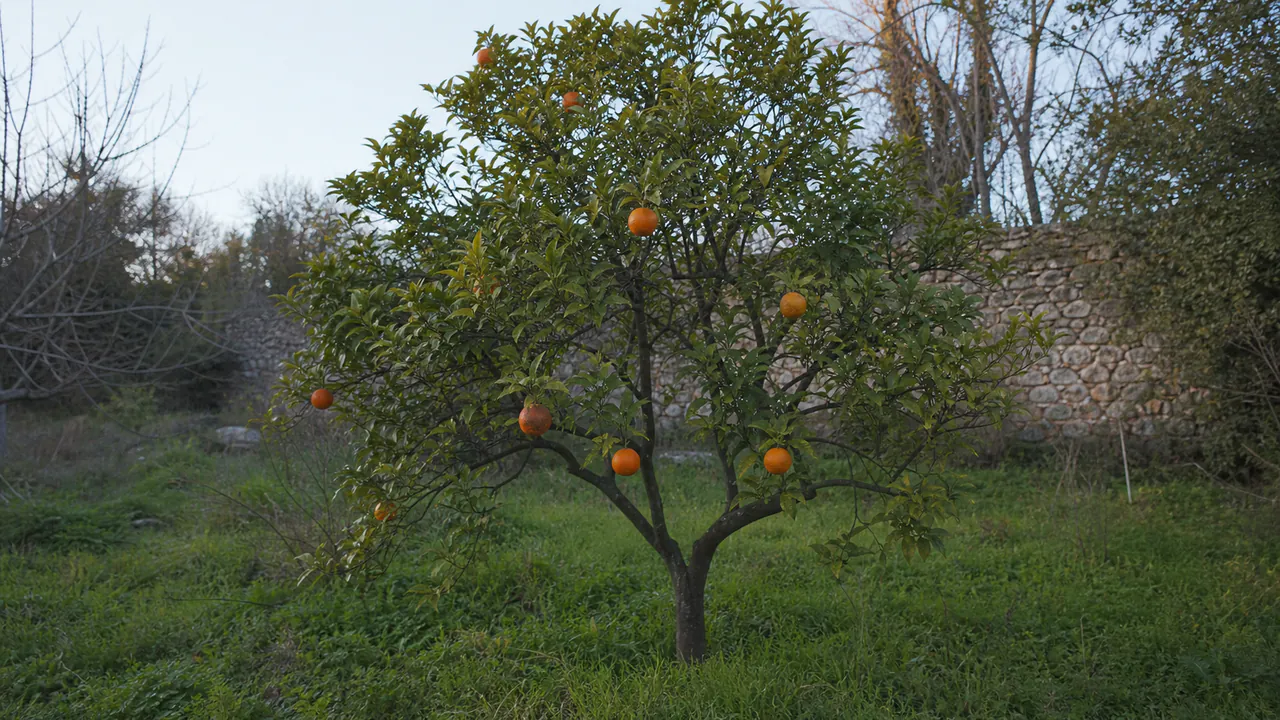
Sanguinello is the cultivarA variety produced through selection or cultivation, distinct from the wild original plant. name retained for this encyclopedia entry, while the documented Spanish selection is commonly written Sanguinelli. The UCR accession CRC 3828 identifies it as a late-midseason limb sport of Doblefina; Italian Sanguinello material should not be assumed to be the same accession without provenance. A traceable tree may carry small-to-medium, sometimes asymmetrical fruit with red-blushed peel, juicy flesh and strong but variable internal pigmentation. Low temperature can induce anthocyanin formation (see the Ruby mechanism detailed with Tarocco), but no universal night threshold or simple temperature-swing rule guarantees colour. Cool ripening conditions are not frost tolerance, especially for fruit held late on the tree.
Compare the cultivar and pigmentation evidence with Tarocco and Moro. The same late-fruit caution appears with Navelate: extending a season also extends exposureThe amount of sunlight a spot in the garden receives (full sun, part shade, shade). to damaging cold.
Reliable checks before you buy
Extend the blood-orange season without promising a date
The attraction is real: Spanish Sanguinelli is documented as a late-midseason blood orange that can hold later than its Doblefina parent and show strong red pigmentation in peel and flesh. In Spain, IVIA gives a January-to-March commercial window for its material; UCR records December to February at Riverside. Those are site records, not British instructions. In a UK greenhouse or conservatory, flowering, fruit set, light and winter temperature may shift the cycle, so cut and taste a sound fruit rather than adopting either calendar.
An Andalusian field study compared Sanguinelli on four rootstocks across several sampling dates. Rootstock and date changed measured bioactive compounds and fruit response, but it identified no universal British winner. Ask which rootstock is beneath the graft and why it suits the actual soil or container water. Keep the distinction clear: a rootstock can alter adaptation and fruit traits, but cannot make late fruit immune to frost.
| Your objective | What to verify | Why — and the trade-off |
|---|---|---|
| Correct cultivar | Sanguinello or Spanish Sanguinelli, clone, rootstock and graft union | Names are used loosely in trade. ⚠️ Do not merge Italian and Spanish material without provenance. |
| Hard water, high pH or heavy soil | Nursery reason for the chosen rootstock | Rootstock affects adaptation and fruit response. ⚠️ A Spanish trial is not a universal UK ranking. |
| Container and limited winter space | Expected vigour and drainage of the graft combination | A movable tree is easier to protect. ⚠️ Restricted roots require closer watering and feeding. |
| Remember | Identity × rootstock × site × harvest stage | Colour and quality belong to a dated combination, not to the name alone. |
Sanguinello through the year: protect a late crop
A mobile container with a bright, cool, frost-free winter position is the dependable British baseline. Open ground is for an exceptionally mild, sheltered site. The fruit-check row is observational and does not prescribe British harvest months.
| Jan | Feb | Mar | Apr | May | Jun | Jul | Aug | Sep | Oct | Nov | Dec | |
|---|---|---|---|---|---|---|---|---|---|---|---|---|
| Plant outdoors (exceptionally mild, sheltered site) | ||||||||||||
| Protect tree and late fruit from frost (under cover / fleece) | ||||||||||||
| Move container outdoors after frost risk | ||||||||||||
| Flowering (main spring flush; conditions may shift it) | ||||||||||||
| Inspect ripening fruit (quality checks, not a fixed harvest period) | ||||||||||||
| Feed with citrus fertiliser |
Colour the fruit without sacrificing it to frost
Identity, fruit and winter position
Record the nursery name, rootstock, shelter and internal colour of dated fruit. One thermometer reading cannot explain a season.
Pale flesh or damaged late fruit
Pale flesh may reflect material, maturity or limited cool exposure; water-soaked or browned fruit after a freeze is a different problem.
Sample before committing the crop
Cut and taste one sound fruit, then weigh colour and sugar-acid balance against the next frost risk rather than waiting by habit.
Make shelter part of the choice
Use a bright, cool and frost-free winter place. If that cannot be provided, a long-hanging blood orange is a poor fit.
Read the symptom, trace the cause, correct and prevent
Sanguinello shares common orange-tree problems. Variable flesh colour is normally a question of identity, environment and maturity, not a disease.
| Observed symptom | Likely cause | Correct | Prevent |
|---|---|---|---|
| Flesh is pale or unevenly streaked | Material, maturity or limited cool exposure — not a disease | Verify the label and taste a sound sample; do not chase a temperature threshold | Buy traceable grafted stock and record conditions |
| Late fruit turns soft, watery or brown after cold | Frost injury while fruit remained on the tree | Remove damaged fruit and protect the remaining sound crop | Use movable shelter or harvest by evidence before a damaging freeze |
| Yellow leaves with green veins | Iron chlorosisYellowing of the foliage caused by poor iron uptake, often linked to chalky soil. linked to high pH, lime or poor root aeration | Correct watering and confirm pH before using chelated iron | Free-draining compost, suitable water and rootstock |
| Cottony masses or shell-like bumps on stems and leaf undersides | Mealybugs or scale insects | Isolate, remove accessible pests and use only a currently authorised product if needed | Inspect before winter shelter and keep air moving |
| Silvery winding mines in young leaves | Citrus leafminer | Remove only badly damaged soft growth; preserve natural enemies | Avoid excess nitrogen that drives repeated soft flushes |
Keep treatment proportionate. Before using any product, check the current HSE authorisation and the exact label. Report a suspected regulated pest through the plant-health authority for your UK nation rather than treating blindly.
Late-season colour, juice and peel
A sound Sanguinello can be eaten fresh or pressed for a richly coloured, aromatic juice. The peel contributes fragrant zest, pectin and gentle bitterness to marmalade and can be candied. Its practical distinction is timing: it can extend the blood-orange season in a suitable climate, but the individual fruit must prove its colour and balance.
What the commercial standard actually says
Sanguinello falls within the blood orange category of Great Britain’s commercial marketing standard for fresh citrus fruit.
- Commercial minima for blood oranges: diameter ≥ 53 mm, juice content ≥ 30% and sugar-to-acid ratio ≥ 6.5:1.
- Red colour: these grade figures do not guarantee internal pigmentation, flavour, ripeness in a home tree or cultivar identity.
No generic tree yield is published here. Rootstock, soil, tree age, crop load, shelter and season all alter it; record the crop from your own tree.
What growers ask most often
Are Sanguinello and Sanguinelli the same?
The names are often mixed in trade, but provenance matters. UCR’s Spanish Sanguinelli accession CRC 3828 is a Doblefina limb sport; Italian Sanguinello material should not be assumed to be identical to it. Ask the nursery for cultivar, clone and rootstock.
Why is the flesh not strongly red?
Anthocyanin formation in blood oranges is cold-inducible, but no single night temperature guarantees colour. Material, maturity, site and rootstock also matter; verify the graft and inspect a sound fruit internally.
Can I grow it in a container in Britain?
Yes, and a mobile container is normally the soundest option. Summer it in a sunny sheltered place, then overwinter it somewhere bright, cool and frost-free rather than in a hot, dry living room.
When should I pick Sanguinello?
Do not copy a Spanish, Italian or Californian date. Cut and taste a sound sample, assess internal colour and sugar-acid balance, and compare those signals with the risk of leaving late fruit through the next cold spell.
Sources and verification
Scientific, horticultural and regulatory check completed on 3 August 2026. Cultivar, rootstock and harvest observations retain their accession, site and trial limits.
- Royal Horticultural Society — orange ‘Sanguinelli’: British profile of Citrus × sinensis, full-light container culture and protected growing context.
- UC Riverside — Sanguinelli blood orange, CRC 3828: accession identity, Spanish origin, tree and fruit characters and site-bound season observations.