Moro blood orange tree
Citrus × sinensis ‘Moro’ — a Sicilian blood-orange cultivar capable of very dark pigmentation
Moro is the intense blood orange: its flesh may turn deep ruby to purplish red and its flavour can be assertive and berry-like. Identity, maturity and low-temperature exposureThe amount of sunlight a spot in the garden receives (full sun, part shade, shade). all shape the result.
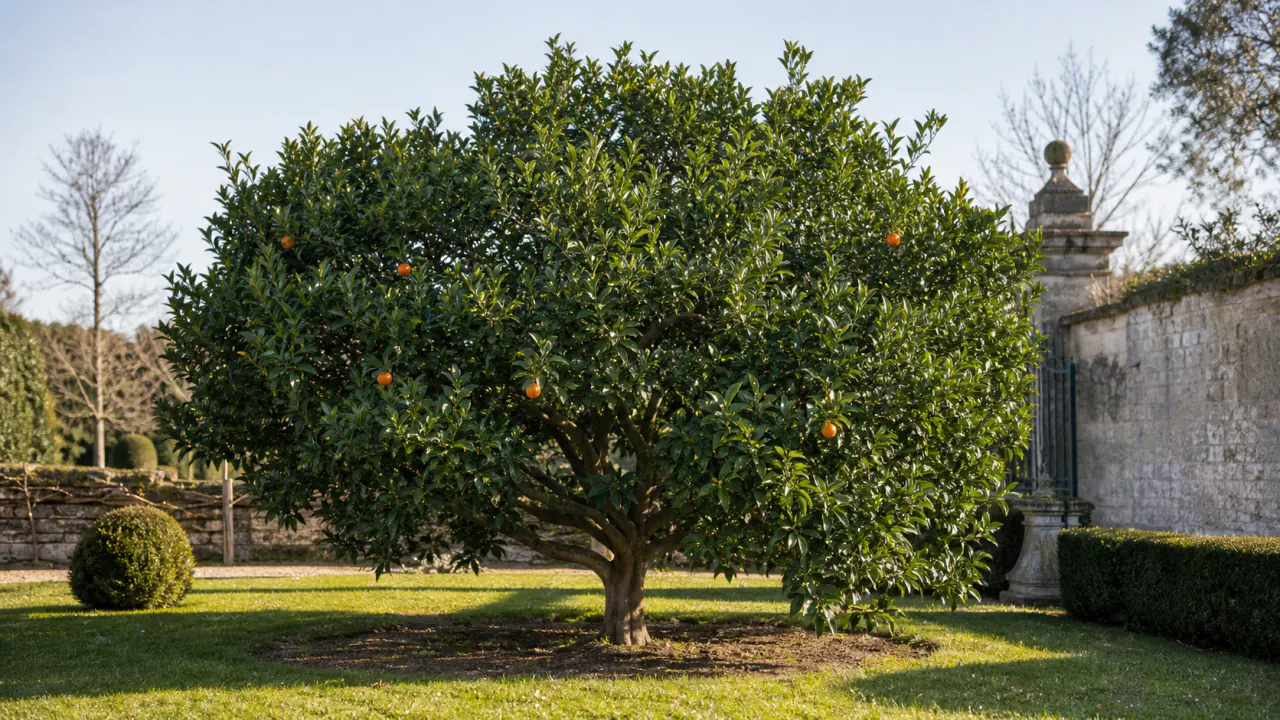
Moro differs from the more balanced Tarocco through its intensity. A traceable plant can develop deep ruby to purplish flesh, sometimes with a burgundy blush on the rind, and a strongly coloured juice. Yet the label does not guarantee almost-black flesh. Its anthocyanins are genetically enabled and cold-inducible during ripening; the result also varies with accession or clone, maturity and site, and the cultivarA variety produced through selection or cultivation, distinct from the wild original plant.-rootstockThe root and base onto which a variety is grafted to give it vigour or resistance. combination. Research does not support one universal night-temperature threshold or a simple day-night amplitude rule, and useful cool exposure must never be confused with frost tolerance.
Compare the more balanced Tarocco, the lycopene-pink Cara Cara, and blond oranges such as Valencia Late and Washington Navel.
Reliable checks before you buy
Dark colour is potential, not a promise
Moro carries the genetic system that allows anthocyanins to accumulate in the fruit. In tested material, low-temperature exposure activated that system and Moro accumulated more pigment than Tarocco in the same experiment. That is a mechanism, not a recipe: it does not prove a universal night threshold, a required temperature swing or guaranteed violet flesh in every garden. A curated UCR accession describes a moderate, spreading tree with medium round fruit, sometimes burgundy-blushed peel and flesh capable of becoming very dark red, but its Californian season and performance are not British norms.
The blood-orange pigmentation mechanism and rootstock trials set complementary boundaries. In one Spanish orchard, fruit quality, sugars and anthocyanins changed with the Moro-rootstock combination and across three harvest dates. The practical choice is therefore a traceable graft, a rootstock explained for the actual soil, water and container, and a harvest judged by internal colour and flavour rather than an imported calendar or rind colour alone.
| Your objective | What to verify | Why — and the trade-off |
|---|---|---|
| A genuine, grafted Moro | Cultivar name, rootstock and graft union | Traceability separates Moro from a generic blood orange. ⚠️ A plant passport alone does not guarantee flesh colour. |
| Hard water, high pH or poor drainage | Why the nursery chose that rootstock | Root-zone fit affects chlorosisYellowing of the foliage caused by poor iron uptake, often linked to chalky soil., vigour and fruit response. ⚠️ No one rootstock suits every British container. |
| Container and limited winter space | Expected vigour of the graft combination | Rootstock can alter growth and fruit traits. ⚠️ It does not make the scion frost-hardy. |
| Remember | Cultivar × rootstock × site × harvest date | Colour and sugars belong to a dated combination; avoid universal rankings. |
Moro through the year: open ground or container
Citrus is not reliably hardy outdoors in Britain. A mobile container with a bright, cool, frost-free winter position is the dependable baseline; open ground is reserved for an exceptionally mild, sheltered site. The fruit-check row is observational and does not prescribe British harvest months.
| Jan | Feb | Mar | Apr | May | Jun | Jul | Aug | Sep | Oct | Nov | Dec | |
|---|---|---|---|---|---|---|---|---|---|---|---|---|
| Plant outdoors (exceptionally mild, sheltered site) | ||||||||||||
| Protect from cold (container under cover / outdoor fleece) | ||||||||||||
| Move container outdoors | ||||||||||||
| Flowering (spring, fragrant) | ||||||||||||
| Inspect ripening fruit (quality checks, not a fixed harvest period) | ||||||||||||
| Feed with citrus fertiliser |
How to pursue colour without inventing a threshold
The fruit, not one thermometer reading
Record the winter position, low-temperature exposure and internal colour of dated fruit; a continuous biological response cannot be reduced to one cold night.
Identity, maturity and roots
If colour disappoints, check the named cultivar, harvest stage and rootstock-site match before blaming Moro itself.
Judge flavour as well as pigment
Leave sound fruit to mature, then taste a sample; neither rind colour nor an imported harvest month is a complete ripeness test.
Protect without overheating
Keep the tree frost-free, but favour a bright, cool shelter over a centrally heated room that is warm and dry.
Read the symptom, trace the cause, correct and prevent
Moro shares the usual orange-tree problems. Pale flesh is different: it is normally a response to identity, conditions and maturity, not a disease.
| Observed symptom | Likely cause | Correct | Prevent |
|---|---|---|---|
| Flesh is pale or only lightly streaked | Identity, limited cold exposure or harvest stage — not a disease | Check the label and taste sound fruit at maturity; avoid an overheated winter position | Buy traceable material and record conditions rather than chasing one threshold |
| A flavour you find too sharp or bitter | Cultivar character, maturity or growing conditions; no single cause is proven | Taste a dated fruit and compare the next sound fruit later | Harvest by several signals, not rind colour alone |
| Yellow leaves with green veins | Iron chlorosis from high pH, lime or poor root aeration | Correct watering and confirm pH before using chelated iron | Free-draining compost, suitable water and rootstock |
| Cottony masses or shell-like bumps on stems and leaf undersides | Mealybugs or scale insects | Isolate, remove accessible pests and use only a currently authorised product if needed | Inspect before bringing the plant under cover; keep air moving |
| Sticky black coating on foliage | Sooty mould growing on honeydew from scale insects or aphids | Control the honeydew-producing insect first | Check early for aphids, mealybugs and scale insects |
Keep treatments proportionate and follow the authorised label. For a plant bought online, check the applicable UK plant-passport requirements; report a suspected regulated pest through the current authority for your nation.
Deeply coloured juice with an assertive profile
Moro can give striking deep-red juice and aromatic fresh segments. Its fruit is also useful for zest, marmalade and candied peel. Flavour descriptions often mention berry-like notes and a more assertive edge than Tarocco, but taste and colour still vary with the individual fruit and growing conditions.
What the commercial standard actually says
Moro falls within the blood orange category of Great Britain’s commercial marketing standard for fresh citrus fruit.
- Commercial minima for blood oranges: diameter ≥ 53 mm, juice content ≥ 30% and sugar-to-acid ratio ≥ 6.5:1.
- Dark flesh: these grade figures do not guarantee pigmentation, flavour or cultivar identity.
No generic tree yield is published here: rootstock, soil, tree age, crop load and climate all alter it. Record the output of your own tree.
What growers ask most often
Is Moro always darker than Tarocco?
Moro has very strong pigmentation potential and produced more anthocyanin than Tarocco in a controlled experiment. That does not guarantee the darkest flesh in every fruit: identity, maturity, site and temperature exposure still matter.
Why is my Moro not deep red inside?
First verify that the graft is traceably labelled Moro. Anthocyanin production is cold-inducible during ripening, but no single night temperature guarantees it; maturity, rootstock and site also affect the result.
Can I grow Moro in a container in Britain?
Yes. A mobile container is normally the soundest choice: summer it outdoors, then overwinter it in a bright, cool, frost-free place. A heated living room is often too warm and dry.
When should I pick Moro?
Do not copy a Sicilian or Californian date. Cut and taste a sound sample, assess internal colour and sugar-acid balance, and keep the harvest decision tied to your tree and season.
Sources and verification
Scientific and regulatory check completed on 3 August 2026. Exact-cultivar, rootstock and harvest observations retain their accession, site and trial limits.
- The Plant Cell — Ruby regulation in blood oranges: primary evidence that anthocyanin production is fruit-specific and cold-inducible in tested Moro and Tarocco material.
- UK Government — Marketing standard for citrus fruit: commercial minima for blood oranges in Great Britain.