Olive tree
Olea europaea
A Mediterranean tree that becomes drought-tolerant after establishment but remains far less tolerant of stagnant water. In a container, free drainage, root-ball checks and a bright winter position matter more than a rigid watering calendar.
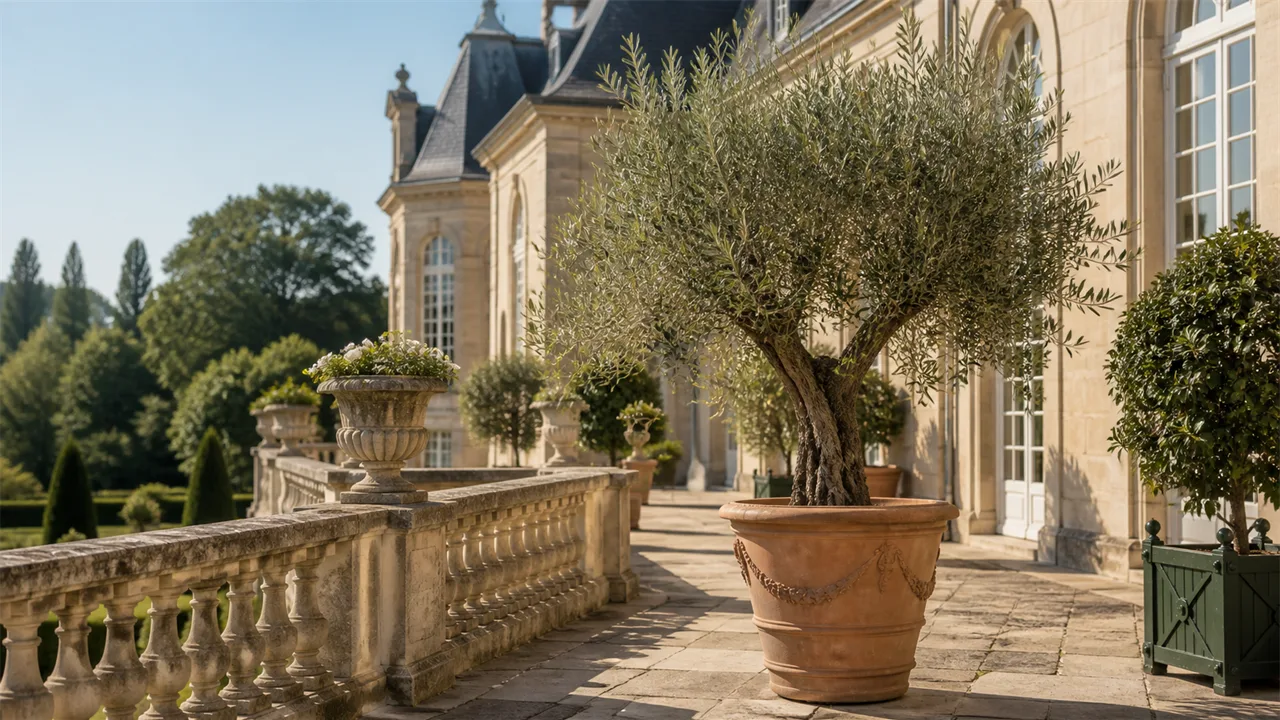
An olive tree needs full sun, a sheltered position and a root zoneThe area of soil occupied by a plant's roots, where water and nutrients matter most. that drains freely. The right watering decision changes with establishment, rainfall, soil and pot size. Grey-green leaves can hide a mistake for some time, so check the compost or soil below the surface before adding either water or feed.
To compare a dry-site plant with one that needs more moisture, read the English lavender profile and the hydrangea profile, then browse the complete plant encyclopedia.
Reliable facts before choosing an olive tree
Ground or container: which is the durable choice?
The RHS recommends planting outdoors only in a warm, sunny and sheltered site with very free drainage. Spring planting gives roots a full growing season before winter. In a cold, exposed or heavy-soil garden, use a substantial container that can be moved or protected rather than treating the tree as fully hardy.
Begin with a pot around 30–35 cm for a young specimen, then move up gradually. The container must have open drainage holes and stand clear of the paving. A decorative cachepot that holds runoff is unsuitable. Repot when roots circle densely or water no longer moves evenly through the compost.
When should an olive tree be planted, watered, fed and pruned?
This calendar is for a UK garden. Use frost risk, actual growth and soil moisture rather than the printed month alone.
| Jan | Feb | Mar | Apr | May | Jun | Jul | Aug | Sep | Oct | Nov | Dec | ||
|---|---|---|---|---|---|---|---|---|---|---|---|---|---|
| Plant or repot | |||||||||||||
| Check water need | |||||||||||||
| Feed containers | |||||||||||||
| Prune lightly | |||||||||||||
| Protect pot and roots |
How much should an olive tree be watered after rainfall?
For a newly planted tree in the ground, soak the root ball, water the whole rooting zone slowly and then check below the surface twice a week during dry weather. Water again when that zone is beginning to dry, not simply because seven days have passed. Universeity of California guidance uses a deep watering every 7–10 days during the first two or three years as a Californian establishment comparison. It is not a UK timetable: subtract effective rain, shorten the interval only on a free-drainingDescribes soil that lets water flow away easily, without pooling around the roots. hot site and lengthen it in cool or moisture-retentive soil.
For an established tree in the ground, survival and fruit production are different targets. An ornamental tree may need little supplementary water once rooted, whereas a crop requires steadier moisture through growth and fruit development. Check the soil before a prolonged dry spell and water deeply only when the active root zone is drying. Stop if water ponds, runs off or the soil remains wet.
For a container tree, the RHS advises keeping compost moist through the growing season. Test 3–5 cm below the surface and lift or tilt the pot to learn its dry weight. When that layer is dry and the pot feels lighter, water slowly until a little drains out, then empty the saucer. Check daily in hot wind without assuming daily watering. In a bright, cool winter position, water sparingly but never let the entire root ball turn dust-dry.
Which NPK should an olive tree receive, and when?
A healthy olive tree is not improved by automatic heavy feeding. First correct drainage, root restriction and watering. Pale leaves can reflect cold or waterlogged roots as well as nutrient shortage. Soil testing is the safest basis for a productive tree.
UC Agriculture and Natural Resources gives an exact, documented example of a balanced NPKThe three main nutrients in a fertiliser: nitrogen, phosphorus and potassium. 10-10-10 in early spring and warns against excessive nitrogen. This is Californian guidance, so its dose and schedule must not be copied into a UK garden. The figure is useful only as a transparent ratio reference where an exact NPK was requested.
For UK container growing, the RHS recommends a balanced liquid feed monthly during the growing season. Choose a locally labelled product, follow its container dose on already moist compost and stop late enough for growth to firm before winter. If the tree was repotted into fresh enriched compost, delay additional feed rather than stacking two nutrient sources.
Four checks before watering or feeding an olive tree
Read the root ball
Check moisture below the surface, pot weight, recent rainfall and drainage before interpreting the leaves.
Separate drought from saturation
Dry soil with curled leaves suggests water stress; yellowing over wet soil requires air and drainage first.
Treat the whole root zone
Water slowly and thoroughly if needed, or pause watering and reopen drainage where compost remains saturated.
Keep a simple log
Write down rain, the amount applied, soil condition and the response seven days later. The pattern becomes specific to your tree.
Which olive suits oil, table fruit or an ornamental position?
Pollination and crop reliability vary with cultivarA variety produced through selection or cultivation, distinct from the wild original plant. and local summer warmth. Confirm a compatible pollinator and overlapping bloom with the supplying nursery if fruit matters.
| Cultivar | Useful trait | Check before buying |
|---|---|---|
| Arbequina | Early oil cultivar, listed as self-fruitful by UC Marin. | A container restricts both eventual size and crop. |
| Picholine du Languedoc | French dual-purpose cultivar for table use and oil. | Allow for its vigour and local ripening conditions. |
| Leccino | Italian oil cultivar with relative cold tolerance. | UC Marin lists ‘Maurino’ as a pollinator. |
| Manzanillo | Table olive; UC Marin lists ‘Arbequina’ as a pollinator. | Bloom overlap and sufficient summer heat still matter. |
| Swan Hill | Non-fruiting ornamental selection. | Choose it for landscape effect, not a harvest. |
Fruit fly, peacock spot, Verticillium or a watering error?
Symptoms overlap. Compare leaves, fruit, branches and soil moisture before acting, and use only controls authorised for the crop and situation.
| What you see | Possible cause | Favouring conditions | First action |
|---|---|---|---|
| Punctured fruit, softened flesh, larval tunnel or premature fruit drop. | Olive fruit fly Bactrocera oleae | Fruit is present during adult activity. | Collect fallen and leftover olives, inspect sound fruit and seek the current local monitoring advice. |
| Round dark leaf spots, sometimes with a yellow halo, followed by leaf fall. | Peacock spot Venturia oleaginea | Mild wet conditions and a dense canopy. | Improve airflow, keep foliage dry and have a spreading problem confirmed. |
| Grey or pale discoloration, especially beneath leaves, with gradual defoliation. | Cercospora leaf spot Pseudocercospora cladosporioides | Persistent leaf wetness and retained affected debris. | Remove heavily affected fallen leaves, thin congested growth and obtain a diagnosis. |
| Rapid one-sided wilt or branch dieback while soil is not dry. | Verticillium wilt Verticillium dahliae | Contaminated soil or movement of infected soil and plants. | Stop moving soil or plants and request professional confirmation before replanting. |
| Sticky leaves, black sooty coating and small fixed scales on stems or leaf backs. | Scale insects and sooty mould | Warm shelter, stressed plants and unchecked inner growth. | Isolate a potted tree, remove light infestations physically and correct the growing conditions. |
| Yellowing over saturated soil, or unusual marginal scorch and rapid unexplained decline. | Root stress, drought or a regulated disease | Blocked drainage, drought or frost; Xylella fastidiosa symptoms are not specific. | Check the root zone immediately and do not move the plant. Report a genuine suspicion in Great Britain through TreeAlert or the relevant plant-health authority; in Northern Ireland use TreeCheck or contact DAERA. |
How should an olive tree be pruned and protected?
Prune lightly in early spring after the worst frost risk: remove dead wood, crossing stems and unwanted suckers while retaining an open crown. Severe pruning produces vigorous water shoots and cannot repair poor roots. Clean tools before moving from a suspect tree to a healthy one.
Before hard weather, stand the pot on feet in a sheltered position and insulate the root ball. In colder districts, move it to a bright, cool, frost-free place. Reduce water but do not let the whole root ball dry. Wrapping foliage alone will not protect roots held in frozen, wet compost.
The practices that most often weaken an olive tree
Giving a splash every day wets the surface without watering the root ball properly.
Leaving runoff in a saucer removes oxygen from the roots.
Copying an orchard dose into a pot risks salt damage and soft late growth.
Calling every pale leaf a deficiency overlooks cold, saturation and disease.
Promising fruit from any single tree ignores cultivar, pollination and summer heat.
Frequently asked questions about olive trees
How often should an olive tree be watered?
Use no fixed frequency. During establishment, inspect below the surface and water the full root zone when it begins to dry, allowing for rain. An established tree needs far less for survival; a pot is watered when the top 3–5 cm are dry and excess water can escape.
Which NPK feed is suitable for an olive tree?
UC ANR documents balanced NPK 10-10-10 in early spring, but this is a Californian ratio reference, not a UK dose. For a UK container, the RHS advises a balanced liquid feed monthly in the growing season. Follow a local label and avoid excess nitrogen.
Why is my olive tree dropping leaves?
Check the root ball first. Drought, saturated compost, frost and a sudden move can all cause leaf drop. Round spots, grey growth beneath leaves, sticky deposits or branch dieback need a closer plant-health diagnosis.
Can an olive tree stay outdoors in winter?
A mature tree in dry, sheltered ground is safer than a young tree or a pot. RHS lists the species as H4, but severe frost can damage it and container roots are exposed. Provide a sheltered, bright winter position in colder districts.
Are two olive trees needed for fruit?
It depends on the cultivar. Some are described as self-fruitful; others need or benefit from a compatible pollinator. Flowering must overlap and the season must still be warm enough for fruit development.
Horticultural, cultivation and plant-health sources
- Kew Science — Olea europaea: taxonomy, native range and botanical size.
- Royal Horticultural Society — common olive: size, site, hardiness and plant-health risks.
- Royal Horticultural Society — how to grow olives: UK planting, container watering, feeding, pruning and winter protection.
- UC Agriculture and Natural Resources — olive trees: Californian establishment-water and NPK 10-10-10 comparison.
- UC Marin Master Gardeners — olive: cultivar, pollination, watering and disease comparisons.
- UC Napa Master Gardeners — olives: distinction between establishment and mature-tree watering.
- Forest Research — Xylella fastidiosa: UK status, non-specific symptoms and current reporting routes for Great Britain and Northern Ireland.
- International Olive Council — World Olive Catalogue: cultivar diversity and production-system suitability.