Valencia Late orange tree
Citrus × sinensis ‘Valencia Late’ — the late blonde juice orange
A very late juice orange whose crop can overlap the next blossom in a citrus climate. Judge it by litres extracted from a weighed fruit sample, not by the diameter of one orange.
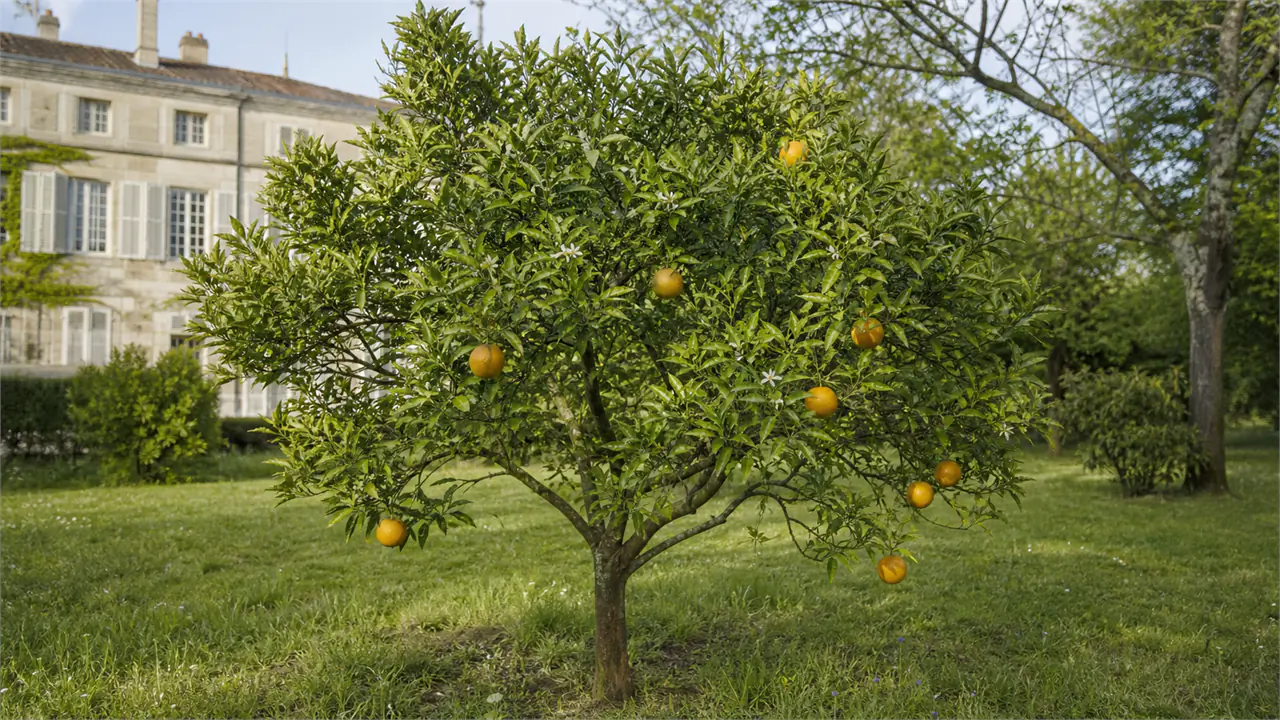
Where Washington Navel is chiefly a dessert orange, Valencia Late is selected for juice. This old late sweet orange is valued because it can give plenty of well-balanced juice with less risk of rapid Navel-type delayed bitterness. That is a relative advantage, not a storage guarantee: chill or drink freshly pressed juice promptly. Compare trees by juice yield from a weighed sample, not fruit size. Its other defining feature is its very late season: in a suitable citrus climate, mature fruit may overlap the following bloom.
It complements Washington Navel: one is chosen primarily for eating, the other for pressing. Keep it distinct from blood oranges such as Tarocco and Moro.
Reliable checks before you buy
The orange measured in litres
Valencia Late changes the comparison. It is not a show fruit judged by calibre but a juice orange: thinish rind, very juicy flesh and a lower risk of rapid delayed bitterness than with Navels make it a standard choice for pressing. Test the claim on your own tree: weigh a representative batch, press it with the same machine and record litres per kilogram. Repeat at the next picking instead of converting one overseas sample into a universal yield. A variable number of seeds is possible and matters less in fruit destined for the press.
Its late timing can extend the orange season, but it also lengthens exposureThe amount of sunlight a spot in the garden receives (full sun, part shade, shade). to cold. In Britain, provide bright, frost-free winter quarters and judge maturity by flavour rather than rind colour alone. The crop may meet the next blossom under suitable protected conditions; that striking overlap is not a reason to leave vulnerable fruit through a frost warning.
| Your conditions or aim | Rootstock point to check | Reason — and limit |
|---|---|---|
| Carrizo or C-35 offered | Confirm the nursery label | They are recorded on the UCR accession. ⚠️ That is not a blanket recommendation for British soil or containers. |
| High-pH or saline conditions | FA5 only after professional matching | Ask what the sold combination tolerates in your water and root zoneThe area of soil occupied by a plant's roots, where water and nutrients matter most.. ⚠️ It is not universal. |
| Compact plant or relative cold tolerance | Trifoliate or Swingle only on a matched, free-draining site | These names may affect vigour. ⚠️ They dislike some alkaline conditions and do not protect exposed fruit. |
| Key point | Exact, traceable combination | Confirm cultivarA variety produced through selection or cultivation, distinct from the wild original plant. and rootstock with the nursery, then plan winter shelter before buying. |
Valencia Late through the year: protect the long crop
The British rhythm is container-led. Keep the crop bright and frost-free through winter, acclimatise the tree outdoors after frost risk, and treat the marked harvest period as an observation window, not a promised date.
| Jan | Feb | Mar | Apr | May | Jun | Jul | Aug | Sep | Oct | Nov | Dec | |
|---|---|---|---|---|---|---|---|---|---|---|---|---|
| Repot or renew the surface compost | ||||||||||||
| Keep fruit frost-free in bright winter quarters | ||||||||||||
| Acclimatise the container outdoors | ||||||||||||
| Main flowering period; crop may overlap | ||||||||||||
| Assess protected fruit; harvest when flavour is ready | ||||||||||||
| Feed with a citrus fertiliser |
Measure the juice, protect the time it needs
Weigh a representative batch
Select sound fruit across the crop, weigh the batch and note the date, colour and flavour before pressing.
Separate low juice from small fruit
Measure litres per kilogram with the same press: diameter alone does not reveal how much juice the crop provides.
Support roots and water evenly
Correct drainage and irregular watering before adding feed, and keep the rootstock matched to the actual root zone.
Secure winter space before the crop
Move the container before frost and keep fruit in bright quarters; harvest sound ripe fruit ahead of damaging cold.
Read the sign, trace the cause, correct, prevent
Valencia Late shares the usual orange-tree problems. Its distinguishing management issue is a very late crop that remains exposed while the next growth cycle begins.
| Observed sign | Likely cause | Correct | Prevent |
|---|---|---|---|
| Damaged rind or flesh after a cold spell | Late fruit exposed to frost or cold wind | Harvest sound fruit and move the tree to protected quarters | Act on forecasts before fruit is damaged |
| Yellow leaves with greener veins | Iron chlorosisYellowing of the foliage caused by poor iron uptake, often linked to chalky soil. linked to high pH, hard water or poor drainage | Check watering and root zone before using an appropriate iron chelate | Use free-draining compost and suitable water |
| Cottony masses or fixed scales on stems and leaf undersides | Mealybugs or scale insects | Isolate, remove by hand and use a currently authorised treatment only if needed | Inspect before winter quarters and keep air moving |
| Black sticky coating on the foliage | Sooty mould growing on honeydew from scale insects or aphids | Control the honeydew-producing insect first | Monitor scale insects and aphids early |
| Silvery winding mines in young leaves | Citrus leaf miner | Remove only badly damaged soft growth and conserve beneficial insects | Avoid excess nitrogen that drives repeated soft flushes |
Keep treatment proportionate: diagnose first, ventilate winter quarters and avoid excess feeding. For a regulated plant-health concern, follow current official guidance.
A juice orange, with a freshness boundary
Valencia Late is chosen first for juice. Its juicy flesh and comparatively low risk of rapid Navel-type delayed bitterness make it useful for pressing, but the flavour still changes after extraction: drink or chill it promptly and never treat cultivar choice as a food-safety guarantee. The rind can also supply zest and marmalade. Fresh eating is possible, but juice yield is the more revealing measure of this cultivar.
What the commercial standard says
Valencia Late falls under “other varieties” of oranges, not the Navels group, in the official citrus marketing framework.
- Commercial minima for other oranges: 53 mm diameter, at least 35% juice and a 6.5:1 sugar-to-acid ratio.
- What to measure at home: weigh a representative batch, press it consistently and record the litres obtained per kilogram.
No generic tree yield is given. Rootstock, root volume, light, age, crop load, water and harvest date all change the result; compare only your own repeated samples.
What gardeners ask most often
Why is Valencia Late called a juice orange?
Because its very juicy fruit and lower risk of rapid Navel-type delayed bitterness suit pressing. Measure your own batch in litres per kilogram, and still drink or chill the juice promptly.
Why can fruit and flowers appear together?
The crop is very late. In a suitable citrus climate or protected setting, mature fruit can remain while the next main bloom opens; the overlap is normal, but it does not protect fruit from frost.
Does Valencia Late have seeds?
Seed numbers vary. UCR’s dated samples differ, so do not promise a fixed count; for fruit destined for pressing, a few seeds are usually a minor inconvenience.
How does it differ from Washington Navel?
Washington Navel is chiefly a seedless dessert orange whose juice may become bitter on standing. Valencia Late is much later and selected primarily for juice, but fresh juice should still be handled promptly.
Sources and verification
Last evidence check: 2026-08-01. Exact-cultivar observations, British cultivation and commercial minima are kept in separate evidence lanes.
- UC Riverside — Valencia Late orange, CRC 4077: exact accession, recorded rootstocks and site-dated Citrus × sinensis fruit-quality observations.
- UK Government — marketing standard for citrus fruit: orange size and “other varieties” commercial maturity minima.