Femminello Lemon (group)
Citrus × limon ‘Femminello’ group — the great family of Sicilian lemons
Not a lemon tree, but a whole family. Understanding the Femminello group — everbearing, aromatic, split into many clones — beats seeking a single figure that does not exist.
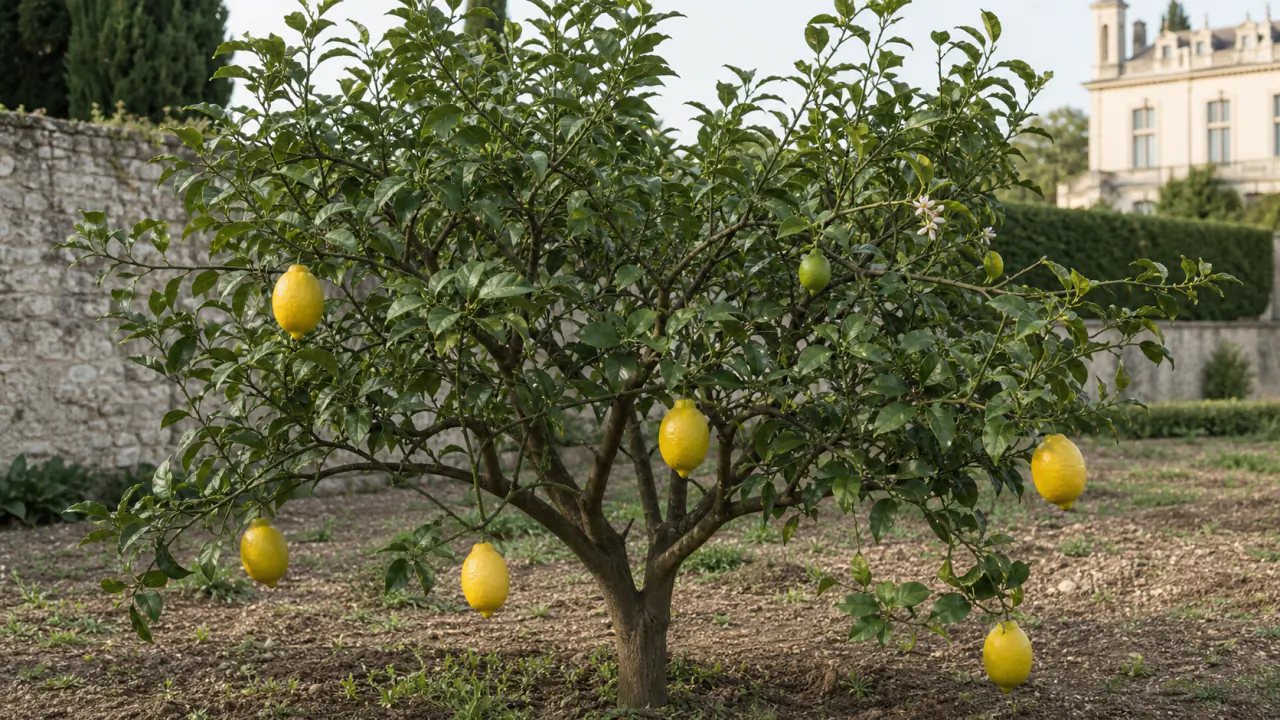
The « Femminello » is not one lemon tree: it is a large Italian cultivarA variety produced through selection or cultivation, distinct from the wild original plant. group, mainly southern and Sicilian, gathering many clones (Femminello comune, siracusano and many others). It is the family of the classic Sicilian lemons: often productive and everbearing, aromatic, built for juice and zest. Trying to assign it a single figure — a size, a date, a yield — would make no sense: everything varies by clone. The right approach is to understand the group, then choose an identified, genuinely marketed clone.
To place among the encyclopedia’s other lemon trees: the Spanish Fino / Primofiori and Verna, the everbearing Lunario « four seasons », the sweet Meyer. See also the Citrus & Orchard section.
The reliable facts (at group level)
Understand the group, then choose a clone
The useful decision is not « plant a Femminello » but which one. The group stands out for its everbearing habit: well managed, its clones can give several harvests a year, including the famous forced summer crop (the « verdello ») in its Sicilian heartland. But size, calendar and vigour differ from one clone to another: we do not invent a uniform fact-sheet for the whole family.
When buying, ask for the precise clone (Femminello comune, siracusano or other) and its real calendar. The rootstock is then chosen according to the soil, as for any lemon tree — the exact combination is to be confirmed with the nursery.
| Depending on your situation | Rootstock(s) | Why — and the trade-off |
|---|---|---|
| Productivity, warm soil | Volkameriana, Citrus macrophylla | Vigour and yield. ⚠️ fruit sometimes less concentrated. |
| Pot, relative cold | Trifoliate, Flying Dragon | Dwarfing and quality. ⚠️ sensitive to active lime. |
| Calcareous or saline soil | Forner-Alcaide 5 (FA5), C35 | ChlorosisYellowing of the foliage caused by poor iron uptake, often linked to chalky soil. tolerance. ⚠️ FA5 not « universal ». |
| To keep in mind | Confirm by clone | Behaviour depends on the clone: validate the pairing with the nursery. |
The Femminello’s rhythm: everbearing, in a tub or mild climate
Like lemon trees, it lives in a tub outside mild climates, with bright frost-free overwintering. Its everbearing habit spreads flowering and harvests: the precise calendar depends on the clone and management.
| Jan | Feb | Mar | Apr | May | Jun | Jul | Aug | Sep | Oct | Nov | Dec | |
|---|---|---|---|---|---|---|---|---|---|---|---|---|
| Plant / repot (settled warmth) | ||||||||||||
| Protect from cold (pot in / fleece) | ||||||||||||
| Move the pot out (mild nights) | ||||||||||||
| Flowerings (everbearing) | ||||||||||||
| Harvests (several waves by clone) | ||||||||||||
| Feed (citrus, in growth) |
A well-identified, well-managed Femminello
Which clone, exactly
First of all, identify the clone you grow: it is what sets size, calendar and everbearing habit, not the generic name « Femminello ».
Irregular harvests
Disappointing everbearing often comes from a lack of heat, water or nutrition, or from unsuitable management — more than from a disease.
Nutrition and consistency
An everbearing lemon is hungry: attend to regular feeding and watering in growth to sustain several waves of fruit.
Careful overwintering
Cold-sensitive (F2), it needs bright frost-free overwintering in a non-mild climate, like all lemon trees.
Read the sign, trace the cause, correct, prevent
The Femminello shares the troubles of tubbed lemon trees; its everbearing habit makes it all the more sensitive to cultural jolts.
| Sign observed | Probable cause | Correct | Prevent |
|---|---|---|---|
| Few flowers or fruit despite everbearing | Insufficient heat, water or nutrition; unsuitable management | Regularise watering and feeding; review the aspect | Regular follow-up in growth |
| Yellow leaves with veins staying green | Iron chlorosis (high pH, lime, waterlogging) | Iron chelate; review watering; suitable rootstock | Free-draining compost, low-lime water |
| Cottony masses or shells on stems and undersides | Scale insects (mealybugs or armoured scale) | Clean off, white oil or soft soap, isolate | Ventilate overwintering, inspect when bringing in |
| Sticky black deposit on the foliage | Sooty mould, on the honeydew of scale or aphids | Treat the honeydew-producing insect first | Watch scale and aphids early |
| Winding silvery galleries on young leaves | Citrus leaf miner | Remove badly affected shoots; let beneficials act | Avoid nitrogen excess that multiplies young leaves |
Stay sparing with treatments: clean foliage, bright frost-free overwintering, balanced nutrition. If a notifiable citrus disease is suspected, follow the official instructions in force.
The versatile Sicilian lemon
An aromatic lemon par excellence, the Femminello shines above all through its juice and its zest, foundations of Mediterranean cooking. Its everbearing habit makes it a regular supplier, and its peel lends itself to salting (preserved lemons), to marmalade and to drying. As with the other lemon trees, it is not eaten raw: its value is to sharpen and flavour. The detail of the aromas depends on the clone you grow.
What the standards say (lemon group)
The Femminello belongs to the lemon group of the European standard.
- Commercial minimum (lemons): diameter ≥ 45 mm, juice content ≥ 20 %, colouring codes 0 to 7 (green « verdello » is allowed).
- Per clone: exact size, calendar and yield vary by clone — to be established case by case, never generalised.
No generic yield can be published: it depends on the clone, the rootstock, the soil, the age and the climate. Measure your own crop.
What people most often ask
Is the Femminello a cultivar?
No: it is a large Sicilian cultivar group gathering many clones (comune, siracusano…). You must choose a precise clone, not « a Femminello » in general.
What is the verdello?
It is the summer crop of still-green lemons, obtained thanks to the everbearing habit and management techniques (forcing) in the group’s Sicilian heartland.
What size and calendar to expect?
It depends on the clone: there is no single figure for the whole family. Ask for the data of the marketed clone.
Can it be grown in a pot?
Yes, like lemon trees: cold-sensitive (F2), it needs a tub and bright frost-free overwintering outside a mild climate.
Sources and control
Last scientific check: 2026-07-18. The clones available and their calendars remain to be identified.
- UC Riverside — Citrus Variety Collection: lemons of the Femminello group (Citrus × limon).
- Lemon — Wikipedia (EN): lemon groups, everbearing habit and verdello.