Dancy tangerine
Citrus reticulata ‘Dancy’ — the historic, richly flavoured Florida tangerine
An old tangerine chosen for deep colour and rich, sprightly flavour — not for seedlessness.
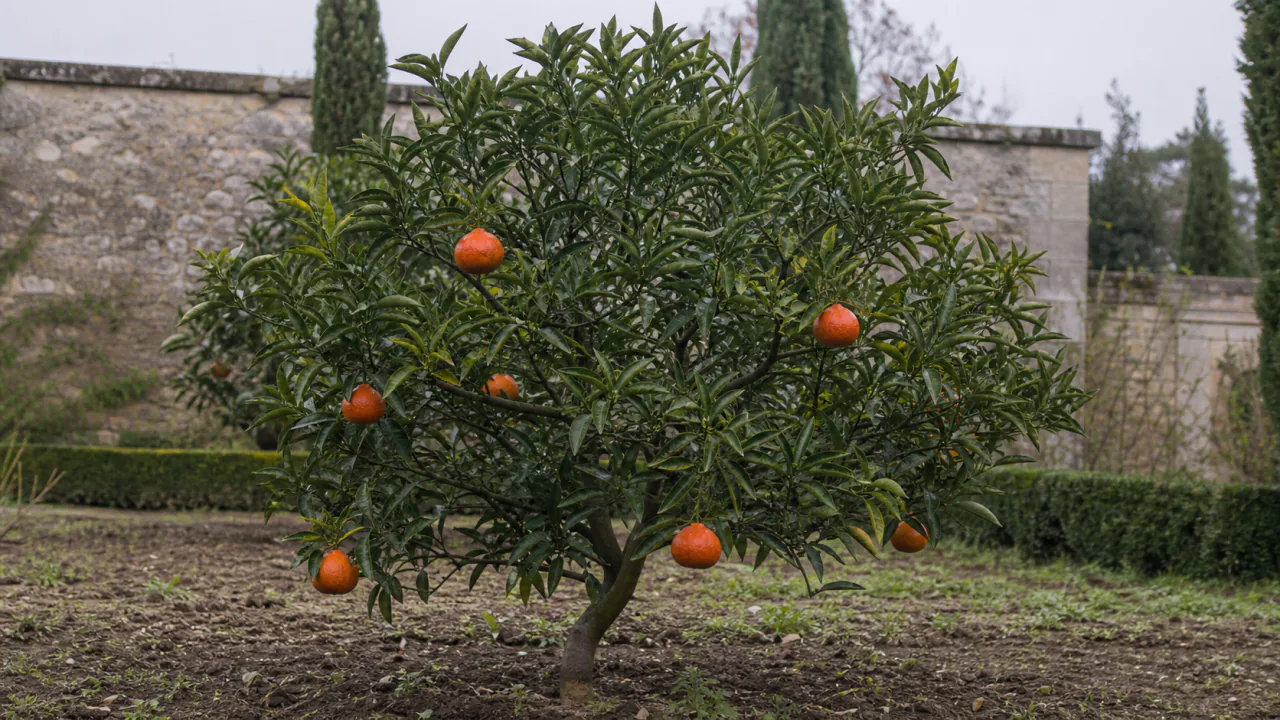
Dancy is a historic Florida tangerine selected from a seedling in 1867. Its medium fruit develops a deep reddish-orange colour, thin easy-peel rind and rich, lively flavour. It is self-compatible and normally contains seeds — Florida extension records roughly 6–20 per fruit — so seedlessness is not the promise. Dancy also became a parent of important tangelos and mandarins.
Compare aromatic, seedy Willowleaf with later Nadorcott and Tango. Dancy puts flavour before convenience.
Reliable points to check before buying
Rich flavour first, seeds accepted
Dancy is for growers who value flavour over seedless convenience. Its thin, loose peel is easily damaged, so commercial fruit is clipped rather than pulled to avoid peel plugging. Pick promptly at maturity because fruit loses quality and the rind puffs when held too long. The tree tends to alternate bearing: heavy crops of small fruit may be followed by light crops of larger fruit.
Thin a heavy crop and match the rootstock to the site; confirm the graft combination with the nursery.
Dancy through the year: in the ground or in a pot
Plant outdoors in mild climates; use a container elsewhere. The source window is December–January in Florida, not a universal calendar.
| Jan | Feb | Mar | Apr | May | Jun | Jul | Aug | Sep | Oct | Nov | Dec | |
|---|---|---|---|---|---|---|---|---|---|---|---|---|
| Plant outdoors (mild areas) | ||||||||||||
| Protect / overwinter pot | ||||||||||||
| Move pot outdoors | ||||||||||||
| Fragrant flowering | ||||||||||||
| Winter harvest | ||||||||||||
| Citrus feed |
Keeping Dancy aromatic and regular
Flavour comes first
Watch colour and aroma, then taste before picking.
Uneven crops
Heavy and light years suggest alternate bearing, not disease.
Balance crop load
Thin heavy years and maintain balanced nutrition.
Accept the seeds
Seediness is normal; rich flavour is the cultivarA variety produced through selection or cultivation, distinct from the wild original plant.’s reward.
Observe first; treat only after identification
The same symptom can have several causes. This grid gives a first check, not a remote diagnosis or pesticide prescription.
| Observation | First check | Decision boundary |
|---|---|---|
| Leaves turning yellow | Check moisture, drainage, water quality and changes in young leaves | Have the cause confirmed before applying an amendment |
| Insects, cottony clusters or sticky deposits | Isolate the plant and identify the organism accurately | Use only a method or product authorised for that use, following the local label |
| Coloured fruit with disappointing flavour | Sample one fruit and check internal maturity before generalising | Rind colour alone cannot diagnose maturity or disease |
Seek professional or plant-health advice if decline is rapid, symptoms are unusual or regulatory status is uncertain.
A tangerine grown for flavour
Eat Dancy fresh for its rich flavour, discarding pips. Its intense aroma also suits juice, zest and marmalade.
What the current marketing standard says
Dancy belongs to other mandarin varieties.
- Nominal minimum size: 45 mm diameter. Within the 10% size tolerance, fruit may be no smaller than 43 mm.
- Maturity minimums: 33% juice and at least a 7.5:1 sugar-to-acid ratio.
- Seeds: normal for this self-compatible cultivar, not a defect.
Yield varies with rootstock, age, climate and alternate bearing.
What growers most often ask
Does Dancy contain seeds?
Yes. UF/IFAS reports about 6–20 per fruit; seediness is normal.
Why choose it over a seedless mandarin?
For its rich, lively flavour, deep colour and easy-peel rind.
Why does cropping vary by year?
Dancy tends to alternate bear. Thinning a heavy crop helps fruit size and regularity.
Why is Dancy historically important?
This 1867 Florida seedling parented major tangelos including Minneola and Orlando, plus other mandarins.
Sources and checks
Target-language review: 30 July 2026. Florida extension and UCR are primary cultivar authorities.
- UCR — Dancy mandarin: origin, tree, fruit, seeds, harvest, parentage and alternate bearing.
- GOV.UK — Citrus fruit marketing standard: 45 mm nominal minimum, 43 mm only within the 10% size tolerance, 33% juice and a 7.5:1 minimum ratio for other mandarins.
- Royal Horticultural Society — grow your own citrus: UK horticultural guidance used only for drainage, container growing and winter shelter; it does not establish cultivar-specific performance.
- IVIA — mandarin and rootstock evaluation programme: Spanish official evidence used only for the experimental boundary that a combination is assessed against site, climate, soil and growing system; no universal ranking is transferred.