Clausellina satsuma
Citrus unshiu ‘Clausellina’ — an Owari bud mutation found in Spain in 1962
A Spanish early-season satsuma related to Owari, and a useful case study in reading Brix, acidity and juice measurements without turning one sample into a universal average.
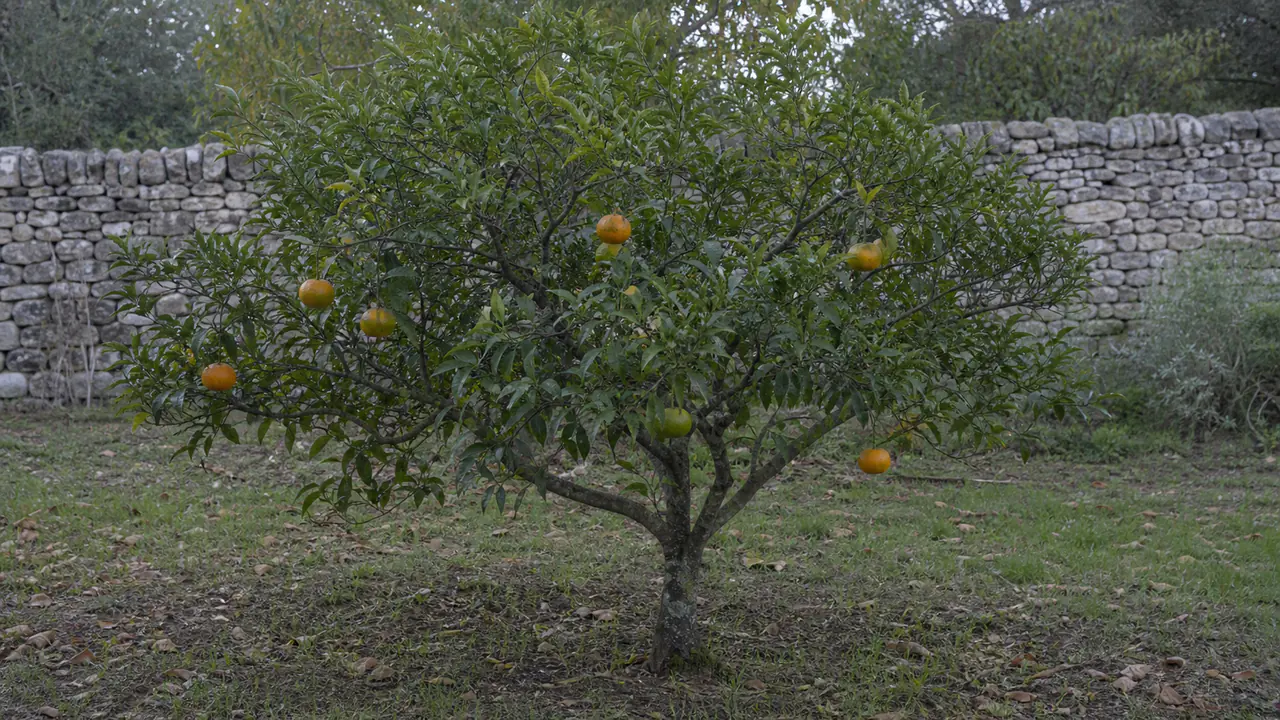
Clausellina is recorded by UCR as an Owari bud mutation found in Spain in 1962. It is often described as an early-season satsuma, but British timing is site-dependent; UCR samples include small as well as larger fruit, and the fruit is usually seedless, not invariably so. That makes this cultivarA variety produced through selection or cultivation, distinct from the wild original plant. a useful case study in data literacy. The UC Riverside collection publishes multiple dated observations of weight, dimensions, soluble solids, acidity, seeds and juice at different places and dates. Each row is a place-and-date-specific observation, not a fixed cultivar property. Juice percentage, size and maturity vary with the sample and its conditions.
It belongs to the encyclopedia’s satsuma series, centred on its parent cultivar, Owari, alongside the early selections Miyagawa Wase, Okitsu Wase and Iwasaki.
Reliable points to check before buying
Read a measurement without freezing it into an average
Clausellina’s most useful lesson is methodological. When a serious collection publishes soluble solids concentration (SSC, often discussed as °Brix), citric acid and juice percentage, those figures must retain their place, date, rootstock and sample size. Reading one row as “Clausellina has X °Brix” is an error: another sample, place or date can differ. A measurement is a contextualised observation, not a fixed cultivar property.
No universal figure applies here: “average”. At Riverside on 26 September 1995, two separate ten-fruit samples recorded SSC 10.70 versus 9.50, acid 0.910% versus 0.720%, juice 45.98% versus 36.85%, and average weight 32.06 g versus 47.63 g. UCR records many zero-seed samples but also occasional non-zero rows, so Clausellina is usually seedless, not absolutely seedless. Carrizo and C-35 describe UCR’s accession trees; the exact cultivar–rootstock pairing must be confirmed with the nursery.
| What you are checking | Evidence to request | Why—and the limit |
|---|---|---|
| Named cultivar | Citrus unshiu ‘Clausellina’ on the label | The RHS also records it under Citrus reticulata, with C. unshiu ‘Clausellina’ as a synonym. A generic “satsuma” is not equivalent. |
| Rootstock | Written rootstock name from the nursery | Rootstock can alter vigour and response to compost and water. Ask for advice matched to your conditions. |
| UCR accession context | Carrizo and C-35 citrange | These are the collection accession’s rootstocks. ⚠️ They are not a universal recommendation for Britain. |
| Your own record | Cultivar × rootstock × place × date | Keep the same context with every fruit sample so that later comparisons remain meaningful. |
The Clausellina year in a British container
This is a care rhythm, not a promised harvest window. The dependable British pattern is a sunny, sheltered summer position and bright, frost-free winter quarters; flowering and ripening shift with light and temperature.
| Jan | Feb | Mar | Apr | May | Jun | Jul | Aug | Sep | Oct | Nov | Dec | |
|---|---|---|---|---|---|---|---|---|---|---|---|---|
| Repot or renew the surface compost (spring preferred) | ||||||||||||
| Bright frost-free shelter / fleece during transitions | ||||||||||||
| Harden off before the summer move | ||||||||||||
| Flowering (conditions dependent) | ||||||||||||
| Taste and record ripeness (not a fixed UK harvest) | ||||||||||||
| Citrus feed during active growth |
Measure your own crop instead of copying one figure
Build a representative sample
Record the place, date, rootstock and number of fruit before weighing, tasting or measuring; one attractive fruit does not describe the crop.
Compare like with like
If your SSC, acidity or juice result differs from a published row, first compare sample date and growing conditions rather than suspecting a false plant.
Pick for balance, not a borrowed date
Adjust picking to your preferred balance of sweetness, acidity and juice, using repeated tastes or measurements from your own tree.
Keep the context with every number
Store each result with its conditions. A short annual record becomes more useful than a universal figure copied from another climate.
Read the symptom, find the cause, correct it and prevent a repeat
Clausellina shares the usual container-citrus problems. Fruit size and a particular SSC result are observations to interpret before they are labelled as defects.
| Symptom observed | Likely cause | Correct | Prevent |
|---|---|---|---|
| Smaller fruit than expected | Sample variation, rootstock, conditions or an excessive crop—not necessarily disease | Check crop load and compare several fruit at the same stage | Record fruit count and sample context before drawing a conclusion |
| SSC or “Brix” below a published value | Different place, date, rootstock or sample | Repeat on a representative sample as ripening progresses | Never treat one observation as a cultivar standard |
| Yellow leaves with greener veins | Iron chlorosisYellowing of the foliage caused by poor iron uptake, often linked to chalky soil. associated with high pH or waterlogged roots | Check drainage, compost and water; use an appropriate iron treatment only as directed | Match rootstock and growing medium, and never leave the pot standing in water |
| Cottony patches or scales on stems and leaf undersides | Mealybugs or scale insects favoured by sheltered quarters | Remove physically and use only a product authorised for the crop, following its label | Inspect before housing and ventilate the winter quarters |
| Silvery winding mines in young leaves | Citrus leaf miner | Remove only badly affected soft shoots; avoid unnecessary treatment | Avoid excess nitrogen that drives vulnerable soft growth |
Keep treatment proportionate and follow the current UK label for any plant-protection product. For a regulated plant-health concern, use official guidance rather than a generic citrus remedy.
An easy-peeling, usually seedless early-season satsuma
Clausellina is usually seedless and easy to peel, although an occasional pip remains possible. A fruit with a balanced taste can be enjoyed fresh in segments or pressed for juice. Untreated peel can contribute aroma and pectin to marmalade, while segments or peel may be dried. Judge the fruit by flavour and juice on your own tree: neither one published figure nor external colour alone defines eating quality.
What GB commercial standards say—and what they do not
Great Britain’s specific marketing standard includes the satsuma group. Its figures apply to fresh produce sold commercially, not to the ripeness of one container tree.
- GB commercial minimums for satsumas: diameter at least 45 mm, juice content at least 33%, and a sugar-to-acid ratio of at least 6.5:1.
- UCR sample contrast: on 26 September 1995 at Riverside, two separate ten-fruit samples differed in SSC, acid, juice percentage and average fruit weight, despite sharing the same place and date.
The commercial figures are marketing-standard requirements, and the UCR figures are observations. Neither is a universal home-ripeness target, yield promise or fixed Clausellina average; keep your own sample, place and date attached to every result.
What British citrus growers often want to know
What Brix should Clausellina satsuma reach?
There is no single correct figure. UCR reports dated samples, and even two ten-fruit samples from the same place and date differed. Compare your own representative samples through ripening.
Where did Clausellina originate?
UCR records it as a bud mutation of Owari satsuma found at Almazora, Castellón, Spain, in 1962.
Why can Clausellina fruit be small?
Fruit size varies among UCR samples and can also respond to rootstock, conditions and crop load. Compare several fruit at the same stage before treating size as a problem.
Is Clausellina seedless?
It is usually seedless, not absolutely so. Many UCR samples contained no seeds, while a few rows recorded occasional seeds; no polliniser is required simply to obtain a crop.
Sources and checks
Scientific and market check completed on 2026-08-01. Cultivar observations, British container practice and commercial standards remain separate.
- UC Riverside Citrus Variety Collection—Clausellina satsuma, CRC 4012 (Citrus unshiu): identity, origin, Riverside season and row-level fruit-quality samples. The RHS separately recognises the cultivar and supplies British container guidance at https://www.rhs.org.uk/fruit/citrus/grow-your-own.
- GOV.UK—Marketing standards for citrus fruits: GB commercial minimum diameter, juice content and sugar-to-acid ratio for satsumas.