Drought-Resistant Plants: A Border That Needs No Watering
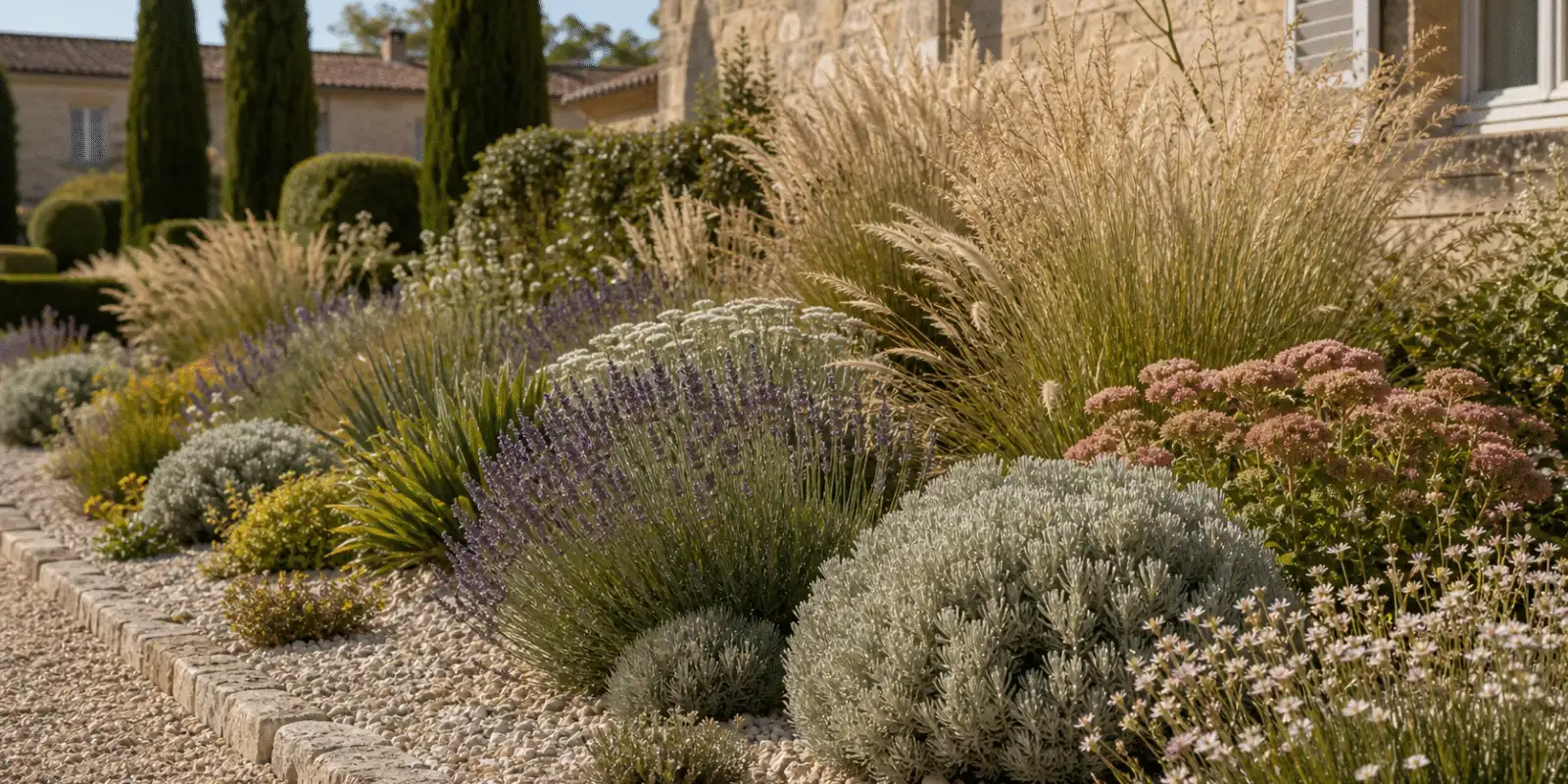
The best defence against a heatwave is prepared at planting time: choosing perennials and shrubs suited to dry conditions that, once established (about a year), need no watering. Lavender, gaura, sedum, grasses, sage… make up a structured, flowering, thrifty border. The key: free-draining soil, a mineral mulch and planting in the right season. This guide enriches Outdoor Design.
The Chatelain Method for a thrifty garden
We observe the exposure and the soil type; we diagnose the driest areas; we correct with the right plant in the right place; we prevent the watering chore with plants cut out for drought.
A palette of drought-resistant plants
Here are reliable choices, to combine by height and flowering.
| Plant | Type | Exposure | Strength |
|---|---|---|---|
| Lavender | Sub-shrub | Full sun | Flowering, scent, structure |
| Rosemary | Shrub | Full sun | Evergreen, bee-friendly, aromatic |
| Gaura | Perennial | Sun | Light, long flowering |
| Sage (Salvia, Perovskia) | Perennial | Sun | Lasting blues and mauves |
| Sedum / stonecrop | Succulent perennial | Sun | Ground cover, late-season flowering |
| Yarrow, gaillardia | Perennial | Sun | Bright colours, long flowering |
| Santolina, cistus, phlomis | Mediterranean shrub | Full sun | Grey foliage, neat habit |
| Grasses (stipa, blue fescue) | Perennial | Sun | Movement and lightness |
| Valerian, nepeta, Verbena bonariensis | Perennial | Sun | Generous flowering, easy |
| Agapanthus, yucca | Structural | Sun | Graphic silhouette |
For stony soils and slopes, these plants lend themselves admirably to a rock garden or the surroundings of a dry-stone wall.
The Chatelain’s rule of thumb. The secret is not only the plant, it is patience: in the first year, you water to help rooting. After about a year, a drought-adapted perennial draws from deep down on its own and rides out the heatwave without a single watering. You invest a year of attention for years of peace.
The principles of a no-watering border
- Free-draining soil: most of these plants fear standing water more than drought. Lighten heavy soils with gravel.
- A mineral mulch (gravel, pozzolana, slate): it keeps things cool, avoids moisture at the collar and sets off the grey foliage.
- Planting in autumn (or spring), never in the middle of a heatwave: the roots settle before the next summer.
- The right spacing: let the plants develop to cover the soil and limit evaporation.
- Water in the first year only, while they establish.
Rethinking the lawn
A large lawn is thirsty and scorches in a heatwave. You can shrink it in favour of dry borders, ground covers and grasses, more thrifty and more graphic. If you keep a lawn, see how to manage it in a lawn scorched by the heatwave. For the comfort of the living space, see cooling a sun-baked terrace.
FAQ
Which plants best resist drought?
Mediterranean perennials and shrubs: lavender, rosemary, sage, gaura, sedum, santolina, cistus, plus grasses (stipa, blue fescue). Once established, they need no watering.
Can you really have a border with no watering?
Yes, provided you choose drought-adapted plants, free-draining soil and a mineral mulch, and water only in the first year while they root. After that, they draw from deep down on their own.
When should you plant drought-resistant perennials?
In autumn preferably, or in spring, never in the middle of a heatwave. Autumn planting gives the roots time to settle before the next summer.
Should you mulch drought plants?
Yes, preferably with a mineral mulch (gravel, pozzolana, slate): it keeps things cool, avoids moisture at the collar and sets off grey foliage. It also limits weeds.