Cool Down a Sun-Baked Terrace: Shade, Planting, Materials
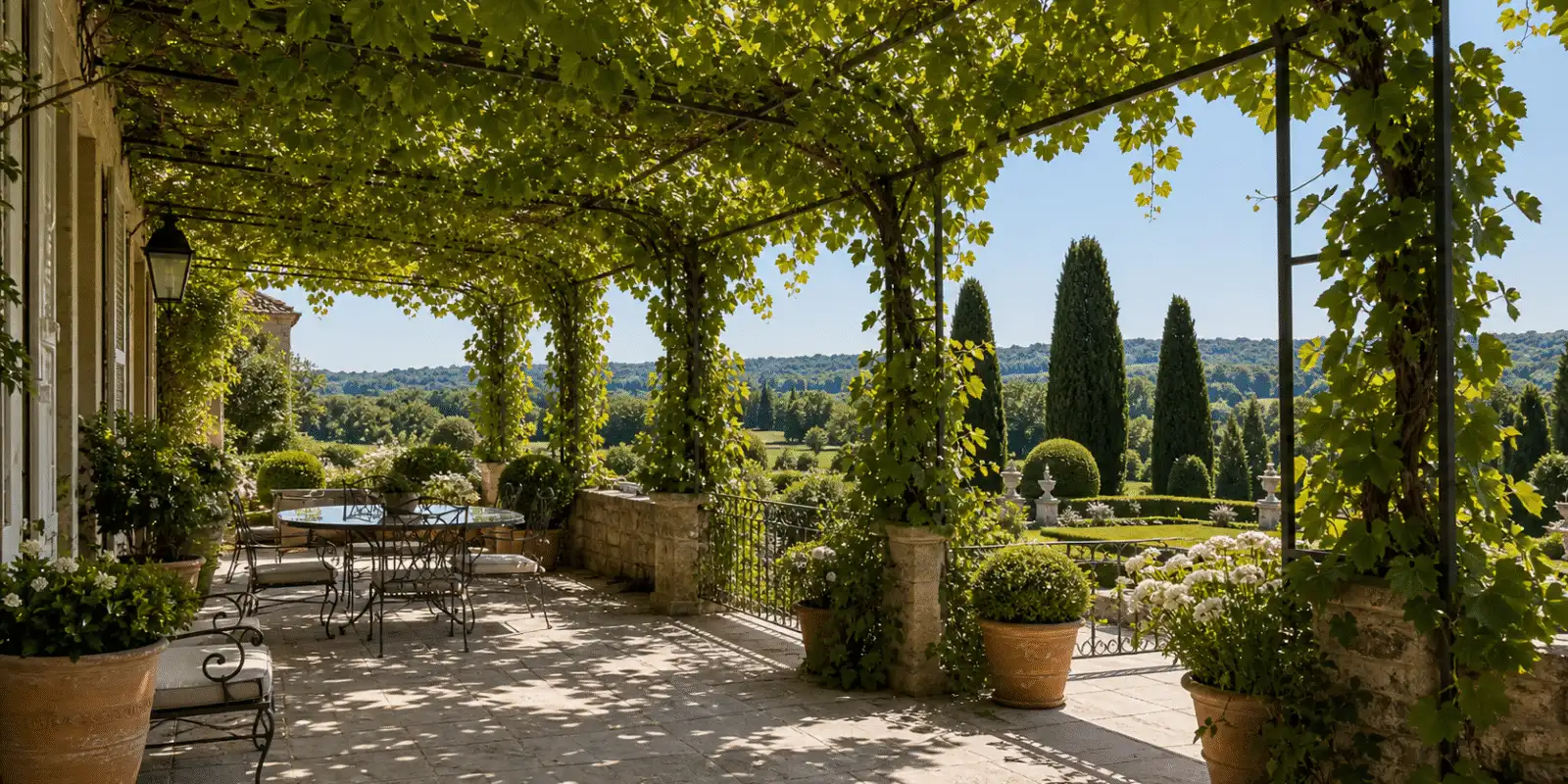
A hard-surfaced terrace stores and gives back heat: in full sun, a dark surface can become scorching. To bring coolness back, pull three levers — shade (sail, pergola, awning), planting (climbers, pots, a potted tree) and materials (light colours, misting). This guide complements Outdoor Design.
The Chatelain Method for the terrace
We observe the exposure and the materials; we diagnose the sources of overheating; we correct with shade and planting; we prevent through material choices at the design stage.
Why a terrace overheats
Three mechanisms add up: dark materials absorb the radiation and heat up sharply; their thermal mass gives that heat back late into the evening; and the glare off surrounding pale surfaces adds to the discomfort. A dark slab facing full south can become scorching underfoot — well over 50 °C in full sun — where a light, shaded surface stays temperate.
The Chatelain’s rule of thumb. A terrace’s coolness is won mainly through shade and planting: a plant transpires and cools the air around it (evapotranspiration), while a planted pergola can turn an oppressive slab into a shaded lounge. A tree over grass can cool its surroundings by up to 4 °C. The mineral heats; the living tempers.
Lever 1 — Create shade
This is the fastest and most effective action:
- Shade sail stretched over the living area (see shade sails and shade structures).
- Pergola, fixed and ideally adjustable — see bioclimatic pergola: attached or freestanding.
- Retractable awning or cantilever parasol for surfaces next to the house.
Lever 2 — Bring in planting
Planting cools through shade and evapotranspiration:
- Climbers on a pergola (grapevine, jasmine, wisteria): living, scented shade.
- Pots and large planters grouped together: they temper the air and dress the slab. For large trees, see large planters.
- A tree or large specimen in a planter (olive, citrus, maple) that casts a moving shade.
Lever 3 — Play with material and water
| Surface | Behaviour in heat | To favour |
|---|---|---|
| Light stone, light wood | Stays more temperate, reflects | Yes, in full sun |
| Dark tile / composite | Absorbs, becomes very hot | Must be shaded |
| Light gravel, planted ground | Little heat given back | As a complement |
On the water side: a misting system lowers the felt temperature by several degrees by humidifying the air, and rinsing the terrace at the end of the day flushes out part of the stored heat. For the choice of a durable surface, see exotic wood decking vs composite.
Mistakes to avoid
- A dark slab facing full south with no shade: guaranteed discomfort all summer.
- A 100 % mineral terrace: without planting, nothing tempers the air.
- Misting in a strong wind or continuously: ineffective and wasteful; mist intermittently, sheltered from the wind.
FAQ
How do you cool down a terrace in a heatwave?
Combine three levers: create shade (sail, pergola, awning), bring in planting (climbers, pots, a potted tree) and play with material (light colours, misting, rinsing the floor in the evening). Shade and planting are the most effective.
Why is my terrace so hot in summer?
Because dark materials absorb the sun, store the heat and give it back late, while glare adds to the discomfort. A dark slab in full sun can become scorching without shading.
Which terrace material stays coolest?
Light materials (light stone, light wood) stay more temperate than dark surfaces (dark tile or composite), which heat up sharply. At equal exposure, favour light tones and shading.
Is a misting system effective against the heat?
Yes, it lowers the felt temperature by several degrees by humidifying the air, provided you use it intermittently and sheltered from the wind. It complements shade and planting without replacing them.