How long before a lemon tree bears fruit?
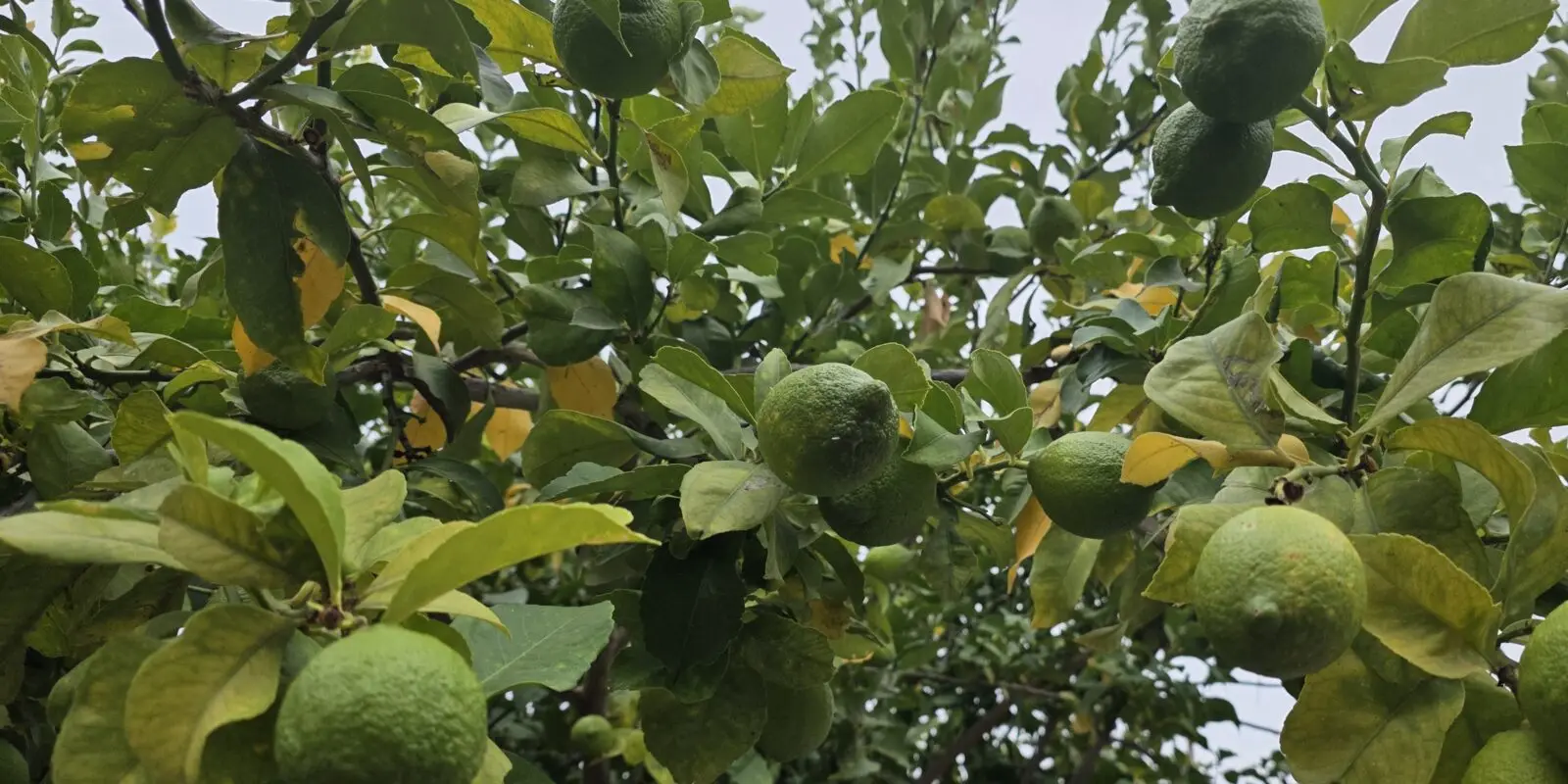
A grafted lemon tree can flower in its first year with you. One grown from a pip may keep you
waiting a decade. That gap is not a difference in growth rate, it is a difference in nature: the
grafted tree carries a scion that is already adult, while the seedling has to live through its own
youth first.
The RHS puts the British version of this plainly. Most citrus sold here is grafted precisely so that
it fruits early, and ungrafted plants may take up to ten years to fruit. The same guidance
suggests buying a plant that is already flowering or fruiting. So for most readers the real question
is not when the tree can fruit. It is when you should let it.
Juvenility, the word missing from most answers
The figures you find online run from three years to fifteen with nothing to explain them. The
missing word is juvenility. A citrus grown from seed goes through a phase in which it will not
flower, whatever you feed it and wherever you stand it. It is not a cultivation problem, it is a
state of the plant.
Published ranges are wide, and that width is itself the answer. Marutani-Hert and co-authors, in
PLoS One in 2012, describe an extended juvenile phase in citrus that « typically requires at least
5-10 years before flowering », and place the move to the adult reproductive phase anywhere between
two and twenty years. Clemson’s extension service gives a useful contrast between species:
grafted oranges, grapefruits and mandarins need about five years before they flower, while
« lemons require 1 to 3 years to overcome juvenility ». Among citrus, the lemon is the impatient one.
On our own ground near Nice we have seen a seed-grown lemon take up to sixteen years. That is
not an average and we do not offer it as one: it is the upper end of what we have observed, and it
sits inside the range the research describes. If you sow a pip today, the honest answer is that you
do not know whether you will wait six years or twice that.
A grafted tree does not grow faster, it starts adult
This is the part almost no guide spells out. When a nursery grafts, it takes budwood from a tree in
production, one that has already left juvenility behind. That scion does not become young again when
it is placed on new roots. It arrives at your door with maturity acquired somewhere else.
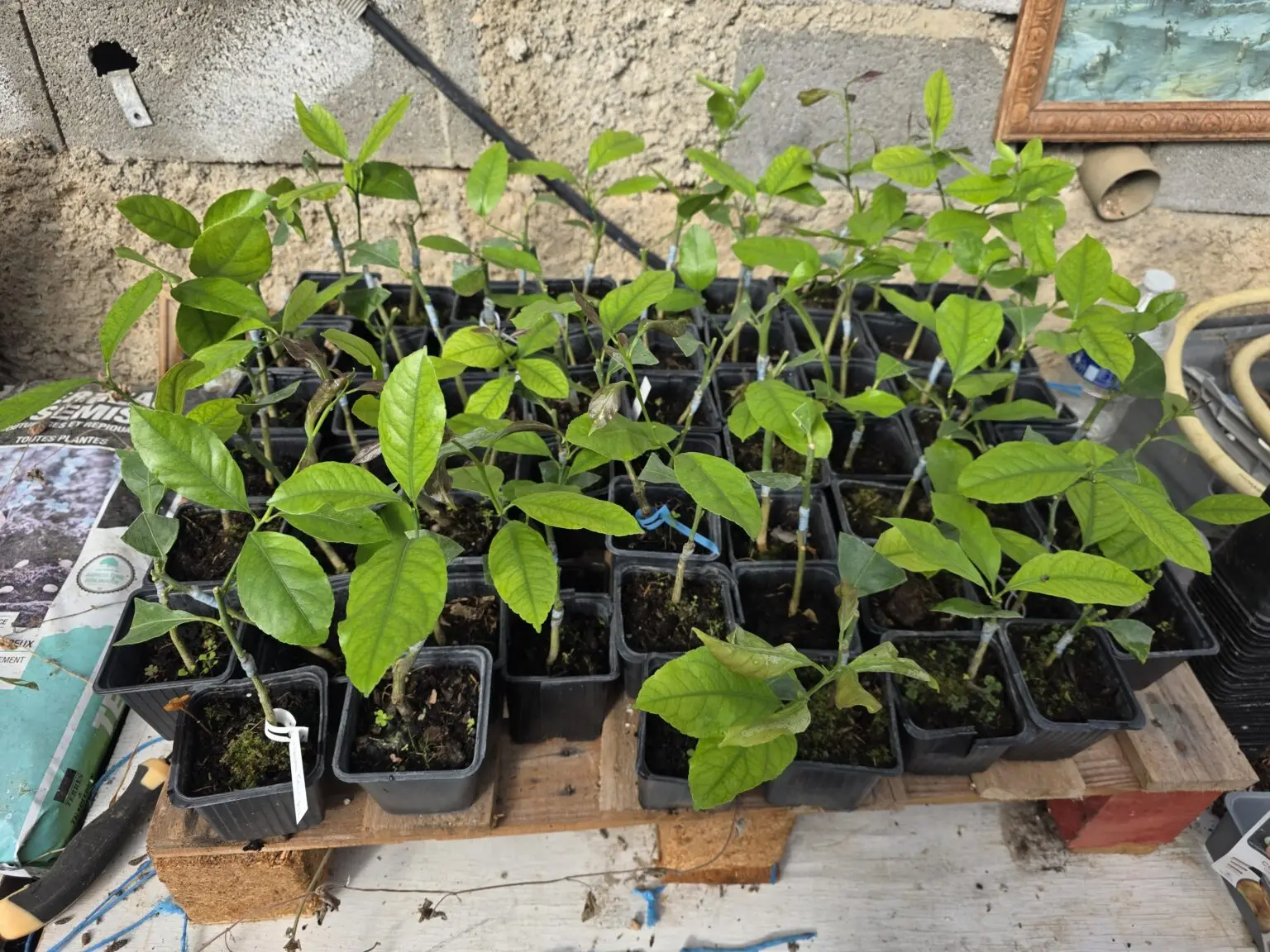
That is why the RHS can recommend buying a plant in flower or in fruit without it being a trick: the
fruit you see on the bench is real, and it is the direct result of grafting adult wood. It is also
why an ungrafted plant, however well grown, keeps you waiting.
Bearing is not the same as producing
A young grafted tree will flower, set, and hand you three lemons in its first year. It is flattering
and it is a poor bargain. Those fruits are built from resources the tree is not putting into roots,
trunk and framework.
On our holding the fruit of the first two years is removed so the tree makes wood and grows. It
is a real sacrifice: two crops given up on a tree that was able to carry them.
The gesture itself matters, and this is where most people get it wrong. We do not remove the
flowers, we remove the young fruit, once it reaches five millimetres. Taking the flowers off
simply prompts the tree to make more, and the spending starts again. Waiting for fruit set and
removing the fruitlet stops the spending where it counts, once the tree has committed. Five
millimetres is about the size of a peppercorn, and it is the moment you can see which ones have
truly set.
Four years, and they belong to the roots
A planted tree takes time to make common cause with new ground. We count four years before it is
settled enough to carry a real crop. Before that it produces, but it does not bear.
What happens during those four years is invisible, which is why it gets forgotten. It is not the
canopy doing the work, it is the root system. Whatever the size of the tree you bought, the roots
start from nothing in soil they do not know, and they need those years to gain, in the phrase we use
here, more straws to draw up water and food.
This nuances a piece of advice you will read everywhere, Clemson included: buy a larger specimen and
you will fruit sooner. Both things are true and they are not about the same thing. A large tree
produces earlier, because it already carries adult wood and more framework. It does not
settle any faster, because its roots meet your soil at the same pace as a small one’s. Paying
more buys years of canopy, not years of root.
| Starting point | Earliest flowering | A real crop |
|---|---|---|
| Grown from a pip | at least 5 to 10 years per the research; RHS says up to ten years for ungrafted plants; up to 16 observed here | later still, with no guarantee |
| Grafted tree, newly planted | first year possible; 1 to 3 years to clear juvenility per Clemson | about four years after planting, on our conduct |
| Potted tree bought in fruit | fruit already on the plant | from the year after purchase |
The common British case: a potted tree bought in fruit
This is what most readers actually own, and it deserves saying plainly. Lemon trees sold in pots
already carry fruit at the point of sale. They were pushed to do so in production, and that fruit
reflects the nursery’s conduct rather than the state of the tree in your conservatory.
Our advice runs against the instinct you have on the way home: remove the fruit of the year you
buy, and eat the fruit of the years that follow. The tree has just changed its light, its air, its
water and often its pot. Asking it to finish a crop in those conditions is asking two things at once.
What you give up is one season’s ornament, not the future harvest. You get it back the following
year, on a tree that spent its first autumn settling in rather than finishing a production started
elsewhere.
What pushes the date back, in a British winter
The timings above assume the tree has what it needs. If it does not, it does not die, it waits, often
for years, and that is the usual reason a lemon « never fruits ».
- Light. Indoors, aim for a bright spot near a south-facing window with at least six hours of
direct sun. Short of that, the tree makes leaves instead of flowers. - Winter temperature. Citrus are not hardy here, and the minimum depends on the fruit: the RHS
notes that some lemons are fine as low as 5 °C, while limes and grapefruits should be kept above
10 °C. It also warns that the main rooms of centrally heated homes are usually too warm and too
dry in winter. - A cool rest. Most citrus prefer a cool winter spell. A tree kept warm and dark all winter
often flowers poorly the following spring. - Watering. Water freely in summer, sparingly in winter, letting the surface dry before watering
again. Overwatering in winter is among the commonest problems. - Pot volume and rootstock. Both are decided before you ever water the plant, and both set the
ceiling.
One reassurance: citrus are self-fertile, so a single plant can set fruit on its own. If the tree is
losing leaves rather than flowering, the issue is its health rather than its age, and that is a
different diagnosis.
Frequently asked questions
I sowed a lemon pip. Will I get lemons?
Probably, but not for years, and the range is wide: the research speaks of at least five to ten years
before flowering, the RHS of up to ten years for ungrafted plants, and we have seen sixteen. Buy a
grafted tree if you want fruit; sow a pip if you want to grow a tree.
My grafted tree flowered the year I planted it. Should I keep the fruit?
Not on our holding. For the first two years we take the fruitlets off at about five millimetres so
the tree builds wood and roots. You lose two modest crops and gain a tree that will carry.
Why remove fruit from a plant I have just bought in fruit?
The reason is the tree, not the fruit. It has just changed light, water and often pot, and it has
better things to do than finish a crop begun in a nursery.
My lemon flowers but drops its fruit. Why?
Some drop is normal, as the tree adjusts its load. Heavy drop points to water, light or a recent
shock rather than to the tree’s age.
Sources and further reading
- RHS, how to grow citrus — grafted plants
fruit early, ungrafted may take up to ten years, winter minima by fruit type, self-fertility. - Clemson Cooperative Extension, in-ground citrus production
— one to three years for lemons to overcome juvenility, about five for other grafted citrus. - Marutani-Hert et al., 2012, « A Dark Incubation Period Is Important for Agrobacterium-Mediated
Transformation of Mature Internode Explants of Sweet Orange, Grapefruit, Citron, and a Citrange
Rootstock », PLoS One — at least five to ten years before flowering, two to twenty years to reach
the adult phase. - University of Florida, Ask IFAS, citrus propagation
— juvenility in seedlings and where budwood is taken from.
Elsewhere in this section:
Orchard and citrus · Watering citrus: what your soil decides · When to harvest olives