Fruit Sunscald: Preventing Sunburn in the Orchard
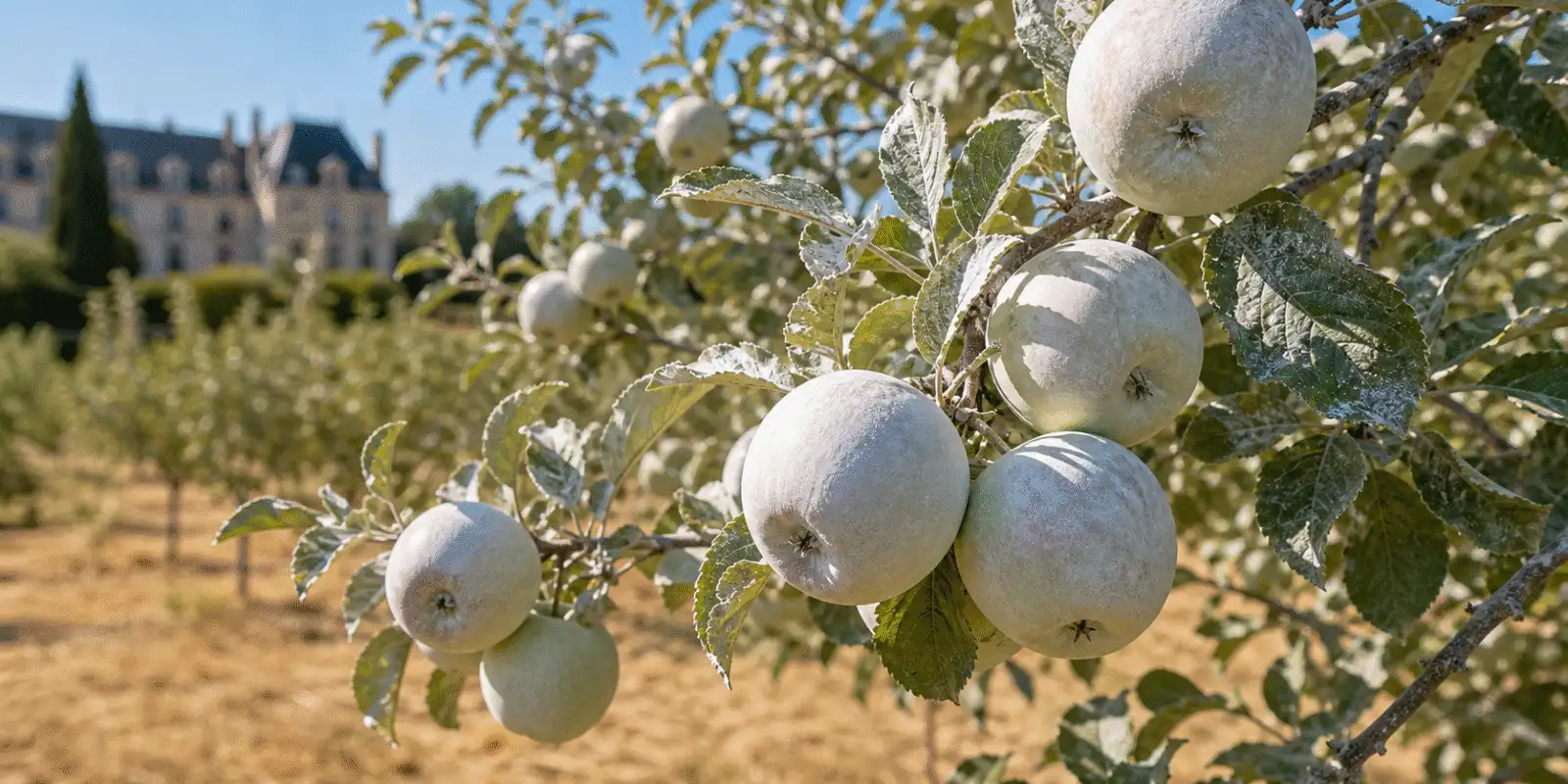
Sunburn — also called sunscald — is the fruit’s own sunstroke: under intense sun, the skin of exposed apples, pears and grapes stains brown, hardens and dies off. Once burnt, a fruit does not heal — the whole battle is preventive: kaolin (reflective white clay), shading of exposed trees and sensible pruning that never strips the fruit bare. This guide complements fruit trees in a heatwave.
The Chatelain Method against fruit sunburn
We observe the sides exposed to the afternoon sun; we diagnose the risk (bare fruit, a heat spike after overcast weather); we correct with a reflective film; we prevent from pruning time onwards by keeping protective foliage.
What is fruit sunburn?
Sunburn is a burn of the tissues caused by the rise in temperature of the fruit’s skin under direct radiation. It mainly affects:
- The south and west sides, struck by the afternoon sun, the hottest of the day.
- Fruit stripped bare by overly severe summer pruning, which has lost its natural shade.
- Orchards caught by a sudden heat spike after an overcast spell, when the fruit is not yet « hardened off ».
Apples, pears and grapes are the most affected, but citrus and even fruiting vegetables in the kitchen garden can suffer the same damage.
The Chatelain’s rule of thumb. Kaolin works like a high-factor sunscreen for plants: suspended in water, this white clay forms a film that reflects UV, lowers the surface temperature of the fruit and slows moisture loss. It is the reference protection in fruit growing — properly applied, reflective films can cut sunburn losses by up to half according to Washington State Universeity trials.
Preventing sunburn: the three levers
| Lever | Action | When |
|---|---|---|
| Kaolin (white clay) | Spray a protective film on fruit and foliage | Before and during heat spells |
| Shading | Shade net or reed screen over exposed trees | During the heatwave |
| Sensible pruning | Keep foliage that shades the fruit | At spring/summer pruning |
- Kaolin. Spray the diluted white clay on fruit and foliage, covering the exposed sides well. Renew the film after heavy rain. It also protects against certain pests.
- Shading. A shade net stretched over the most exposed trees limits direct radiation without smothering. To integrate it elegantly, see shade sails and shade structures.
- Pruning. Avoid « opening up » the tree abruptly at the height of summer: foliage is the fruit’s natural parasol. The right calendar is in pruning fruit trees.
Reducing the tree’s overall stress
A well-hydrated fruit resists better. Deep, spaced watering, thick mulch and trunk protection lower the tree’s overall stress. For the trunk, a whitewash (lime wash) plays the same reflective role as kaolin on fruit. For watering, see watering in a heatwave.
What to do with fruit already burnt?
A sunburnt fruit cannot be repaired. If the burn is light and superficial, the fruit may sometimes ripen but remains downgraded. If it is deep, the dead tissue becomes an entry point for rot: better to remove badly damaged fruit to protect the rest and prevent disease from spreading.
FAQ
What is sunburn on fruit?
It is the fruit’s sunstroke: under intense radiation, the skin heats up, stains brown, hardens and dies. It mainly affects the sides exposed to the afternoon sun and fruit stripped bare by pruning.
How do you protect fruit from the sun in a heatwave?
Spray kaolin (reflective white clay) on fruit and foliage, install a shade net over exposed trees and keep enough foliage to shade the fruit naturally.
Is kaolin safe on edible fruit?
Kaolin is a mineral clay used in fruit growing, including organic orchards. The white film rinses off at harvest. Always follow the instructions of the product you buy.
Can a sunburnt fruit recover?
No. The damaged area is permanently dead. If the burn is light, the fruit may ripen but is downgraded; if it is deep, better to remove it to avoid rot.