Graft a Citrus Tree Yourself: Technique and Calendar
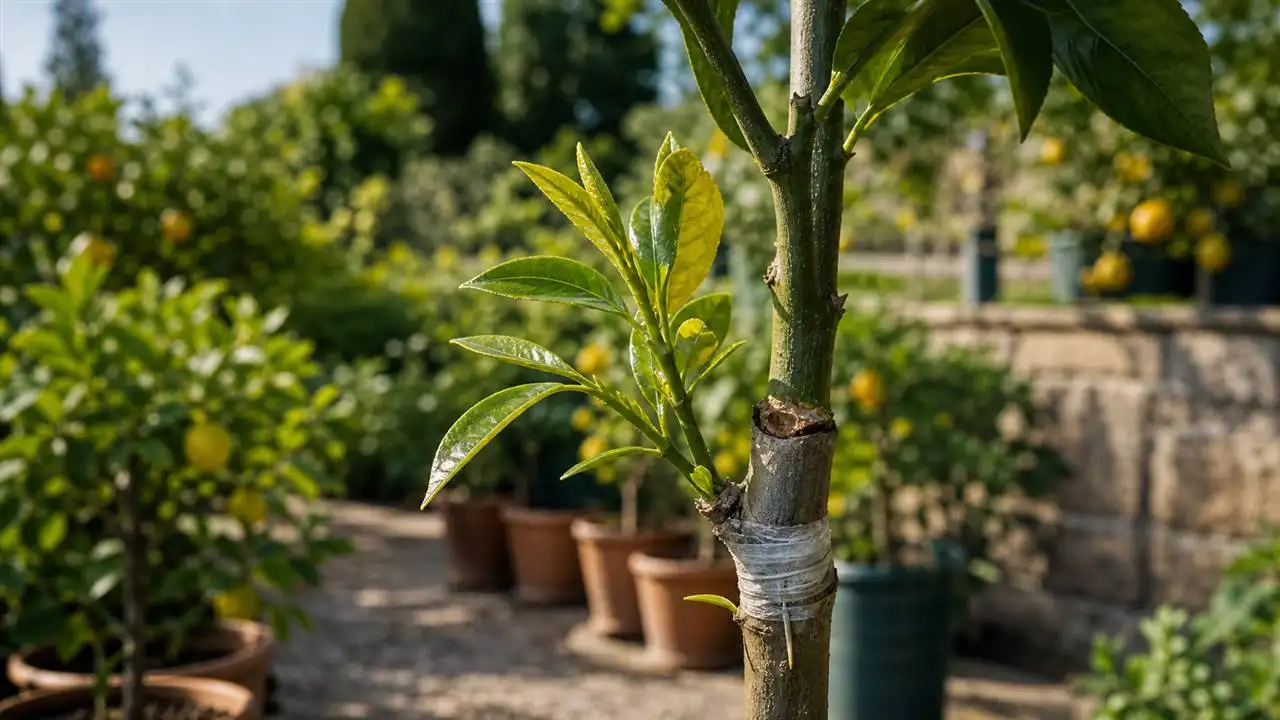
Grafting a citrus lets you multiply a variety while gaining the hardiness of a rootstock. The go-to technique is T-budding (a single bud inserted under the bark), done when the bark separates easily from the wood — typically between spring and autumn while the tree is actively growing. With the right rootstock (trifoliate orange for hardiness), you get a vigorous tree. Here’s the method, step by step.
The Chatelain Method for grafting
You observe the state of the bark (it must « lift » cleanly); you diagnose the right rootstock; you correct with a clean, precise cut; you prevent failure with careful ties and healthy budwood.
The right rootstock
| Rootstock | Strength |
|---|---|
| Trifoliate orange (Poncirus trifoliata) | Maximum hardiness, resistant to citrus tristeza virus and Phytophthora root rot |
| Citrange | Vigour + good hardiness |
| Citrumelo | Tolerant of a range of soils |
The rootstock passes on hardiness and disease resistance; the scion passes on the variety (lemon, orange, yuzu…).
T-budding, step by step
- Take a bud from a healthy shoot of the desired variety.
- Cut a T-shape into the rootstock bark, which must lift easily.
- Slide the bud under the bark flaps, bud facing up.
- Tie it without covering the bud (raffia or grafting tape).
- Wait: the bud breaks the following spring, at which point you cut the rootstock back above it.
The Chatelain note. T-budding succeeds when the bark lifts cleanly — budwood is usually taken between spring and autumn, when the bark separates easily from the wood. Too early or too late, the sap no longer « carries » the bud: timing accounts for 80% of the result.
What we actually do on the holding
The T-budding described above remains the reference technique on citrus, and it works. Our own practice departs from it on two points, for reasons of workshop organisation rather than principle.
First, we raise our own rootstocks from seed rather than buying them. A citrus seedling does not come true to variety, which would rule it out if we wanted faithful fruit, but it is exactly what a rootstock is asked to provide: vigour and a root system suited to the soil. The variety arrives with the scion.
Second, we prefer to T-budding the technique we call the greffe collée, for one simple reason: the union takes faster. When several trees are grafted in succession, that gain on the union changes how a whole season is organised.
On a large rootstock, neither suits, and we switch to crown grafting, which suits heavy diameters where the bark can be lifted at several points around the cut.
These three techniques do not compete, they answer different diameters and different volumes. Anyone grafting a single tree is best served by T-budding, which is widely documented and forgiving of beginners.
Afterwards
The young graft is cared for like any citrus: free-draining substrate, feeding on the calendar, winter protection. If leaves cause concern, the general citrus leaf-drop diagnostic applies.
Grafting is about timing more than technique
Citrus grafting looks like it takes a specialist’s touch. In reality, failure comes more often from bad timing than a bad cut. If the sap isn’t flowing enough, the bark lifts poorly; if warmth is erratic, the graft union dries out; if the budwood is weak, take stays hesitant.
In old orangery collections, grafting was used to preserve valuable varieties, adapt a tree to a soil, and get reliable fruiting faster. It’s an act of transmission: you’re not just sowing a citrus, you’re carrying a variety forward.
To make the process less abstract, check these four conditions:
- rootstock actively growing, neither thirsty nor waterlogged;
- budwood taken from healthy, ripened, non-desiccated wood;
- disinfected tools and a clean cut;
- a firm tie, without lasting constriction.
The Chatelain Method applies directly: observe vigour, diagnose the right moment, correct with a clean cut, prevent drying out with the tie and light shade. The good sign isn’t immediate — a successful graft often starts by doing nothing for a few days, then quietly swelling.
The final call: is grafting really necessary?
Grafting isn’t always needed. If you just want a decorative citrus, a healthy young plant bought ready-grafted is simpler. Grafting becomes worthwhile to multiply a specific variety, adapt a tree to a rootstock, or save a cultivar you care about.
The deciding factor is the value of the variety. The rarer or better suited to your garden, the more grafting makes sense. The more general the project, the more buying an already-grafted plant saves years of waiting and uncertainty.
FAQ
When should I graft a citrus?
T-budding is done between spring and autumn, when the rootstock’s bark separates easily from the wood. Bud-wood is usually collected during this active growth period.
Which rootstock is best for hardiness?
Trifoliate orange (Poncirus trifoliata) is the hardiest; citrange offers a good vigour/hardiness compromise.
How long before it fruits?
Generally 2-3 years after a successful graft for the first fruit.
Can several varieties be grafted onto one tree?
Yes: this is the « citrus fruit salad tree, » grafting several buds of different species onto the same rootstock.