Gardening by the Moon: What the Studies Actually Say
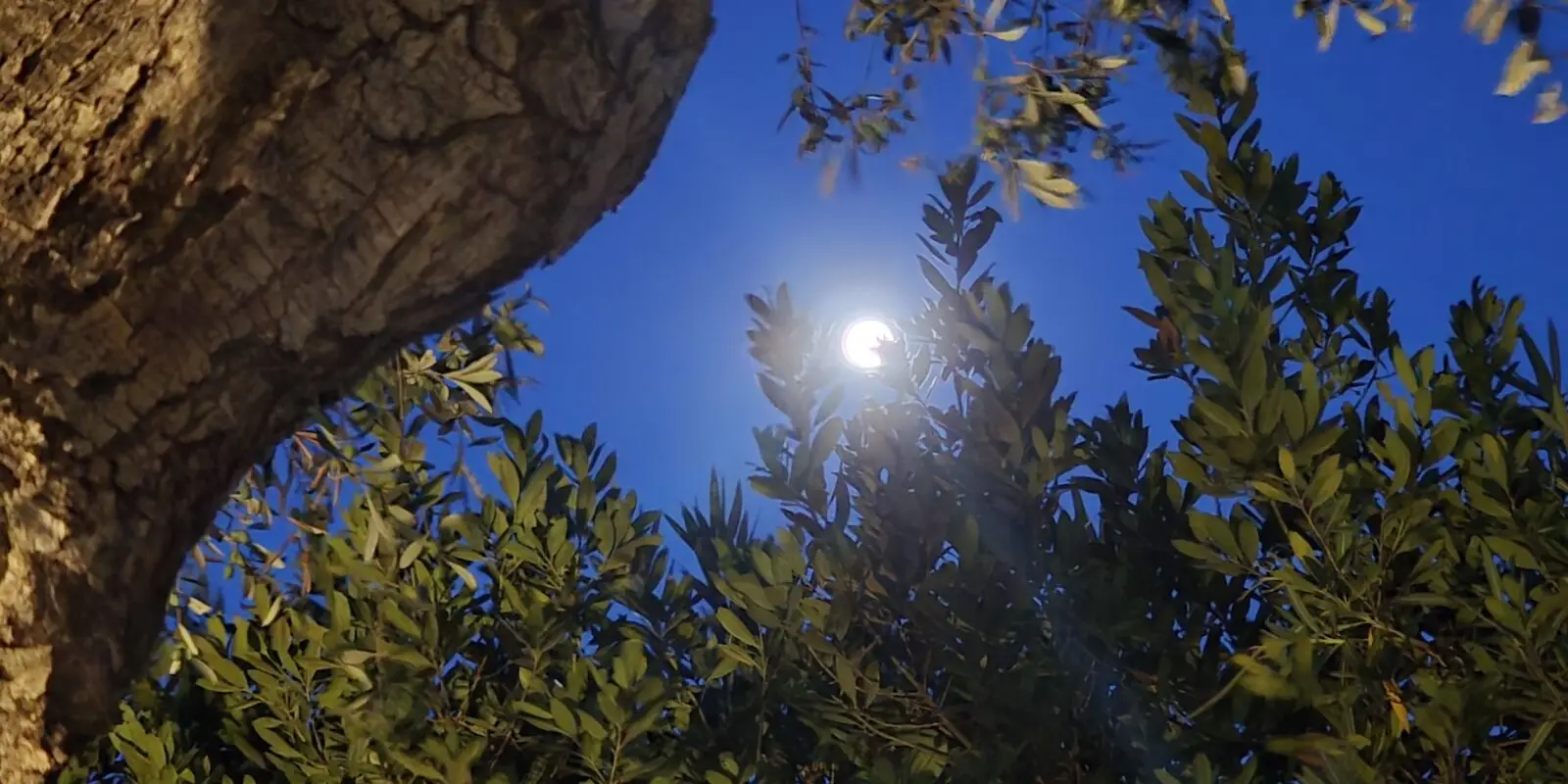
We garden by the moon. We follow the ascending and descending cycle to choose when we sow, transplant, prune, graft and harvest, working from a printed almanac. And this article has to open with the thing that should always open it: the available studies do not robustly demonstrate that choosing growing dates from a lunar calendar improves harvests. What we publish here is a calculated astronomical calendar, the real state of the evidence without softening it, and the one thing our own practice allows us to defend.
The confusion almost every calendar keeps alive
One ambiguity has to be cleared first, because it makes most published advice unreadable: « waxing » and « ascending » are not the same thing, and the two cycles are not synchronised. The moon can perfectly well be waxing and descending at the same time.
A waxing or waning moon belongs to the cycle of phases, the one everybody sees: from new moon to full moon and back. That is the synodic cycle, lasting on average about 29 days 12 hours 44 minutes. It is the cycle of mainstream calendars, and the one that drives the tides.
An ascending or descending moon has an increasing or decreasing declination. At our northern latitudes, this can be seen in its height at upper meridian passage, not at a fixed clock time: altitude also depends on hour angle. The two states alternate roughly every two weeks.
This is not a quibble about vocabulary. It is the cycle we actually follow, and it is the one commercial calendars most often blur into the first. Advice built on the phases but applied as though it concerned height simply does not say what it claims to say.
The 2026-2027 lunar calendar
The calendar below is not copied from any almanac. It was computed from standard astronomical algorithms, then checked against independently published ephemerides. The method and the checks are set out at the end of this article. Times are given in Paris time (Europe/Paris), so British readers should subtract one hour.
- Full moons13 in 2026 · 12 in 2027
- New moons12 in 2026 · 13 in 2027
- Ascending / descending turning points54 over the two years
- Perigee / apogee passages53 over the two years
- Ascending / descending alternationroughly every two weeks
- Phase cycle (synodic)≈ 29 d 12 h 44 min
Ascending and descending periods
This is the table to consult first if you follow this cycle. One necessary caveat about the third column: it reports what almanac tradition associates with each period. That is not an established effect, and the section of this article devoted to the studies explains precisely why we are careful to word it that way.
| Period 2026 | Cycle | What almanac tradition associates with it |
|---|---|---|
| January 2 → January 16 | Descending | Planting, transplanting, pruning, taking cuttings, soil work, lifting roots |
| January 16 → January 29 | Ascending | Sowing, grafting, picking fruit for immediate use |
| January 29 → February 12 | Descending | Planting, transplanting, pruning, taking cuttings, soil work, lifting roots |
| February 12 → February 26 | Ascending | Sowing, grafting, picking fruit for immediate use |
| February 26 → March 11 | Descending | Planting, transplanting, pruning, taking cuttings, soil work, lifting roots |
| March 11 → March 25 | Ascending | Sowing, grafting, picking fruit for immediate use |
| March 25 → April 8 | Descending | Planting, transplanting, pruning, taking cuttings, soil work, lifting roots |
| April 8 → April 21 | Ascending | Sowing, grafting, picking fruit for immediate use |
| April 21 → May 5 | Descending | Planting, transplanting, pruning, taking cuttings, soil work, lifting roots |
| May 5 → May 18 | Ascending | Sowing, grafting, picking fruit for immediate use |
| May 18 → June 1 | Descending | Planting, transplanting, pruning, taking cuttings, soil work, lifting roots |
| June 1 → June 15 | Ascending | Sowing, grafting, picking fruit for immediate use |
| June 15 → June 28 | Descending | Planting, transplanting, pruning, taking cuttings, soil work, lifting roots |
| June 28 → July 12 | Ascending | Sowing, grafting, picking fruit for immediate use |
| July 12 → July 26 | Descending | Planting, transplanting, pruning, taking cuttings, soil work, lifting roots |
| July 26 → August 9 | Ascending | Sowing, grafting, picking fruit for immediate use |
| August 9 → August 22 | Descending | Planting, transplanting, pruning, taking cuttings, soil work, lifting roots |
| August 22 → September 5 | Ascending | Sowing, grafting, picking fruit for immediate use |
| September 5 → September 18 | Descending | Planting, transplanting, pruning, taking cuttings, soil work, lifting roots |
| September 18 → October 2 | Ascending | Sowing, grafting, picking fruit for immediate use |
| October 2 → October 16 | Descending | Planting, transplanting, pruning, taking cuttings, soil work, lifting roots |
| October 16 → October 29 | Ascending | Sowing, grafting, picking fruit for immediate use |
| October 29 → November 12 | Descending | Planting, transplanting, pruning, taking cuttings, soil work, lifting roots |
| November 12 → November 26 | Ascending | Sowing, grafting, picking fruit for immediate use |
| November 26 → December 9 | Descending | Planting, transplanting, pruning, taking cuttings, soil work, lifting roots |
| December 9 → December 23 | Ascending | Sowing, grafting, picking fruit for immediate use |
| December 23 → January 5 | Descending | Planting, transplanting, pruning, taking cuttings, soil work, lifting roots |
| Period 2027 | Cycle | What almanac tradition associates with it |
|---|---|---|
| January 5 → January 20 | Ascending | Sowing, grafting, picking fruit for immediate use |
| January 20 → February 2 | Descending | Planting, transplanting, pruning, taking cuttings, soil work, lifting roots |
| February 2 → February 16 | Ascending | Sowing, grafting, picking fruit for immediate use |
| February 16 → March 1 | Descending | Planting, transplanting, pruning, taking cuttings, soil work, lifting roots |
| March 1 → March 15 | Ascending | Sowing, grafting, picking fruit for immediate use |
| March 15 → March 28 | Descending | Planting, transplanting, pruning, taking cuttings, soil work, lifting roots |
| March 28 → April 11 | Ascending | Sowing, grafting, picking fruit for immediate use |
| April 11 → April 25 | Descending | Planting, transplanting, pruning, taking cuttings, soil work, lifting roots |
| April 25 → May 9 | Ascending | Sowing, grafting, picking fruit for immediate use |
| May 9 → May 22 | Descending | Planting, transplanting, pruning, taking cuttings, soil work, lifting roots |
| May 22 → June 5 | Ascending | Sowing, grafting, picking fruit for immediate use |
| June 5 → June 18 | Descending | Planting, transplanting, pruning, taking cuttings, soil work, lifting roots |
| June 18 → July 2 | Ascending | Sowing, grafting, picking fruit for immediate use |
| July 2 → July 15 | Descending | Planting, transplanting, pruning, taking cuttings, soil work, lifting roots |
| July 15 → July 30 | Ascending | Sowing, grafting, picking fruit for immediate use |
| July 30 → August 12 | Descending | Planting, transplanting, pruning, taking cuttings, soil work, lifting roots |
| August 12 → August 26 | Ascending | Sowing, grafting, picking fruit for immediate use |
| August 26 → September 8 | Descending | Planting, transplanting, pruning, taking cuttings, soil work, lifting roots |
| September 8 → September 22 | Ascending | Sowing, grafting, picking fruit for immediate use |
| September 22 → October 5 | Descending | Planting, transplanting, pruning, taking cuttings, soil work, lifting roots |
| October 5 → October 20 | Ascending | Sowing, grafting, picking fruit for immediate use |
| October 20 → November 2 | Descending | Planting, transplanting, pruning, taking cuttings, soil work, lifting roots |
| November 2 → November 16 | Ascending | Sowing, grafting, picking fruit for immediate use |
| November 16 → November 29 | Descending | Planting, transplanting, pruning, taking cuttings, soil work, lifting roots |
| November 29 → December 13 | Ascending | Sowing, grafting, picking fruit for immediate use |
| December 13 → December 26 | Descending | Planting, transplanting, pruning, taking cuttings, soil work, lifting roots |
Day types, month by month
Almanacs sort the days into four categories according to where the moon stands: root days, leaf days, flower days and fruit days, each held to favour the matching part of the plant. The grid below gives them for both years.
Two reservations, which we would rather state than let you assume a precision they do not have. First, this is a traditional allocation and not an established effect. Second, almanacs do not all use the same convention for the divisions; ours is set out in the method at the end, and a transition can shift by a day from one calendar to another.
- Ro root day
- Le leaf day
- Fl flower day
- Fr fruit day
| 2026 | 1 | 2 | 3 | 4 | 5 | 6 | 7 | 8 | 9 | 10 | 11 | 12 | 13 | 14 | 15 | 16 | 17 | 18 | 19 | 20 | 21 | 22 | 23 | 24 | 25 | 26 | 27 | 28 | 29 | 30 | 31 |
|---|---|---|---|---|---|---|---|---|---|---|---|---|---|---|---|---|---|---|---|---|---|---|---|---|---|---|---|---|---|---|---|
| Jan | Ro | Fl | Fl | Le | Le | Fr | Fr | Fr | Ro | Ro | Fl | Fl | Fl | Le | Le | Fr | Fr | Fr | Ro | Ro | Fl | Fl | Le | Le | Fr | Fr | Fr | Ro | Ro | Fl | Fl |
| Feb | Le | Le | Fr | Fr | Ro | Ro | Fl | Fl | Fl | Le | Le | Fr | Fr | Fr | Ro | Ro | Fl | Fl | Le | Le | Le | Fr | Fr | Ro | Ro | Fl | Fl | Le | |||
| Mar | Le | Fr | Fr | Ro | Ro | Ro | Fl | Fl | Le | Le | Le | Fr | Fr | Ro | Ro | Ro | Fl | Fl | Le | Le | Fr | Fr | Ro | Ro | Fl | Fl | Le | Le | Fr | Fr | Fr |
| Apr | Ro | Ro | Fl | Fl | Fl | Le | Le | Fr | Fr | Fr | Ro | Ro | Fl | Fl | Le | Le | Fr | Fr | Ro | Ro | Fl | Fl | Le | Le | Le | Fr | Fr | Ro | Ro | Fl | |
| May | Fl | Fl | Le | Le | Fr | Fr | Fr | Ro | Ro | Fl | Fl | Fl | Le | Le | Fr | Fr | Ro | Ro | Fl | Fl | Le | Le | Fr | Fr | Ro | Ro | Ro | Fl | Fl | Le | Le |
| Jun | Le | Fr | Fr | Ro | Ro | Ro | Fl | Fl | Le | Le | Fr | Fr | Ro | Ro | Fl | Fl | Le | Le | Fr | Fr | Fr | Ro | Ro | Fl | Fl | Le | Le | Le | Fr | Fr | |
| Jul | Ro | Ro | Ro | Fl | Fl | Le | Le | Le | Fr | Fr | Ro | Ro | Fl | Fl | Le | Le | Fr | Fr | Ro | Ro | Fl | Fl | Fl | Le | Le | Fr | Fr | Fr | Ro | Ro | Fl |
| Aug | Fl | Le | Le | Le | Fr | Fr | Ro | Ro | Fl | Fl | Le | Le | Fr | Fr | Ro | Ro | Ro | Fl | Fl | Le | Le | Fr | Fr | Fr | Ro | Ro | Fl | Fl | Fl | Le | Le |
| Sep | Fr | Fr | Ro | Ro | Fl | Fl | Le | Le | Fr | Fr | Fr | Ro | Ro | Fl | Fl | Le | Le | Le | Fr | Fr | Ro | Ro | Ro | Fl | Fl | Le | Le | Fr | Fr | Ro | |
| Oct | Ro | Ro | Fl | Fl | Le | Le | Fr | Fr | Ro | Ro | Fl | Fl | Fl | Le | Le | Fr | Fr | Fr | Ro | Ro | Fl | Fl | Le | Le | Le | Fr | Fr | Ro | Ro | Fl | Fl |
| Nov | Le | Le | Fr | Fr | Ro | Ro | Ro | Fl | Fl | Le | Le | Fr | Fr | Fr | Ro | Ro | Fl | Fl | Fl | Le | Le | Fr | Fr | Ro | Ro | Fl | Fl | Le | Le | Fr | |
| Dec | Fr | Ro | Ro | Ro | Fl | Fl | Le | Le | Le | Fr | Fr | Ro | Ro | Ro | Fl | Fl | Le | Le | Fr | Fr | Fr | Ro | Ro | Fl | Fl | Le | Le | Fr | Fr | Ro | Ro |
| 2027 | 1 | 2 | 3 | 4 | 5 | 6 | 7 | 8 | 9 | 10 | 11 | 12 | 13 | 14 | 15 | 16 | 17 | 18 | 19 | 20 | 21 | 22 | 23 | 24 | 25 | 26 | 27 | 28 | 29 | 30 | 31 |
|---|---|---|---|---|---|---|---|---|---|---|---|---|---|---|---|---|---|---|---|---|---|---|---|---|---|---|---|---|---|---|---|
| Jan | Fl | Fl | Le | Le | Le | Fr | Fr | Ro | Ro | Ro | Fl | Fl | Le | Le | Le | Fr | Fr | Ro | Ro | Fl | Fl | Le | Le | Fr | Fr | Ro | Ro | Fl | Fl | Fl | Le |
| Feb | Le | Fr | Fr | Fr | Ro | Ro | Fl | Fl | Fl | Le | Le | Fr | Fr | Ro | Ro | Fl | Fl | Le | Le | Fr | Fr | Fr | Ro | Ro | Fl | Fl | Le | Le | |||
| Mar | Fr | Fr | Fr | Ro | Ro | Ro | Fl | Fl | Le | Le | Fr | Fr | Fr | Ro | Ro | Fl | Fl | Le | Le | Fr | Fr | Ro | Ro | Fl | Fl | Le | Le | Le | Fr | Fr | Ro |
| Apr | Ro | Ro | Fl | Fl | Le | Le | Le | Fr | Fr | Ro | Ro | Fl | Fl | Le | Le | Fr | Fr | Ro | Ro | Ro | Fl | Fl | Le | Le | Fr | Fr | Fr | Ro | Ro | Fl | |
| May | Fl | Fl | Le | Le | Fr | Fr | Ro | Ro | Fl | Fl | Le | Le | Fr | Fr | Fr | Ro | Ro | Fl | Fl | Le | Le | Le | Fr | Fr | Ro | Ro | Ro | Fl | Fl | Le | Le |
| Jun | Fr | Fr | Fr | Ro | Ro | Fl | Fl | Le | Le | Fr | Fr | Ro | Ro | Fl | Fl | Le | Le | Le | Fr | Fr | Ro | Ro | Ro | Fl | Fl | Le | Le | Le | Fr | Fr | |
| Jul | Ro | Ro | Fl | Fl | Le | Le | Fr | Fr | Ro | Ro | Fl | Fl | Fl | Le | Le | Fr | Fr | Fr | Ro | Ro | Fl | Fl | Fl | Le | Le | Fr | Fr | Ro | Ro | Fl | Fl |
| Aug | Le | Le | Fr | Fr | Ro | Ro | Ro | Fl | Fl | Le | Le | Fr | Fr | Fr | Ro | Ro | Fl | Fl | Fl | Le | Le | Fr | Fr | Fr | Ro | Ro | Fl | Fl | Le | Le | Fr |
| Sep | Fr | Ro | Ro | Fl | Fl | Le | Le | Le | Fr | Fr | Ro | Ro | Ro | Fl | Fl | Le | Le | Le | Fr | Fr | Ro | Ro | Fl | Fl | Le | Le | Fr | Fr | Ro | Ro | |
| Oct | Fl | Fl | Fl | Le | Le | Fr | Fr | Ro | Ro | Ro | Fl | Fl | Le | Le | Le | Fr | Fr | Ro | Ro | Fl | Fl | Le | Le | Le | Fr | Fr | Ro | Ro | Fl | Fl | Le |
| Nov | Le | Fr | Fr | Fr | Ro | Ro | Fl | Fl | Fl | Le | Le | Fr | Fr | Ro | Ro | Ro | Fl | Fl | Le | Le | Fr | Fr | Ro | Ro | Fl | Fl | Le | Le | Le | Fr | |
| Dec | Fr | Ro | Ro | Ro | Fl | Fl | Le | Le | Le | Fr | Fr | Ro | Ro | Fl | Fl | Le | Le | Fr | Fr | Ro | Ro | Fl | Fl | Fl | Le | Le | Fr | Fr | Ro | Ro | Ro |
New moons and full moons
| Month 2026 | New moon | Full moon |
|---|---|---|
| January | 18 — 20:52 | 3 — 11:03 |
| February | 17 — 13:01 | 1 — 23:09 |
| March | 19 — 02:23 | 3 — 12:38 |
| April | 17 — 13:52 | 2 — 04:12 |
| May | 16 — 22:01 | 1 — 19:23 31 — 10:45 |
| June | 15 — 04:54 | 30 — 01:57 |
| July | 14 — 11:44 | 29 — 16:36 |
| August | 12 — 19:37 | 28 — 06:18 |
| September | 11 — 05:27 | 26 — 18:49 |
| October | 10 — 17:50 | 26 — 05:12 |
| November | 9 — 08:02 | 24 — 15:53 |
| December | 9 — 01:52 | 24 — 02:28 |
| Month 2027 | New moon | Full moon |
|---|---|---|
| January | 7 — 21:24 | 22 — 13:17 |
| February | 6 — 16:56 | 21 — 00:24 |
| March | 8 — 10:30 | 22 — 11:44 |
| April | 7 — 01:51 | 21 — 00:27 |
| May | 6 — 12:59 | 20 — 12:59 |
| June | 4 — 21:40 | 19 — 02:44 |
| July | 4 — 05:02 | 18 — 17:45 |
| August | 2 — 12:05 31 — 19:41 |
17 — 09:29 |
| September | 30 — 04:36 | 16 — 01:04 |
| October | 29 — 15:36 | 15 — 15:47 |
| November | 28 — 04:24 | 14 — 04:26 |
| December | 27 — 21:12 | 13 — 17:09 |
What the studies actually say
A review published in 2020 in Agronomy by Olga Mayoral and colleagues at the University of Valencia contains more than 120 references, including research and teaching material. In the material examined, the authors found no reliable evidence justifying the timing of agricultural practices by lunar phases. This is a dated assessment of that agricultural justification, not proof that plants cannot respond to moonlight.
The detail of the older work is worth reporting, because it is more instructive than the conclusion itself. The founding experiments of Lily Kolisko in the 1930s, from which most present-day almanacs descend, were never subjected to statistical analysis nor published in a scientific journal. As early as 1946, in Nature, Beeson reviewed the literature and found that only Kolisko’s work reported an effect; he concluded that if such an effect existed it was too unclear to be of any use in horticulture.
According to the SNHF synthesis, from the 1970s onward several teams took up the question with a proper statistical design. Spiess ran three years of radish trials on a biodynamic holding: the correlations were highly significant for the ordinary agronomic factors, planting date, accumulated temperature and rainfall, while the lunar effects he identified were not significant. The synthesis describes a Zürcher experiment carried out in 1992 on Maesopsis eminii, cited in his 2001 publication; the recalculation presented by the SNHF gives 11.9 ± 2.1 cm against 9.7 ± 4 cm, two means that cannot be told apart statistically. Deleuran and Andersen, working under controlled conditions, saw trends but no significant effect, and concluded that soil and weather deserve attention before any almanac does.
One case deserves separate mention. Cappelli reported in 1982 that a full moon favoured the germination of holm oak acorns. What he mainly established, though, is that simple stratification, a spell of cold moist storage to break dormancy, produced better and more even germination whatever the sowing date. An ordinary technique beat the calendar.
Why the tide analogy does not hold
This is the argument one hears most often, and it is the one we used ourselves before checking: the moon lifts the oceans, so it must act on the water in soil and in plants. The reasoning sounds solid. It is not, and its weakness is a matter of scale.
A tide does not exist because the moon « pulls water up », but because it pulls unequally on the two ends of a body of water thousands of kilometres across. That difference in pull is what deforms the ocean. Scaled down to a clod of earth or a plant tissue, the difference becomes negligible, while the water there is held by soil structure, capillarity and organic matter. A plant is also not a passive container: it is a regulated system, through transpiration, stomata, temperature and wind. The ocean-tide analogy does not, by itself, justify a growing calendar.
The orders of magnitude settle it. The moon’s gravitational effect on the earth is roughly 300,000 times weaker than the earth’s own gravity, which makes it imperceptible against the capillary forces that actually hold water in place.
That leaves moonlight. Illinois Extension gives this order of magnitude: full-moon illuminance is about 128,000 times weaker than sunlight. Weak light does not mean no biological response. Breitler and colleagues (2020) observed gene-expression changes in Coffea arabica; Singiri and colleagues (2026) observed cotyledon unfolding in dark-grown Arabidopsis seedlings exposed to full moonlight. These experimental responses, under specific conditions, do not demonstrate that a lunar sowing calendar improves harvests.
On our estate
Our practice is long-standing and carries no mysticism. This is how we learned to grow, and we have gone on doing it that way ever since. There is no cosmic conviction behind it. We favour the ascending and descending cycle for sowing, transplanting, pruning and grafting, and harvesting. The verb matters: we favour it, we do not bind ourselves to it. Our sowings are staggered according to the crop, not as a blanket rule.
The most honest thing we can offer is an arbitration. When the lunar window says one thing and the weather, the available time or the workload say another, the work comes first.
Then there is what we believe we have seen. Sowing outside the window, it seemed to us that plants were less vigorous and that fewer of them came through. We want that sentence read for exactly what it is worth: it is an impression, not a count. We ran no comparative trial, nothing was tallied or recorded, and the batches were never compared under equal conditions. We do measure our own temperature and humidity, so we know what separates a measurement from an impression. This is not one, and it proves nothing. It would not be enough to contradict the trials cited above, which were designed precisely to remove what the eye adds to what it sees.
What remains true
Something does remain, and it needs no astronomy to explain it.
A calendar imposes regularity. It forces you to sow in small batches on set dates rather than all at once when you happen to think of it, to come back to the same bed at intervals, to look between visits, to write things down. For us, that regularity mainly helps organise work and observation; we have not measured its effect on harvests. A sowing notebook can also provide a framework, but we have not compared the two approaches.
That is why we carry on, and it is what we say when someone objects that it is superstition: it imposes a rhythm on us, and that rhythm is useful. We claim nothing more, and certainly not a harvest improvement attributed to the calendar that the data do not support.
Frequently asked
Should I garden by the moon?
Nothing obliges you to and no solid data recommend it. A calendar can provide a framework provided it does not lead you to neglect the weather, soil condition or plant needs, or delay necessary care, but soil quality, water, temperature and aspect weigh incomparably more.
What is the difference between a waxing moon and an ascending moon?
The waxing moon runs from new moon to full moon in roughly two weeks; the complete cycle, from one new moon to the next, averages about 29 and a half days. An ascending moon concerns its height in the sky from one day to the next, alternating roughly every two weeks. The two cycles are distinct and are not synchronised.
How can I tell whether the moon is ascending without a calendar?
From the same place, compare its height at two upper meridian passages: at our latitudes, increasing height indicates increasing declination. These passages occur at different clock times each day; a fixed-time comparison is therefore insufficient.
Does sowing on an unfavourable day ruin the crop?
No. No data establish it, and it is better to sow in good weather on a supposedly poor day than the other way round.
Method and sources
To check this calendar, we compared its phases with the US Naval Observatory ephemerides for 2026 and 2027. An independent reproduction using Swiss Ephemeris and its Moshier analytical engine checked the apparent lunar position, declination extrema and perigee and apogee passages. Times are expressed in Paris time (Europe/Paris), including daylight-saving changes.
The day type is derived from the moon’s position on the sidereal circle, divided into twelve equal 30-degree sectors, using the Lahiri offset and a position taken at midday Paris time (Europe/Paris). This convention should be flagged: some almanacs use the real, unequal constellation boundaries and then place transitions a day away from those given here. If you already follow a printed calendar, compare a few dates before mixing the two.
All fifty new- and full-moon instants across the two years agree with the USNO to within one minute. The numerical reproduction confirms the 53 ascending or descending periods, 54 declination turning points and 53 perigee or apogee passages. It also reproduces all 730 daily categories under the convention above. This checks astronomy and the chosen classification, not their effectiveness in the garden.
These data are astronomical: they belong to nobody and may be reused freely. We simply note that they were computed and verified by Les Jardins d’un Châtelain, and we update them each year.
Sources: Société nationale d’horticulture de France (SNHF), Jardiner avec la lune : mythe ou réalité ?, the French synthesis used for the historical experiments and statistical discussion; Olga Mayoral and colleagues, What Has Been Thought and Taught on the Lunar Influence on Plants in Agriculture? Perspective from Physics and Biology, Agronomy, 2020, University of Valencia; Ryan Pankau, Illinois Extension, University of Illinois, for the illuminance and gravity orders of magnitude; Beeson 1946 in Nature; Spiess 1990; Cappelli 1982; Zürcher 2001; Deleuran and Andersen 2008.