Salustiana orange tree
Citrus × sinensis ‘Salustiana’ — Spain’s dual-purpose sweet orange
A sweet, juicy, nearly seedless orange for fresh eating and pressing. In Britain, choose it as a grafted container tree and plan bright, frost-free winter shelter.
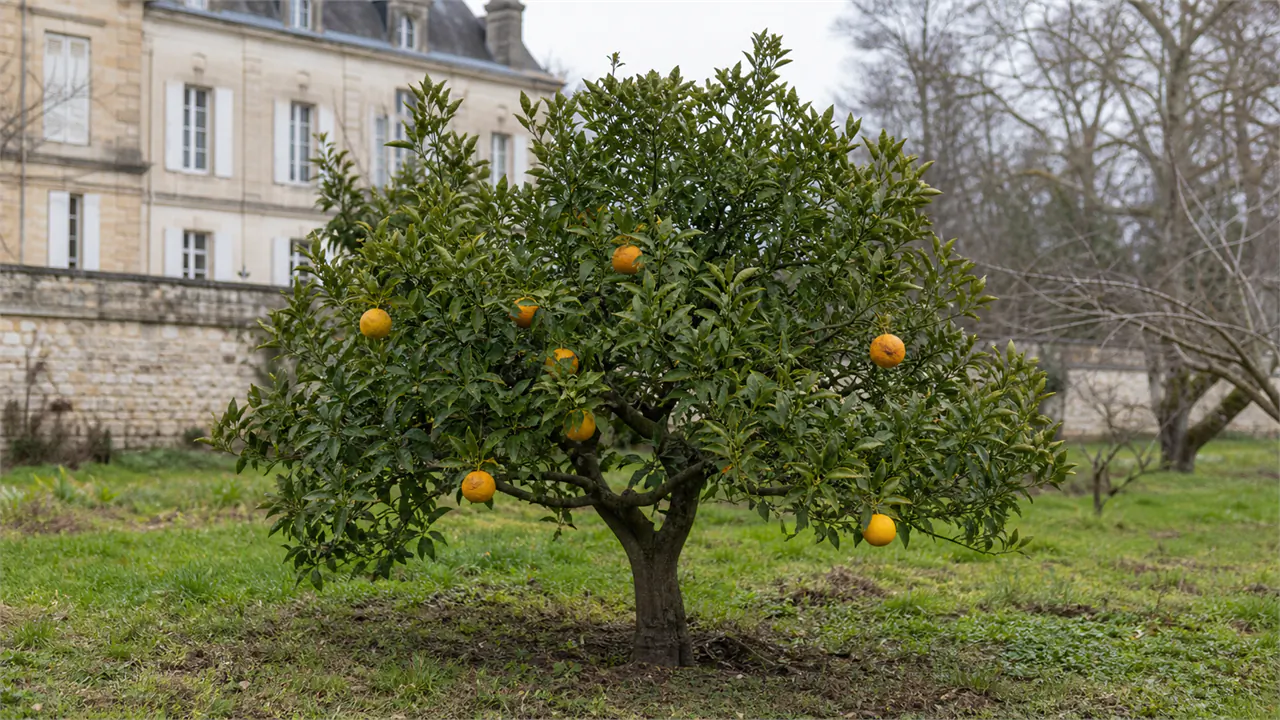
Salustiana is a Spanish sweet orange cultivarA variety produced through selection or cultivation, distinct from the wild original plant., valued for its dual purpose: fruit for both fresh eating and juicing. Its medium-sized oranges yield plenty of juice with a rich, sweet flavour, and they are usually nearly seedless, although an occasional pip remains possible. In Spanish growing conditions it reaches early to mid-season maturity, ahead of Valencia Late, the great late juice orange. British container timing depends on light, warmth and winter protection.
Unlike Navel dessert oranges such as Naveline and Washington Navel, Salustiana’s dual purpose is well documented. It is not a satsuma or mandarin: it is a sweet orange valued for abundant juice. Its Spanish season precedes Valencia, but that is not a guaranteed British harvest month.
Reliable checks before you buy
The dual-purpose orange before Valencia
Choose Salustiana for its dual purpose. Unlike Navels selected chiefly for fresh eating, or Valencia selected for late juice, it does both jobs well in the Spanish mid-season: eat it fresh and press it. Its juice is plentiful and sweet, but should still be drunk or chilled promptly; no cultivar is a storage guarantee. It is nearly seedless, not absolutely pip-free, and a recognised Spanish juice cultivar rather than a satsuma.
Its documented slot is before Valencia in Spanish citrus conditions; a protected British tree will respond to its own light and temperature. Rootstock choice must follow the root zoneThe area of soil occupied by a plant's roots, where water and nutrients matter most., and the exact graft combination should be confirmed with the nursery.
| Your conditions or aim | What to check | Reason — and limit |
|---|---|---|
| Named, true-to-type plant | Grafted Salustiana with a traceable label | Grafting brings a named clone into fruit sooner. ⚠️ A generic “orange tree” label does not establish the cultivar. |
| Carrizo or C-35 offered | Ask why it suits your container and water | Both are recorded on the UCR accession. ⚠️ That is not a blanket recommendation for Britain. |
| Hard or alkaline water | Nursery-matched rootstock and compost | Root conditions influence chlorosisYellowing of the foliage caused by poor iron uptake, often linked to chalky soil. risk. ⚠️ No rootstock is universal. |
| Key point | Confirm the exact graft combination | Match cultivar, rootstock, container and planned winter quarters before buying. |
Salustiana through the year: a container-led rhythm
In Britain, use a movable container: keep the tree bright and frost-free through winter, acclimatise it outdoors in a sunny sheltered place, and treat the marked harvest period as observation rather than a promised date.
| Jan | Feb | Mar | Apr | May | Jun | Jul | Aug | Sep | Oct | Nov | Dec | |
|---|---|---|---|---|---|---|---|---|---|---|---|---|
| Repot or refresh surface compost | ||||||||||||
| Keep in bright, frost-free winter quarters | ||||||||||||
| Acclimatise the container outdoors | ||||||||||||
| Main flowering period; fragrant blossom | ||||||||||||
| Observe protected fruit; harvest only when ripe | ||||||||||||
| Use a growing-season citrus feed |
Balance the crop and protect the tree
Fruit number and branch strain
Check whether the crop is crowded on a few shoots and whether branches are carrying fruit without bending heavily.
Small fruit or uneven ripening
A heavy crop may limit fruit size; weak light, irregular watering or root stress can also delay protected fruit.
Thin only when the crop demands it
Remove damaged fruit first, then thin crowded clusters only if needed and restore even watering before changing the feed.
Prepare bright winter quarters
Secure frost-free space before autumn, keep air moving and reduce winter watering without letting the rootballThe block of soil left around a plant's roots when it is planted or moved. dry out completely.
Read the sign, trace the cause, correct, prevent
Salustiana shares the usual orange-tree problems; container roots, winter air movement and crop load deserve particular attention in Britain.
| Observed sign | Likely cause | Correct | Prevent |
|---|---|---|---|
| Many fruits remain small | Crop load out of balance with the tree | Remove damaged fruit, then thin only if branches remain crowded | Watch fruit set and branch strain from an early stage |
| Yellow leaves with greener veins | Iron chlorosis linked to high pH, hard water or poor drainage | Check watering, drainage and root-zone pH; seek tailored advice if symptoms persist | Use free-draining compost and suitable water |
| Cottony masses or fixed scales on stems and leaf undersides | Mealybugs or scale insects | Isolate the plant, remove accessible pests and use only a currently authorised product if intervention is needed | Inspect before winter quarters and keep air moving |
| Black sticky coating on the foliage | Sooty mould on honeydew from scale insects or aphids | Identify and manage the honeydew-producing insect first | Monitor scale insects and aphids early |
| Silvery winding mines in young leaves | Citrus leaf miner | Remove only badly damaged soft growth and conserve beneficial insects | Avoid excess nitrogen that drives repeated soft growth |
Keep treatment proportionate: diagnose first, ventilate winter quarters and avoid excess feeding. For a regulated plant-health concern, follow current official guidance.
One orange, two useful roles
Salustiana works both ways: eaten fresh, its sweet flesh is usually low in pips; pressed, it provides juice in abundance. Drink or chill fresh juice promptly rather than treating the cultivar as a storage guarantee. The zest and peel can also flavour marmalade. This is a genuinely versatile family orange, spanning plate and glass before late Valencia fruit in Spanish conditions.
What the GB commercial standard says
Salustiana falls under “other varieties” of oranges in the published citrus standard for fruit supplied fresh to consumers; fruit for industrial processing is excluded.
- Commercial minima for other oranges: 53 mm diameter, at least 35% juice and a 6.5:1 sugar-to-acid ratio.
- Boundary: these are grading criteria, not cultivar averages, a domestic ripeness test or a promise for a container crop.
No generic tree yield is given. Rootstock, root volume, light, age, crop load, water and harvest date all change the result; compare only your own repeated observations.
What gardeners ask most often
Is Salustiana for eating or for juice?
Both. It is a dual-purpose sweet orange with juicy, sweet flesh that can be eaten fresh or pressed; handle fresh juice promptly.
Is Salustiana a satsuma?
No. Salustiana is a cultivar of sweet orange, Citrus × sinensis, not a satsuma or mandarin.
When does it ripen compared with Valencia Late?
In Spanish citrus conditions, Salustiana reaches commercial maturity before Valencia Late. A protected British tree does not inherit that calendar automatically.
Does Salustiana have pips?
Usually very few. Exact records describe it as practically or virtually seedless while also noting occasional seeds, so “nearly seedless” is the accurate promise.
Sources and verification
Last evidence check: 2026-08-02. Exact-cultivar evidence, British cultivation practice and commercial grading values are kept within their own geographic and legal limits.
- Royal Horticultural Society — How to grow citrus: British container culture for Citrus × sinensis, gradual outdoor acclimatisation and bright, frost-free winter protection.
- UK Government — marketing standard for citrus fruit: scope, minimum size and commercial maturity criteria for other orange varieties.