Ponkan mandarin
Citrus reticulata ‘Ponkan’ — Asia’s large, sweet mandarin
One of the world’s most widely grown mandarins: large, sweet and loose-skinned enough to peel in one easy motion. It is not a clementine — it is bigger, usually milder, and needs real warmth.
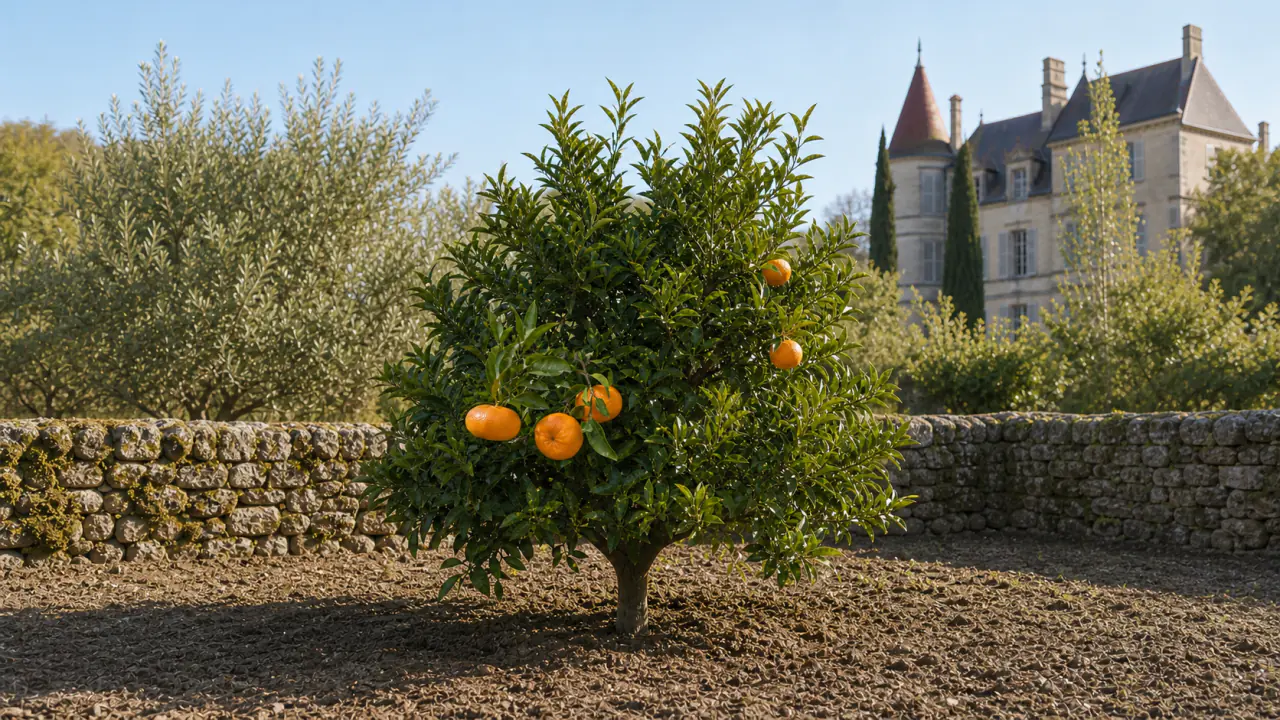
Ponkan is an old Asian mandarin group, now represented by several commercial lines including Nagpur suntara. Its signature is clear: a large, sweet fruit with a loosely adherent rind that comes away readily. Compared with a clementine, Ponkan is larger, generally milder and sweeter, more loosely skinned, and distinctly a warm-climate mandarin. Seed count and climatic behaviour vary between lines, so an unnamed “Ponkan” is not a complete nursery identity.
Set it beside true mandarins such as aromatic Dancy and Willowleaf. Do not confuse it with a clementine, which is smaller and more closely skinned.
Reliable points to check before buying
A mandarin, not a clementine — and it needs warmth
Choose Ponkan for what it is: a large, sweet mandarin with loose rind and tender, mildly aromatic flesh. Two points should decide whether it suits your garden. First, it is not a clementine: it is larger, more loosely skinned and usually less acidic. Second, this is a warm-climate fruit. UCR describes Ponkan as one of the most tropical mandarins; insufficient summer warmth compromises flavour and sweetness.
Because Ponkan covers several commercial lines, seediness, fruit behaviour and adaptation differ. Ask for the exact line. Rootstock must match the soil, and the graft combination should be confirmed with the nursery.
Ponkan through the year: warmth, open ground or container
Grow in the ground in a genuinely warm, mild climate; overwinter a container elsewhere, accepting that cool summers reduce fruit quality. The picking window is local, with November–January documented at Riverside.
| Jan | Feb | Mar | Apr | May | Jun | Jul | Aug | Sep | Oct | Nov | Dec | |
|---|---|---|---|---|---|---|---|---|---|---|---|---|
| Plant outdoors (warm mild areas) | ||||||||||||
| Protect / overwinter pot | ||||||||||||
| Move pot outdoors | ||||||||||||
| Fragrant spring bloom | ||||||||||||
| Winter harvest | ||||||||||||
| Citrus feed |
A sweet, well-filled Ponkan
Available warmth
Judge the site first: without a warm growing season, the rind may loosen before the flesh develops full sweetness.
Hollow or bland fruit
Very loose rind around mild flesh usually points to insufficient warmth, overholding or early picking, not disease.
Warmth and maturity
Use the warmest position and taste before picking; rind colour alone does not prove internal maturity.
Choose the named line
Seeds and behaviour vary between lines: buy one documented for your climate and expectations.
Observe first; treat only after identification
The same symptom can have several causes. This grid gives a first check, not a remote diagnosis or pesticide prescription.
| Observation | First check | Decision boundary |
|---|---|---|
| Leaves turning yellow | Check moisture, drainage, water quality and changes in young leaves | Have the cause confirmed before applying an amendment |
| Insects, cottony clusters or sticky deposits | Isolate the plant and identify the organism accurately | Use only a method or product authorised for that use, following the local label |
| Coloured fruit with disappointing flavour | Sample one fruit and check internal maturity before generalising | Rind colour alone cannot diagnose maturity or disease |
Seek professional or plant-health advice if decline is rapid, symptoms are unusual or regulatory status is uncertain.
The mandarin made for sharing
Large, sweet and easy to peel, Ponkan is immediate fresh-eating fruit, with generous segments that are easy to share. Fully ripe fruit gives mild, aromatic juice, while the loose peel can be used for marmalade when suitable for culinary use. Seeds vary by line and pollination; that is not abnormal. Its advantage is generous sweetness and convenience, provided the fruit receives enough warmth.
What the current marketing standard says
Ponkan belongs to other mandarin varieties under the European citrus marketing standard.
- Current standard: a normal minimum diameter of 45 mm, with 43 mm allowed only within the 10% size tolerance; 33% juice and at least a 7.5:1 sugar-to-acid ratio.
- Loose rind: a cultivarA variety produced through selection or cultivation, distinct from the wild original plant. characteristic, not automatically a defect; however, excessive puffing after maturity reduces quality.
Do not promise a generic yield. Crop size depends on line, rootstock, tree age, site and alternate bearing.
What growers most often ask
Ponkan or clementine?
Ponkan is a large, sweet, loose-skinned mandarin. A clementine is smaller and more closely skinned. They are distinct fruits.
Does Ponkan contain seeds?
It can. Seed count varies by line and pollination, so ask the nursery for the exact selection rather than assuming seedlessness.
Why is my Ponkan bland?
Insufficient warmth is a common cause. This warm-climate mandarin may develop loose rind before the flesh reaches full sweetness.
Why is its rind so loose?
That is a normal cultivar feature and makes Ponkan easy to peel. If fruit stays too long on the tree, the rind can become excessively puffy and quality declines.
Sources and checks
Target-language review: 30 July 2026. UCR and US extension provide the cultivar identity and local horticultural vocabulary; EUR-Lex provides the current marketing thresholds.
- UCR — Ponkan mandarin: lines and synonyms, fruit, tree, November–January at Riverside, climate, alternate bearing and rind puffing.
- UF/IFAS — Citrus Culture in the Home Landscape: Ponkan as an easy-peel home-garden tangerine and general cultivation.
- GOV.UK — Citrus fruit marketing standard: 45 mm nominal minimum, 43 mm only within the 10% size tolerance, 33% juice and a 7.5:1 minimum ratio for other mandarins.
- Royal Horticultural Society — grow your own citrus: UK horticultural guidance used only for drainage, container growing and winter shelter; it does not establish cultivar-specific performance.
- IVIA — mandarin and rootstock evaluation programme: Spanish official evidence used only for the experimental boundary that a combination is assessed against site, climate, soil and growing system; no universal ranking is transferred.