Minneola tangelo (Honeybell)
Minneola tangelo — ‘Dancy’ mandarin × ‘Duncan’ grapefruit hybrid
Recognisable by its stem-end neck, Minneola is exceptionally juicy and aromatic. UF/IFAS calls it not strongly self-fruitful: a suitable polleniser may improve cropping, but poor set alone is not a diagnosis.
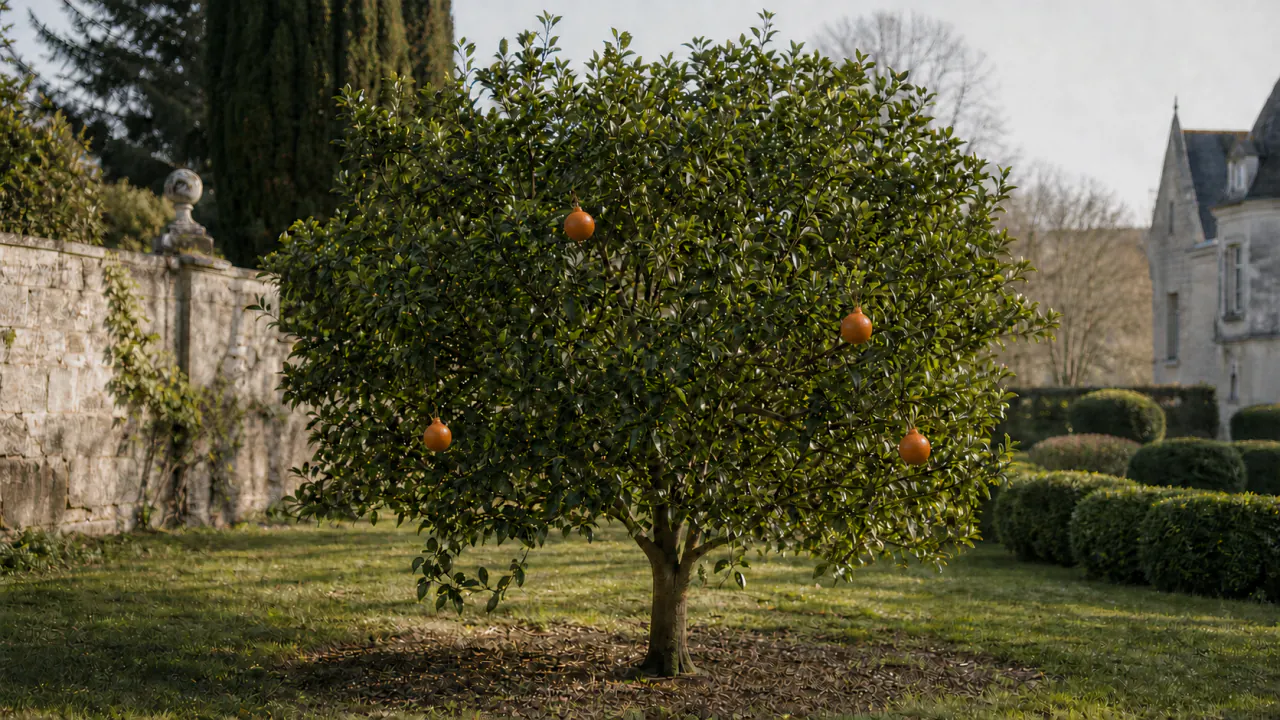
The Minneola tangelo, or Honeybell, is the American Dancy mandarin × Duncan grapefruit hybrid released by USDA in 1931. Its prominent stem-end neck, exceptionally juicy, aromatic flesh and tart-sweet flavour are distinctive. UF/IFAS describes it as not strongly self-fruitful and recommends suitable pollenising cultivars to improve yields. That does not diagnose every light crop or guarantee a partner in every garden.
Health notice — medicines. In Widmer’s 2005 Florida sample, no furanocoumarin was detected in Minneola (ND; analytical detection limit 10 ppb). This small chemical study neither proves universal safety nor excludes every interaction across fruits and medicines: if a leaflet restricts grapefruit or related citrus, ask a pharmacist about that specific medicine.
Compare Nova / Clemenvilla, whose response depends on the pollen pairing, and Fortune, whose pollen may affect some compatible clementines.
Reliable points to check before buying
A quality fruit — but plan your pollination
Minneola is grown for its bell shape, abundant juice and bold tart-sweet aroma. UF/IFAS calls it not strongly self-fruitful: a suitable polleniser may improve yields when compatibility and flowering overlap. The same source notes that disappointing crops can still occur with pollenizers and good growing conditions. Garden decisions therefore need both a checked partner and differential diagnosis.
Cross-pollination can also increase pips. Solid Minneola plantings tend to carry fewer seeds in the Florida context described, without a local guarantee. Choose rootstock and any polleniser for the actual site, confirming the exact combination and flowering overlap with the nursery or an agronomist.
| According to soil / aim | Rootstock(s) | Why — and the trade-off |
|---|---|---|
| Quality, production | Carrizo, C35 | Good balance of quality and yield. ⚠️ chlorosisYellowing of the foliage caused by poor iron uptake, often linked to chalky soil. in high pH soils. |
| Vigour, warm soil | Volkameriana, Citrus macrophylla | Sustained vigour. ⚠️ fruit can be less concentrated. |
| Calcareous or saline soil | Forner-Alcaide 5 (FA5) | Chlorosis tolerance. ⚠️ not universal. |
| Key takeaway | Check a suitable polleniser if poor set persists | Confirm compatibility and local flowering overlap; yield improvement is not guaranteed. |
Minneola through the year: open ground or container
Container culture with a sunny, sheltered summer position and bright frost-free winter shelter is standard in Britain. The winter harvest and spring pollination period must both be anticipated.
| Jan | Feb | Mar | Apr | May | Jun | Jul | Aug | Sep | Oct | Nov | Dec | |
|---|---|---|---|---|---|---|---|---|---|---|---|---|
| Planting (open ground, mild zones) | ||||||||||||
| Frost protection (indoor shelter / fleece) | ||||||||||||
| Move container outdoors | ||||||||||||
| Flowering; ensure pollination | ||||||||||||
| Harvest (winter) | ||||||||||||
| Citrus feed |
A Minneola that sets fruit and rewards the grower
Fruit set over several seasons
Record flowers, fruit, weather, watering, nutrition, vigour, pests, insects and neighbouring citrus rather than relying on one episode.
One hypothesis among several
Pollination may limit cropping, but rule out cold, heat, water, nutrition, young age, pests and disease before concluding.
Confirm the partner
If the hypothesis persists, confirm compatibility and flowering overlap before adding a polleniser; it may improve cropping and raise pip numbers, without guarantee.
Plan and keep observing
Include pollination in the planting plan without making it the sole factor: water balance, climate and plant health remain decisive.
Read the symptom, find the cause, correct it and prevent a repeat
Minneola shares common mandarin troubles; its specific challenge is pollination, not disease.
| Symptom observed | Likely cause | Correct | Prevent |
|---|---|---|---|
| Fine blossom, few fruits | Pollination limitation is possible, alongside cold, heat, water, nutrition, young age or health problems | Compare seasons and rule out competing causes; then confirm any partner | Record flowering, climate, water, health and neighbouring cultivars |
| Yellow leaves with green veins | Iron chlorosis (high pH, lime, waterlogging) | Chelated iron; adjust watering; suitable rootstock | Free-draining compost, low-lime water |
| Cottony patches or scales on stems and undersides | Mealybugs or scale insects | Wipe clean, horticultural oil or soft soap, isolate | Ventilate winter quarters, inspect before housing |
| Sticky black coating on foliage | Sooty mould on insect honeydew | Control the honeydew-producing pest first | Monitor scale and aphids early |
| Silvery winding mines on young leaves | Citrus leaf miner | Remove badly affected shoots; encourage beneficial insects | Avoid excess nitrogen producing soft flushes |
Keep treatments proportionate: clean foliage, ventilated winter quarters, balanced feeding. For regulated plant health concerns, consult current official guidance.
The citrus for juice
Overflowing with juice, Minneola is enjoyed fresh, its neck making it easy to handle, and yields an abundant, aromatic juice — the use that made it famous as « Honeybell ». Its fragrant zest rounds out its culinary uses. Depending on pollination, it may contain pips. The 2005 chemical study detected none in Minneola but is not a medical guarantee; follow the medicine guidance above if a leaflet restricts grapefruit or related citrus.
What the standards say
Minneola falls under the mandarins and hybrids group in commercial fruit standards.
- Regulatory group: other mandarins and hybrids; standard thresholds apply — check local commercial rules, without invented figures here.
- Yield: a suitable polleniser may improve it, but UF/IFAS also records occasional small crops despite good conditions; there is no single-cause diagnosis.
No generic yield is published: it depends on pollination, rootstock, soil, age, and climate. Assess your own crop.
What growers most often ask
Why does my Minneola produce almost no fruit?
Pollination limitation is possible because UF/IFAS calls Minneola not strongly self-fruitful, but it is not diagnostic. Check climate, water, nutrition, age and health, and verify any polleniser and local flowering overlap.
Why does it have this bell shape?
It is Minneola’s signature: a marked stem-end neck, hence the nickname « Honeybell ». It is a normal feature, not a defect.
Can I eat it while taking medication?
Widmer’s small 2005 Florida sample reported no furanocoumarin detected in Minneola (10 ppb limit). That does not guarantee the absence of every interaction across fruits or medicines. If the leaflet restricts grapefruit or related citrus, ask your pharmacist about that specific medicine.
What are its parent species?
It is a tangelo resulting from a cross between the ‘Dancy’ mandarin and the ‘Duncan’ grapefruit, bred in the United States.
Sources and checks
Latest scientific check: 31 July 2026. The polleniser guidance is bounded to UF/IFAS evidence; the Widmer medicines boundary above is unchanged.
- Royal Horticultural Society — How to Grow Citrus fruit: British container culture and bright, frost-free winter shelter only; it does not establish Minneola’s pollination behaviour.
- Universeity of Florida IFAS — Minneola Tangelo: cultivarA variety produced through selection or cultivation, distinct from the wild original plant. origin, parentage, and pollination guidance.
- Widmer — furanocoumarin screening in commercial tangelos: primary USDA-authored study; table 1 lists Minneola (Honeybelle), Dancy × Duncan, 50% grapefruit parentage, as ND (not detected). Analytical detection limit 10 ppb; eight fruit sampled per variety, four prepared, duplicate analyses. This small chemical study is not an individual medical guarantee.