Nova mandarin tree (Clemenvilla)
Clementine × Orlando tangelo, ‘Nova’ cultivar — commonly sold as Clemenvilla
Compatible cross-pollen can improve fruit set in Nova trials, but often increases pips. Poor cropping alone is not a diagnosis: partner compatibility and other stresses need checking.
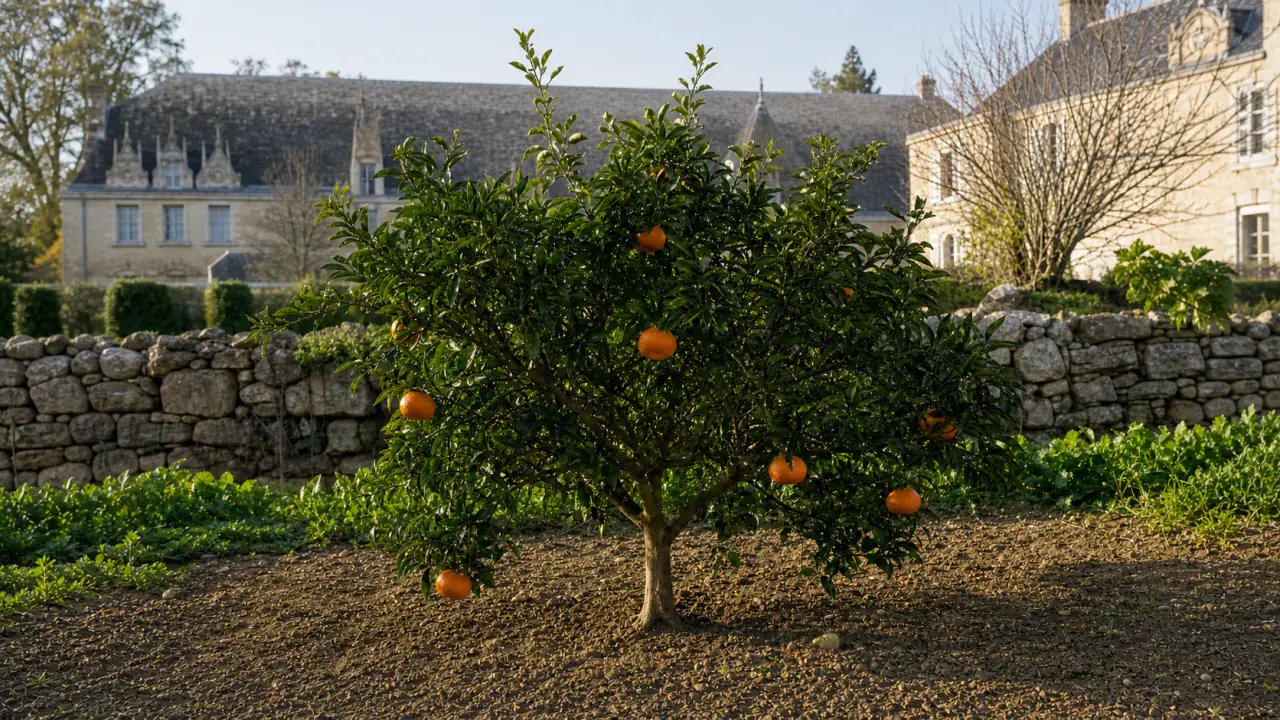
The Nova mandarin, frequently retailed as Clemenvilla, is a clementine × Orlando tangelo hybrid with medium to fairly large, brightly coloured, juicy and aromatic fruit. It is described as self-incompatible. In trials using named pollen donors, cross-pollination improved set or yield and increased seed numbers. The response depends on the pairing, flowering overlap and conditions, so a light crop by itself does not prove a pollination deficit.
Compare with Marisol clementine, where parthenocarpy changes the seed question, and Minneola tangelo, for which a suitable polleniser is often recommended after local checks.
Reliable points to check before buying
The Nova trade-off: crop yield versus pips
Nova is described as self-incompatible. Trials with named pollen donors show that cross-pollination can improve set or yield and often increases seed numbers. No polleniser or effect size should be extrapolated to every garden: compatibility, flowering overlap and local conditions must be checked.
| Strategy | What you gain | What you accept |
|---|---|---|
| Isolated tree (single variety) | May produce fewer pips | Fruit set can be light; outcome not guaranteed |
| With a confirmed partner | Set may improve where compatibility and flowering overlap are verified | Often more pips; effect belongs to the pairing and context |
| Your decision | Balance pip count, crop and local feasibility | No universal yield or pip-free guarantee |
The fruit itself is exceptional: colourful, juicy, aromatic, and medium to fairly large. The rootstock should be selected according to your soil, with the exact combination confirmed by your nursery supplier.
| According to soil / objective | Rootstock(s) | Why — and the trade-off |
|---|---|---|
| Quality and production | Carrizo, C35 | Good balance of fruit quality and cropping. ⚠ ChlorosisYellowing of the foliage caused by poor iron uptake, often linked to chalky soil. risk in high pH soils. |
| Container, cooler site, compact habit | Trifoliate orange, Flying Dragon | Restrains size and concentrates quality. ⚠ Sensitive to active lime. |
| Calcareous or saline soil | Forner-Alcaide 5 (FA5) | Potential lime tolerance. ⚠ Not a universal solution. |
The rhythm of Nova: container or sheltered garden
Container cultivation with bright, frost-free winter shelter is recommended in Britain; open-ground growing is suited only to exceptionally mild, sheltered locations. Harvest runs from winter into early spring, while pollination must be considered during the previous spring.
| Jan | Feb | Mar | Apr | May | Jun | Jul | Aug | Sep | Oct | Nov | Dec | |
|---|---|---|---|---|---|---|---|---|---|---|---|---|
| Plant outdoors (mild southern sites) | ||||||||||||
| Protect from frost (overwinter container indoors) | ||||||||||||
| Move container outdoors for summer | ||||||||||||
| Spring flowering; manage pollination | ||||||||||||
| Harvest (winter to early spring) | ||||||||||||
| Citrus feed and watering |
A productive Nova suited to your taste
Fruit set over more than one cycle
Record blossom, weather, watering, vigour, pests, insect activity and set over more than one season where possible.
Test several hypotheses
Heavy blossom followed by few fruits is consistent with a pollination limit but is not specific. Rule out cold, heat, drought, nutrition, tree youth and health problems.
Confirm before adding a partner
If pollination remains plausible, ask a nursery or agronomist to confirm cultivarA variety produced through selection or cultivation, distinct from the wild original plant. compatibility and local flowering overlap before adding a partner, accepting a higher pip risk.
Plan without promising
Map neighbouring citrus and flowering periods at planting, while continuing to monitor water, cold, heat and plant health.
Read the symptom, find the cause, correct it and prevent a repeat
Nova experiences the usual citrus pests and ailments; its unique characteristic is a pollination dynamic rather than a disease vulnerability.
| Observed symptom | Probable cause | Correct | Prevent |
|---|---|---|---|
| Abundant blossom, few fruits | Pollination limitation is possible, alongside cold, heat, water, nutrition, young age or health stress | Compare seasons and rule out those causes before confirming a partner | Record flowering, weather, watering and cultivar neighbours |
| Many pips in fruit | Cross-pollination is possible; this sign does not identify the donor | Check neighbouring cultivars and flowering overlap | Reduce exposureThe amount of sunlight a spot in the garden receives (full sun, part shade, shade). if desired, without promising pip-free fruit |
| Yellow leaves with green veins | Iron chlorosis (high pH, lime, waterlogging) | Apply iron chelate; adjust watering; check rootstock suitability | Ensure free-draining compost and use low-lime water |
| Cottony patches or scale shields on stems and leaf backs | Mealybugs or scale insects | Wipe clean, use horticultural soap or approved treatment | Ventilate winter quarters and inspect before bringing indoors |
| Silvery winding trails on young leaves | Citrus leaf miner | Remove heavily infested soft shoots; encourage beneficial insects | Avoid excess nitrogen feeding that triggers soft flushes |
Keep treatments proportionate: clean foliage, well-ventilated winter quarters and balanced feeding come first. For regulated plant health issues, follow current official UK guidance.
A fruit of exceptional quality
Whatever cultivation strategy you choose, Nova delivers a brightly coloured, juicy and aromatic fruit that is wonderful eaten fresh in segments or pressed for juice. Its fragrant zest and peel are also well suited to marmalade making. If you have prioritised yield (and therefore accepted seeds), the fruit remains a culinary delight with wonderful flavour. It is a hybrid mandarin designed for pure enjoyment, provided you accept its pollination requirements.
What the standards state
Nova falls within the group of mandarins and hybrids under standard fruit marketing regulations.
- Regulatory group : other mandarins and hybrids; standard sizing and quality criteria apply according to commercial grade.
- Crop yield : highly dependent on pollination; single-variety plantings produce light crops, highlighting the importance of your chosen growing strategy.
No generic yield figure is published: cropping depends on pollination, rootstock, soil type, tree age and local climate. Assess your own harvest locally.
What growers most often ask
Why does my Nova tree produce very few fruits?
Pollination limitation is possible, but this symptom is not diagnostic. Check flowering weather, water, nutrition, age and health, and confirm both compatibility and local flowering overlap before choosing a partner.
How can I obtain fruit without pips?
Reducing exposure to compatible pollen may lower pip numbers, but it cannot guarantee pip-free fruit and may coincide with lighter set under some conditions.
Are Nova and Clemenvilla the same thing?
Yes: ‘Clemenvilla’ is the common commercial trade name for the ‘Nova’ hybrid (clementine × Orlando tangelo).
Is the fruit good to eat?
Yes, of exceptional quality: brightly coloured, juicy and aromatic. The trade-off involves pollination and pips, never flavour.
Sources and checks
Last scientific review: 31 July 2026. Pollination effects remain bounded to the documented cultivars, protocols and conditions.
- Royal Horticultural Society — Citrus × aurantium (Tangelo Group) “Nova”: UK plant-record evidence for the horticultural name only, not the pollination mechanism.
- Royal Horticultural Society — How to Grow Citrus fruit: British container culture and bright, frost-free winter shelter.
- Givaudan Citrus Variety Collection at UCR — Nova mandarin: foreign US exact-cultivar evidence for parentage, fruit characters and the mixed-versus-isolated planting observation; Riverside dates are not UK dates.
- Papadakis, Protopapadakis & Therios — Yield and fruit quality of “Nova”… as affected by self- and cross-pollination: foreign two-year trial with named pollen donors; no universal partner or yield is inferred.