Hong Kong kumquat
Citrus japonica wild group — historically Fortunella hindsii
The smallest-fruited kumquat is a collector plant, not a dessert substitute: dense, thorny and fine-leaved, it is grown for botanical interest, ornament and bonsai.
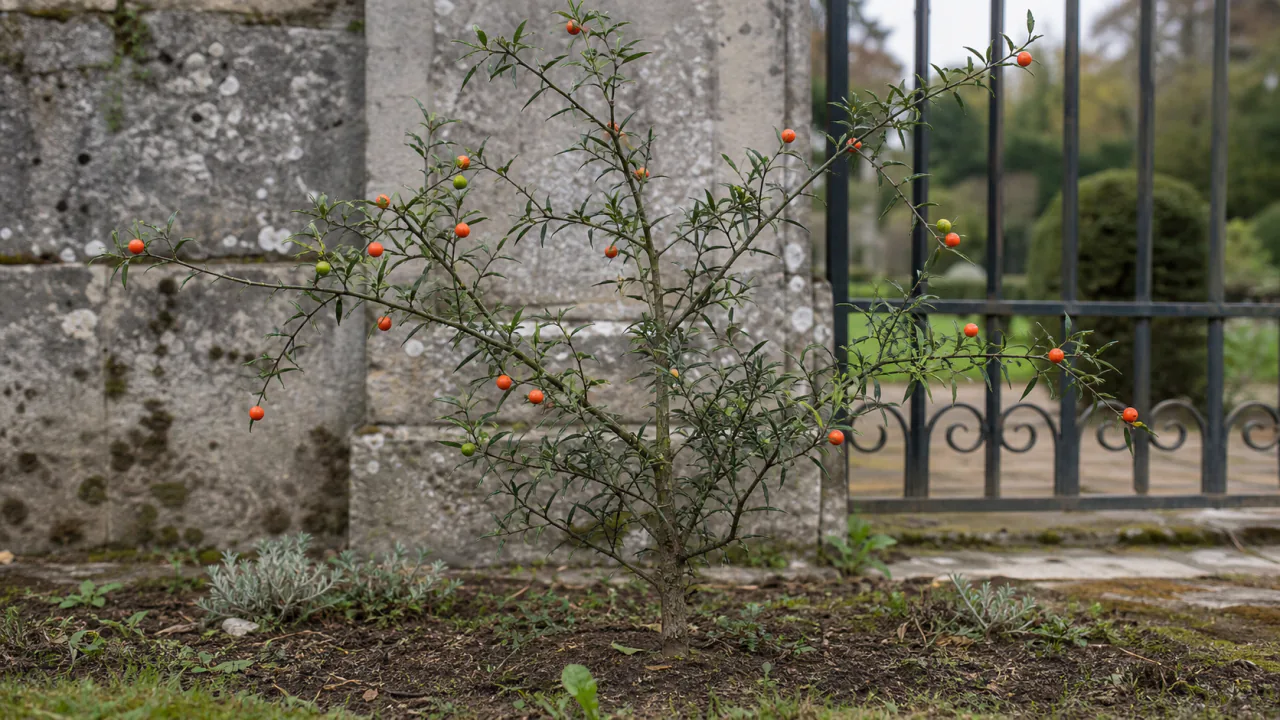
TThe Hong Kong kumquat is a wild species, historically placed in Fortunella hindsii and now associated with the wild kumquat group (Citrus japonica broadly understood). Native to southern China and Hong Kong, it forms a dense, thorny, small-leaved shrub carrying minute fruit with very little flesh and many seeds. Its eating quality is poor: this is not a substitute for Nagami, but a collector plant for botany, ornament and bonsai.
For edible kumquats choose Nagami, Meiwa, Marumi or Fukushu. Hong Kong kumquat is bought for a different purpose.
Reliable checks before you buy
A collector plant — not a fruit crop
Choose it for the right reason. If the aim is bowls of edible kumquats, this is the wrong plant: the tiny fruit is seed-rich and flesh-poor. As a botanical curiosity, ornamental specimen or bonsai subject, however, its dense thorny branching, fine leaves and miniature orange fruit are genuinely distinctive.
Buy a traceable, correctly named plant and ask whether it is seed-grown or grafted. Match any rootstockThe root and base onto which a variety is grafted to give it vigour or resistance. to compost and irrigation water; do not buy on an unsupported hardinessA plant's ability to survive winter cold without protection. number.
| Your situationWhat to | ask | aboutReason — and trade-off |
|---|---|---|
| Container and restricted | spaceTrifoliate orange or Flying | DragonOften chosen to restrain vigour. ⚠ Suitability depends on graft compatibility, compost chemistry and nursery experience. |
| Hard or alkaline irrigation | waterRootstock named by | the nurseryHigh pH can aggravate iron chlorosisYellowing of the foliage caused by poor iron uptake, often linked to chalky soil.. ⚠ Do not assume one rootstock solves every container-water problem. |
| More vigour | wantedCitrange optionsA more vigorous combination | may fill a larger shelter. ⚠ It can also outgrow a pot and remains site-dependent. |
| Keep this ruleNo universal | ban or winnerBuy a | traceable grafted tree and confirm the exact cultivarA variety produced through selection or cultivation, distinct from the wild original plant.–rootstock combination with the supplying nursery. |
The Hong Kong kumquat year in protected culture
Grow it as a mobile collector citrus in Britain: summer light outdoors after frost, then bright, cool and frost-free shelter. Fruit is chiefly an ornamental winter display.
| JanFebMarAprMayJunJulAugSepOctNovDec | ||||||||||||
|---|---|---|---|---|---|---|---|---|---|---|---|---|
| Plant or repot under protection | ||||||||||||
| Keep bright, cool and frost-free | ||||||||||||
| Move outdoors after frost | ||||||||||||
| Watch for summer flowering | ||||||||||||
| Taste ripe fruit | ||||||||||||
| Feed container citrus |
A healthy collector specimen, not a forced crop
Observe Identity,
thorns, leaf scale, fruit Check the whole combination before treating it as Hong Kong kumquat.
Weak growth or
lost fine structure Poor light, wet roots or forced soft growth can blur the compact silhouette.
Correct Light, drainage, restraint
Improve light and drainage, then make one change at a time; do not force growth with excess nitrogen.
Prevent Protect the collection
plant Quarantine new citrus, inspect before winter shelter and use gloves around the thorns.
Read the symptom, trace the cause, correct, prevent
Its dense thorny canopy can conceal scale insects and mites. Inspect the inner crown carefully before moving the plant under cover.
| What | you | seeLikely | causeCorrectPrevent |
|---|---|---|---|
| Yellow leaves with greener veinsPossible | iron chlorosis, high pH, hard water or wet rootsCheck | drainage, water quality and root condition before | feedingUse free-draining compost and monitor irrigation water |
| Cottony clusters or fixed scales | on stemsMealybugs or scale insectsIsolate, remove | by hand and confirm the pestInspect before | overwintering and maintain ventilation |
| Sticky leaves with a black coatingSooty | mould growing on insect honeydewFind | and control the sap-feeding insect firstCheck | young shoots and leaf undersides early |
| Silvery winding mines in young | leavesCitrus leafminerRemove only badly damaged soft | growth; protect beneficial insectsAvoid forcing repeated | lush growth with excess nitrogen |
| Flowers or young fruit droppingFluctuating water, | temperature or | nutritionRestore steady moisture and reduce abrupt environmental changesWater consistently | in summer and repot before roots become congested |
Start with hygiene, ventilation and correct watering. For a suspected regulated pest, follow the UK Plant Health Portal; before using any product, check its current authorisation and label for the exact use.
Collection value, not culinary yield
The fruit is too small, flesh-poor and seed-rich to justify presenting Hong Kong kumquat as a table citrus. Its honest value lies in botanical study, ornament and bonsai.
What the standards do — and do not — tell you
Hong Kong kumquat sits outside the named citrus fruit-size groups used in the marketing standard; do not borrow orange, grapefruit or pummelo codes.
- Commercial classification: no species-specific size scale is applied here; identity, plant health and collector value matter more than diameter.
- Tiny fruit: characteristic of the species, but not evidence of useful culinary yield.
Crop size changes with rootstock, shelter, container volume, tree age and season; record the performance of your own plant.
What growers ask most often
Is the fruit edible? It
is not treated here as a table fruit: flesh is scarce and seeds numerous. Choose a cultivated kumquat for eating.
Why grow it?
For botanical interest, a dense thorny silhouette, tiny leaves, miniature fruit and bonsai potential.
Is it the same
as Nagami? No. Nagami is a cultivated oval whole-fruit kumquat; Hong Kong kumquat is a wild collector taxon.
Can it stay
outdoors in Britain? Do not rely on that. Use a mobile container and bright, cool, frost-free winter shelter.
Sources and verification
Last local-language evidence check: 2026-08-04. UCR supplies the exact accession record; British care follows RHS citrus guidance.
- Royal Horticultural Society — growing citrus: British container care, watering and frost-free winter shelter.
- UC Riverside Citrus Variety Collection — Hong Kong kumquat CRC 3789: accession identity and collector-species morphology.