Marumi kumquat
Citrus japonica ‘Marumi’ · historical name: Fortunella japonica
A small, rounded kumquat with aromatic peel and acidic flesh. Its flavour makes sense when you taste the whole fruit, not the pulp alone.
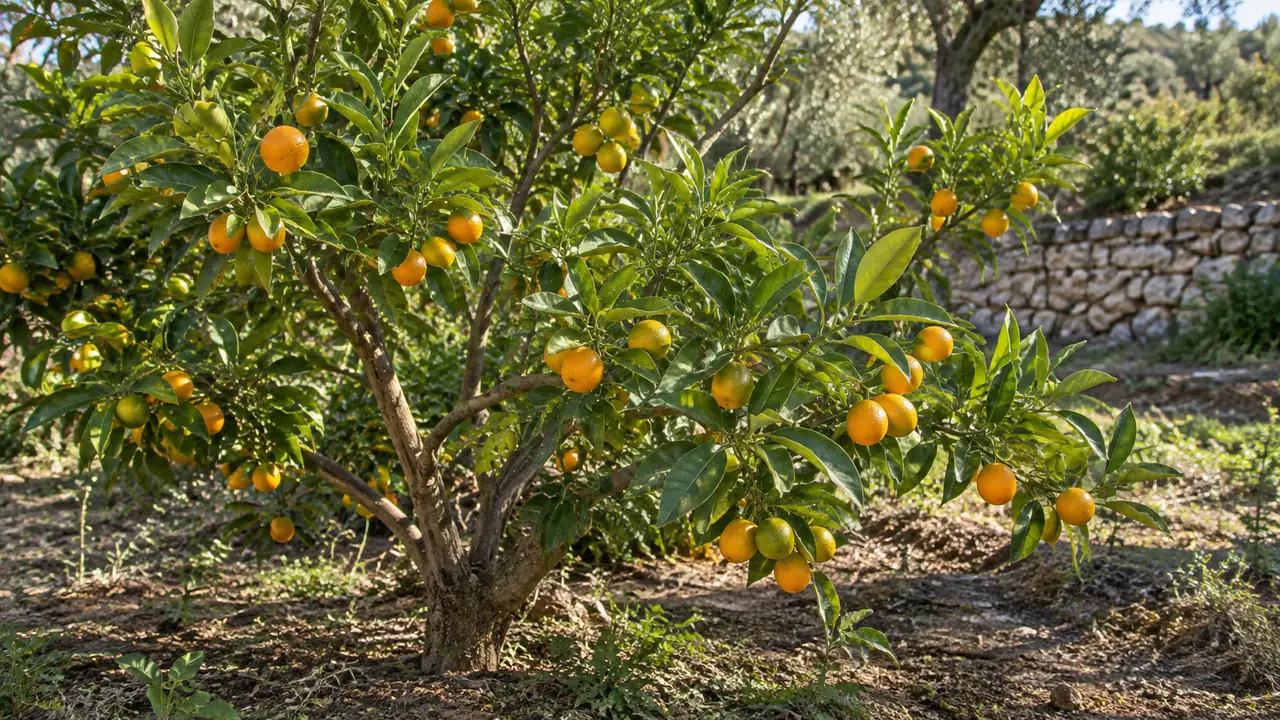
Choose Marumi for its small round fruit, fragrant thin rind and sharp flesh. For a sweeter whole-fruit bite, compare it with Meiwa, whose thicker sweet rind changes the balance. In a British garden, the next decision is where the tree will spend winter. A movable container and a suitable bright shelter are more useful starting points than an unqualified “hardy citrus” label.
Round fruit is a clue, not proof of Marumi
The University of California, Riverside description for Marumi CRC 3237 records round to slightly flattened fruit, thin aromatic rind and acidic juice. Its historical diameter of about 2.5–3 cm is a useful identification reference, not a promised size for every crop. Oval leaves with relatively blunt tips and occasional thorns provide additional clues.
| Kumquat | Useful distinction | What it means when choosing |
|---|---|---|
| Marumi | Small rounded fruit, thin aromatic rind and acidic flesh. | Choose for the contrast between peel and pulp, not sweet flesh. |
| Nagami | Typically oval or elongated fruit. | Shape helps distinguish it from Marumi, but provenance still matters. |
| Meiwa | Rounded to short-oblong fruit with thicker sweet rind; the flesh remains acidic. | Worth comparing if you prefer a sweeter whole fruit. |
| Fukushu | Broader, often bell-shaped fruit with a depressed tip. | A different larger-fruited kumquat, not another name for Marumi. |
Comparators: UCR Nagami, Meiwa and Fukushu/Changshou. No single photograph authenticates a cultivarA variety produced through selection or cultivation, distinct from the wild original plant..
Keep the nursery label and ask for the cultivar and rootstockThe root and base onto which a variety is grafted to give it vigour or resistance., if grafted. A generic label such as “kumquat” or Citrus japonica does not distinguish these choices. Collection rootstock records describe those accessions; they are not a universal recommendation for a British container.
Find the winter space before buying the tree
The RHS citrus growing guide advises protected winter conditions and notes that kumquats often need 7°C or more. That is a growing recommendation for kumquats, not an experimentally established death point for Marumi. It cannot be reversed into “safe outdoors down to this temperature”.
Assess a bright conservatory, greenhouse or other frost-protected space by its actual night temperature and light. A warm living room with limited winter daylight is not equivalent. Container growing lets you move the tree; it also means arranging enough space and a pot you can realistically handle.
The USDA description reports cold tolerance for the Marumi clone DPI-50-47 in Florida. It does not establish that an exposed pot, a young tree and fruit hanging on the branches share one frost limit. If no suitable winter space is available, resolve that constraint before choosing a permanent outdoor position.
Move the plant outside gradually when local conditions allow. There is no single national date that suits a sheltered coastal courtyard and a frost-prone inland garden. Check the forecast and the conditions at your own site rather than copying a Californian growing calendar.
Check the compost before adding water
Use a pot with drainage holes and a freely draining growing medium. During active growth, keep the compost moist without leaving the pot standing in water. In winter, the RHS advises allowing the surface to partly dry before watering. Reduced watering is not the same as drying out the entire rootballThe block of soil left around a plant's roots when it is planted or moved..
After watering, check that excess water can escape. If the compost is still wet, wait and reassess rather than following a weekly rule. Hot, windy weather may require more frequent checks than a cool spell; a move into shelter changes the conditions again.
In our citrus collection in Nice, balancing too little and too much water is a practical challenge across different plants and containers. This is a French collection observation, not evidence that Marumi has been trialled by us in the UK. It supports observation before intervention, not a fixed watering frequency.
Keep pruning light. Removing dead wood or an awkward crossing branch is different from repeatedly clipping away the crown. Before blaming a small crop on fertiliser, consider the plant’s age, growth, light, winter conditions and root health.
The fruit tastes sour: what should change?
Taste rind and flesh separately
Use a ripe, sound, identified fruit suitable for eating. Note its colour and the date, remove the seeds, then compare a little rind, the pulp and a whole-fruit bite. An early-picked fruit is not a fair test of ripe flavour.
Recognise a normal character
Acidic flesh agrees with the Marumi description. By itself, it does not demonstrate a nutrient deficiency or a wrongly labelled plant.
Change the use before the feeding
If you dislike the fruit fresh, use its aromatic peel and acidity in preserves or candied fruit. Do not increase fertiliser solely to remove a normal flavour character.
Choose by the whole-fruit taste
For a future purchase, taste ripe Marumi and Meiwa from known plants where possible. Record which balance of peel and pulp you prefer.
Do not turn a collection calendar into a UK promise
Riverside’s accession notes include its own maturity observations. Those conditions are not a harvest calendar for an overwintered British pot. Inspect the developing crop and sample coloured fruit rather than picking everything on a date copied from another climate. The small fruit is eaten with the peel; its limited, acidic pulp does not make Marumi a high-juice citrus.
Only eat fruit from a plant intended for food use, with any treatments checked for that use. Keep the label if you bought an ornamental plant in fruit. The RHS guidance on chemicals explains that products may have restrictions for edible plants and an interval before harvest. Appearance alone does not establish a plant’s treatment history.
If leaves drop after moving indoors, check light, temperature changes and compost moisture, then inspect leaf undersides and stems for pests. The RHS identifies several possible causes of citrus leaf loss. Adding water, feed and a treatment together makes it harder to tell which condition was wrong. Isolate a pest-infested plant and identify the problem before acting.
Named collections and UK growing guidance
- Royal Horticultural Society — How to grow citrus: UK winter conditions, watering and problems; general citrus guidance, not a Marumi frost trial.
- UCR — Marumi CRC 3237: attributed cultivar description and accession records; comparator accessions linked above.
- USDA Citrus ID — Marumi: identification characters and the limited scope of clone observations.
- INRAE — Les agrumes du Nord de la Méditerranée : p. 195, « Quel porte-greffe pour quel scion (variété) ? » ; rootstock selection depends on variety, climate, soil, cultivation and graft compatibility; no universal best rootstock for Marumi.