Growing Journal: An Organic Hemp (CBD) Crop, Start to Finish
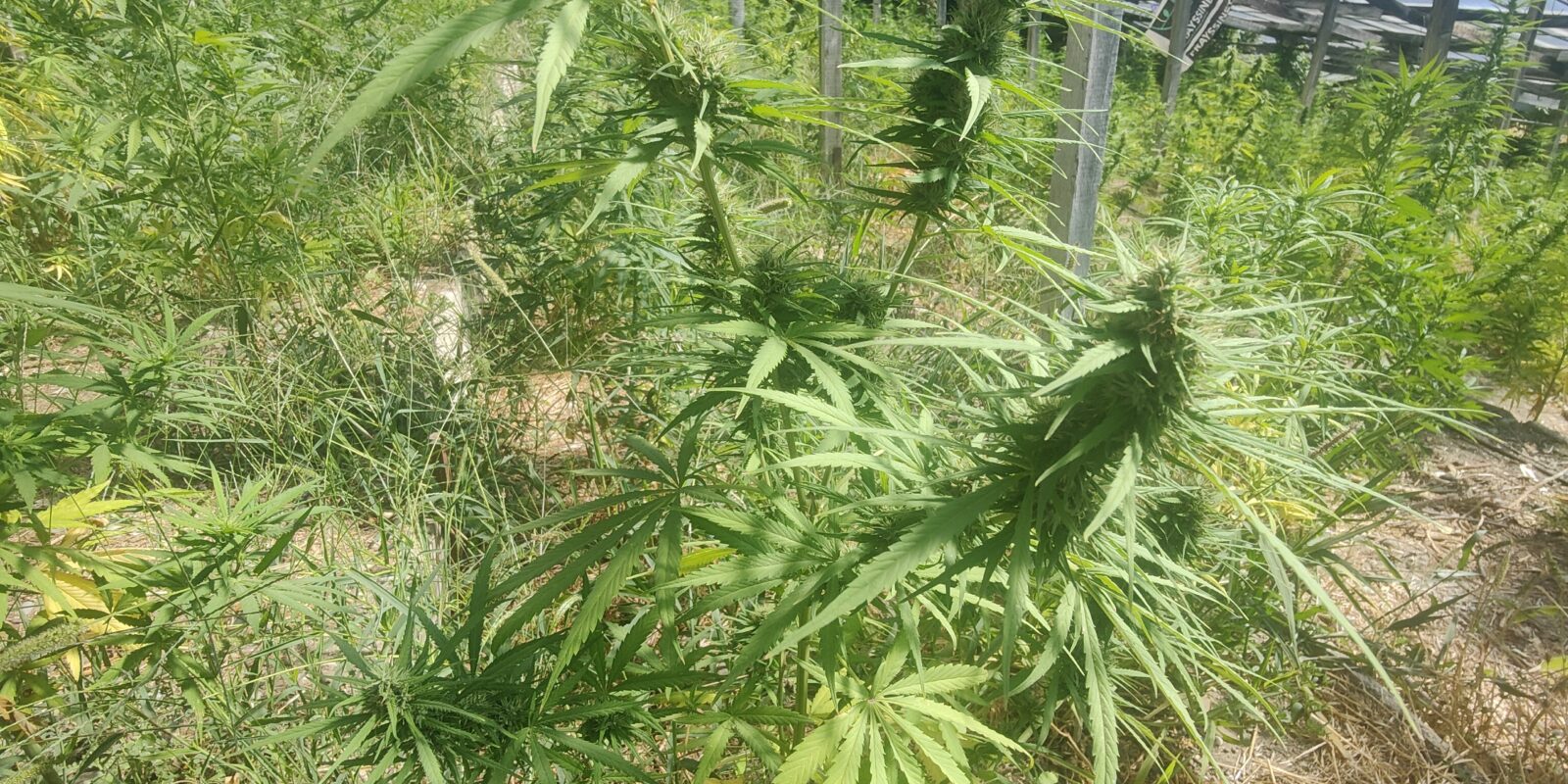
In 2023, a cosmetics professional placed an order with us for a precise raw material: an organic hemp flower harvest, for moisturising creams. We answered that order once, in the Kompolti variety, on a dedicated bed of the estate. We have never repeated it since, for lack of a further request. Here is the full account of this crop, from sowing to delivery — including the setback, and the risk that hangs over this kind of harvest right up to the last day.
This journal follows a crop genuinely grown under the professional framework described in our Encyclopedia entry on hemp: an approved catalogue variety, a declared holding, and a THC level checked in a laboratory before any sale — all under French law, since this crop was grown in France. Growing this plant remains reserved for licensed or declared professionals, and the rules differ significantly by country: readers outside France should note that a standard UK Industrial Hemp licence does not cover flower at all — leaves and flowers must be destroyed under that licence, not harvested and sold as described here. See the fiche’s legal section for the detail. This journal is not an instruction manual for private use; it is an account of what happened, including what went wrong.
As a precaution, and to avoid any misunderstanding, we had notified the local gendarmerie of this crop before planting it — a hemp plot in open ground, even a perfectly lawful one, can look confusing from the outside. This is not a legal requirement, it is a common-sense precaution we would recommend to anyone considering a crop of this kind.
Choosing the variety and setting up the plot
The professional was looking for an organic raw material, which steered the choice towards a variety suited to management without synthetic inputs. We chose Kompolti, a Hungarian variety on the EU catalogue, photoperiodic, known for being vigorous and resistant to mould — a trait that matters particularly for a harvest destined to dry as dense flowering tops.
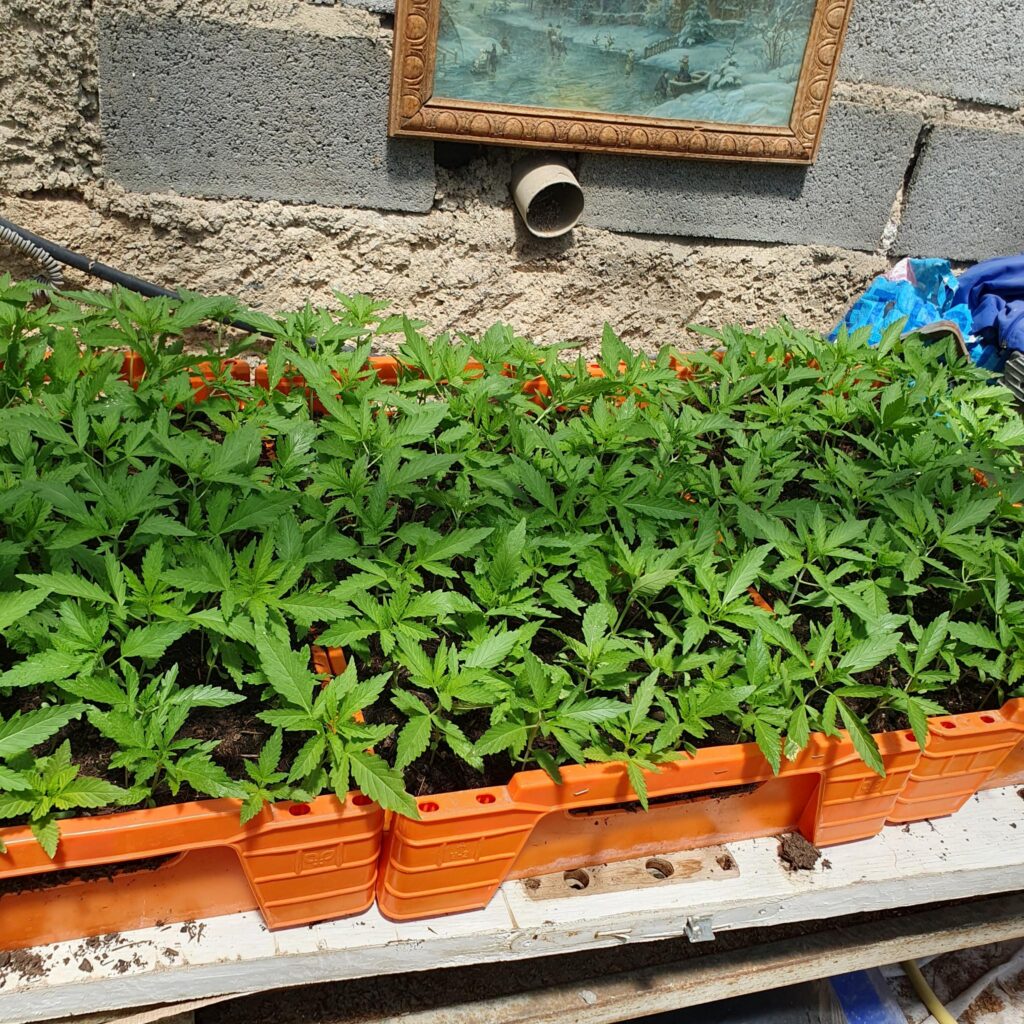
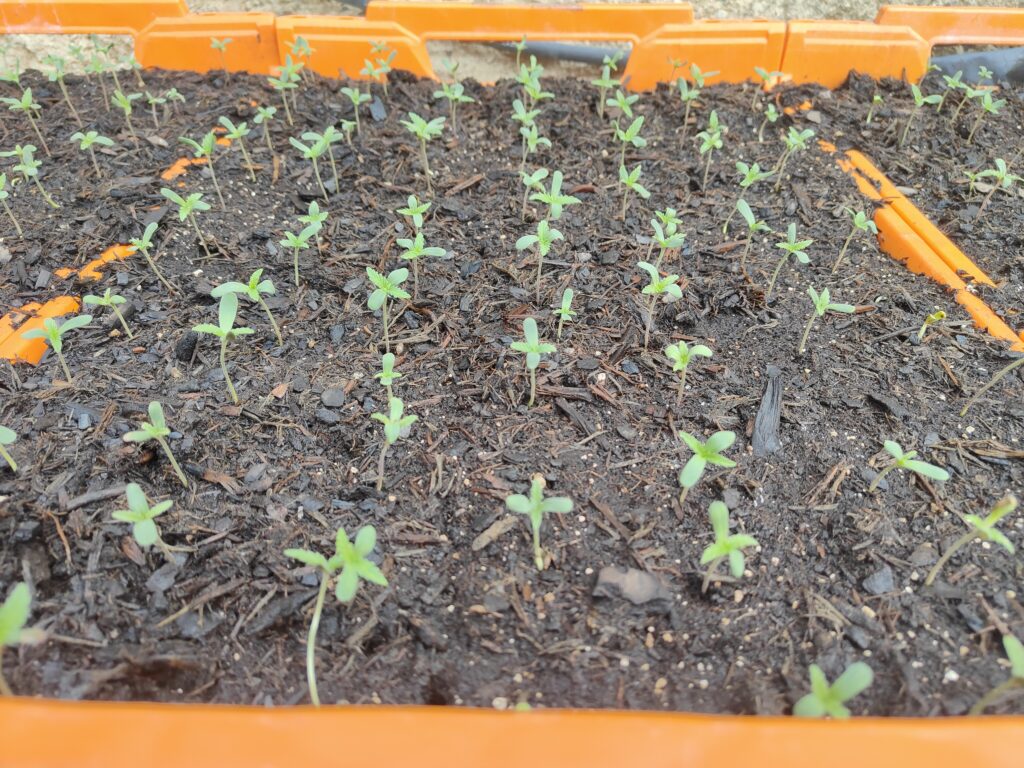
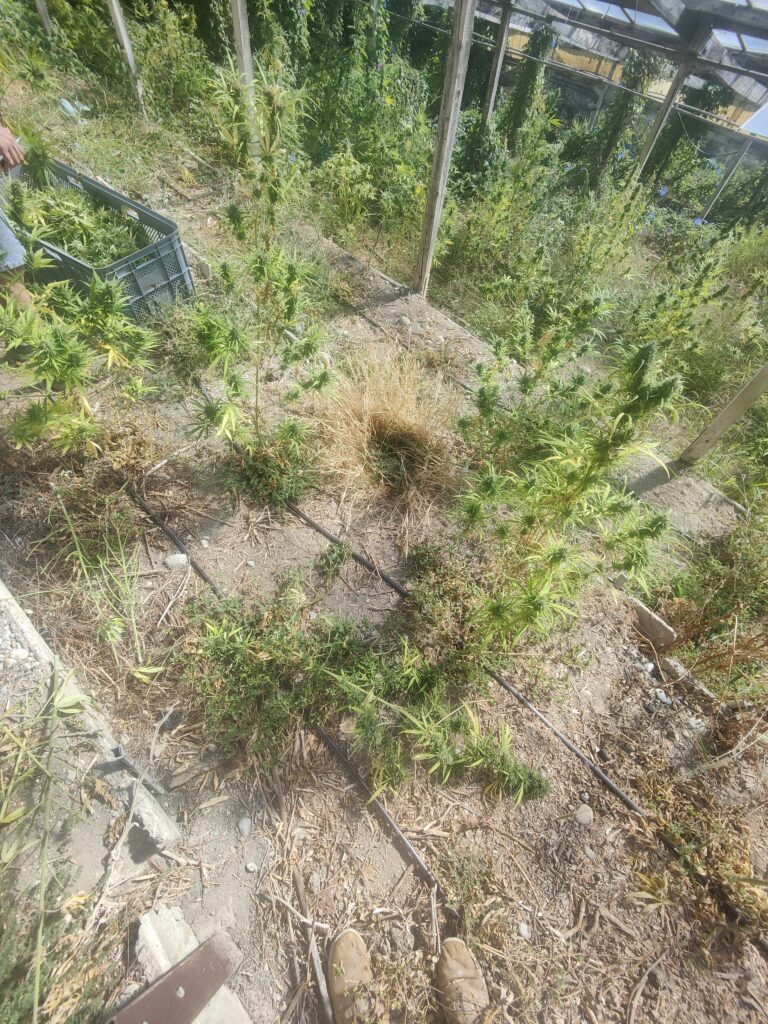
Planting took place in March 2023, on a dedicated bed of the estate, within the same organic-certification area as the rest of the holding. We planted 450 plants, at a rate of one plant per metre, in rows spaced 60 centimetres apart, arranged in a staggered pattern rather than straight lines. The point of staggering is simple: each plant ends up offset from its two row-neighbours, giving it its own light corridor rather than growing in the direct shade of the plant opposite. For a crop aimed at flower, where every flowering top counts, this spacing has a direct bearing on the result.
| Element | Value used |
|---|---|
| Variety | Kompolti (EU catalogue) |
| Number of plants | 450 |
| Spacing within the row | 1 metre |
| Spacing between rows | 60 centimetres |
| Layout | Staggered |
| Sowing date | March 2023 |
Why a March sowing gives an October harvest
Kompolti, like most traditional hemp varieties, is photoperiodic: its flowering is not triggered at a given age, but once night length passes a threshold, near the end of summer. Sowing in March therefore does not speed anything up — it simply lengthens the vegetative growth phase during the long-day months, before the plant switches to flowering as autumn approaches. It is this mechanism, more than the variety itself, that explains a full cycle of seven months between sowing and harvest.
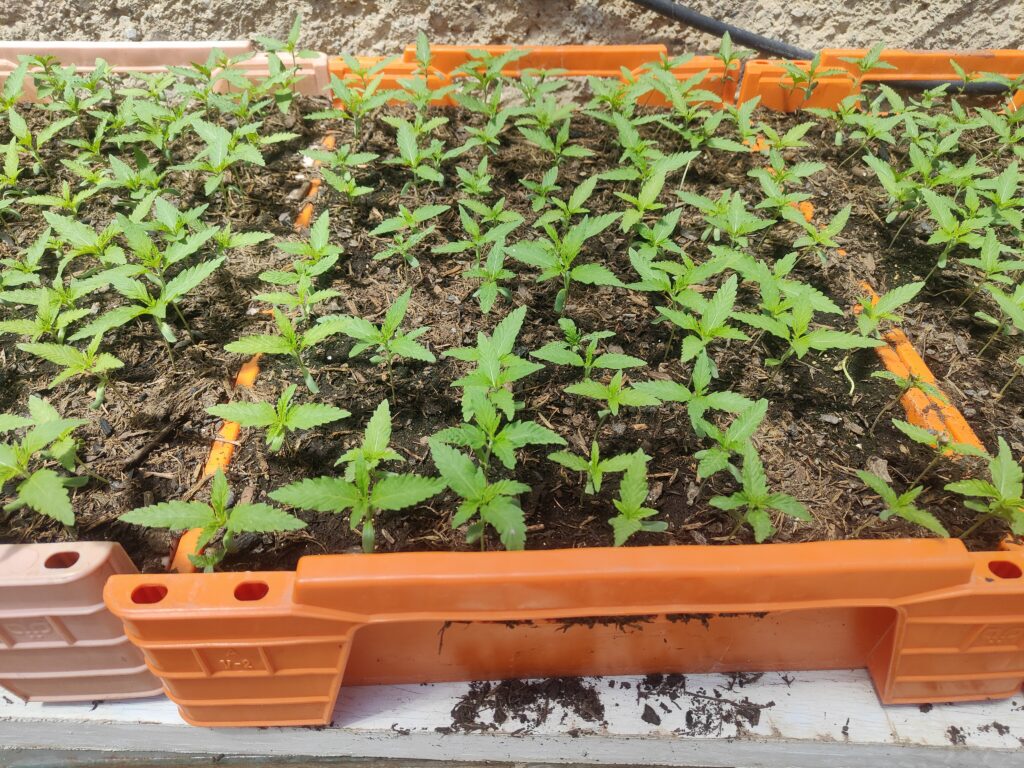
The setback: a mite attack in full growth
During the vegetative phase, an attack of spider mites broke out on the plot — stippled foliage, fine webbing visible under the worst-affected leaves. On a crop destined for cosmetic extraction, a standard contact treatment was out of the question: any residue could potentially end up in the raw material delivered to the client.
We handled the episode with a release of predatory beneficials, with no contact treatment at all — the same approach used elsewhere on the estate, for instance on the aubergines. The predators did the job without leaving a trace on the harvest.
The harvest marker: the lens, not the calendar
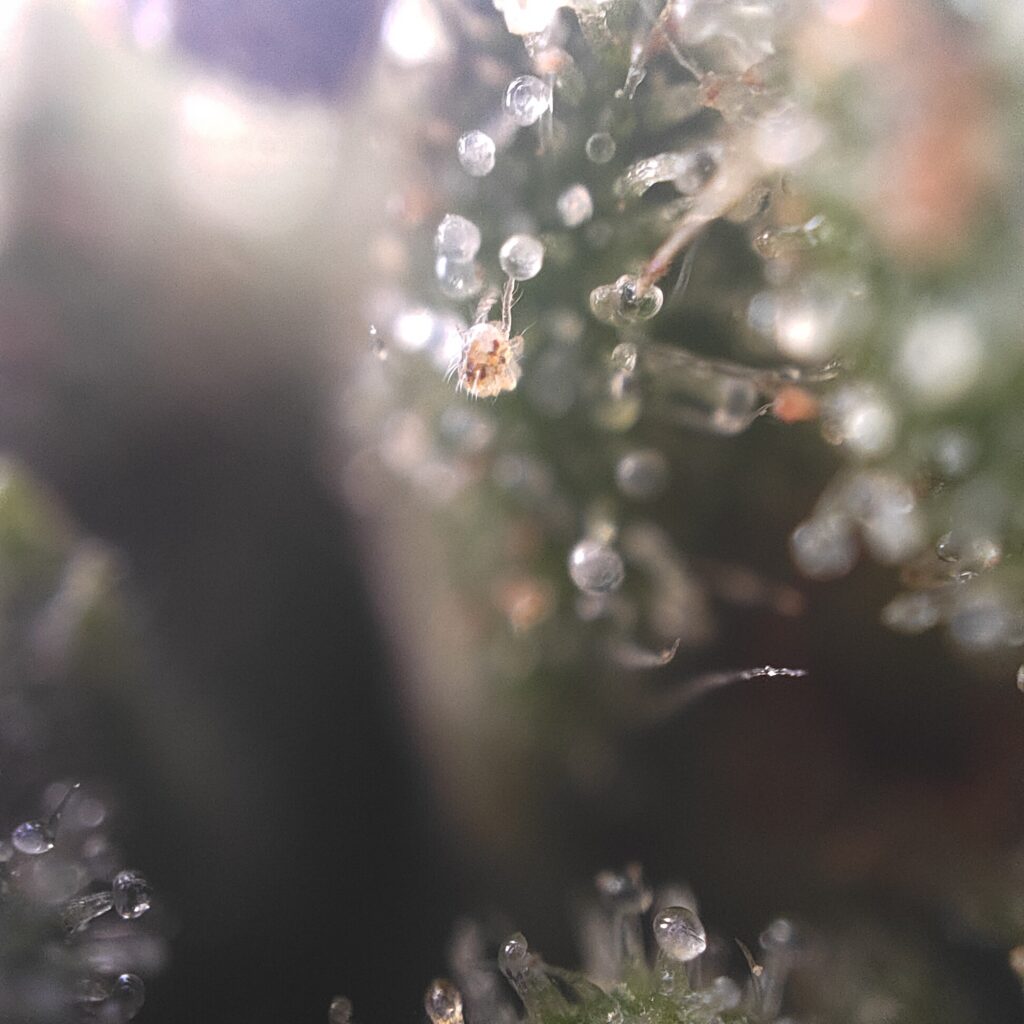
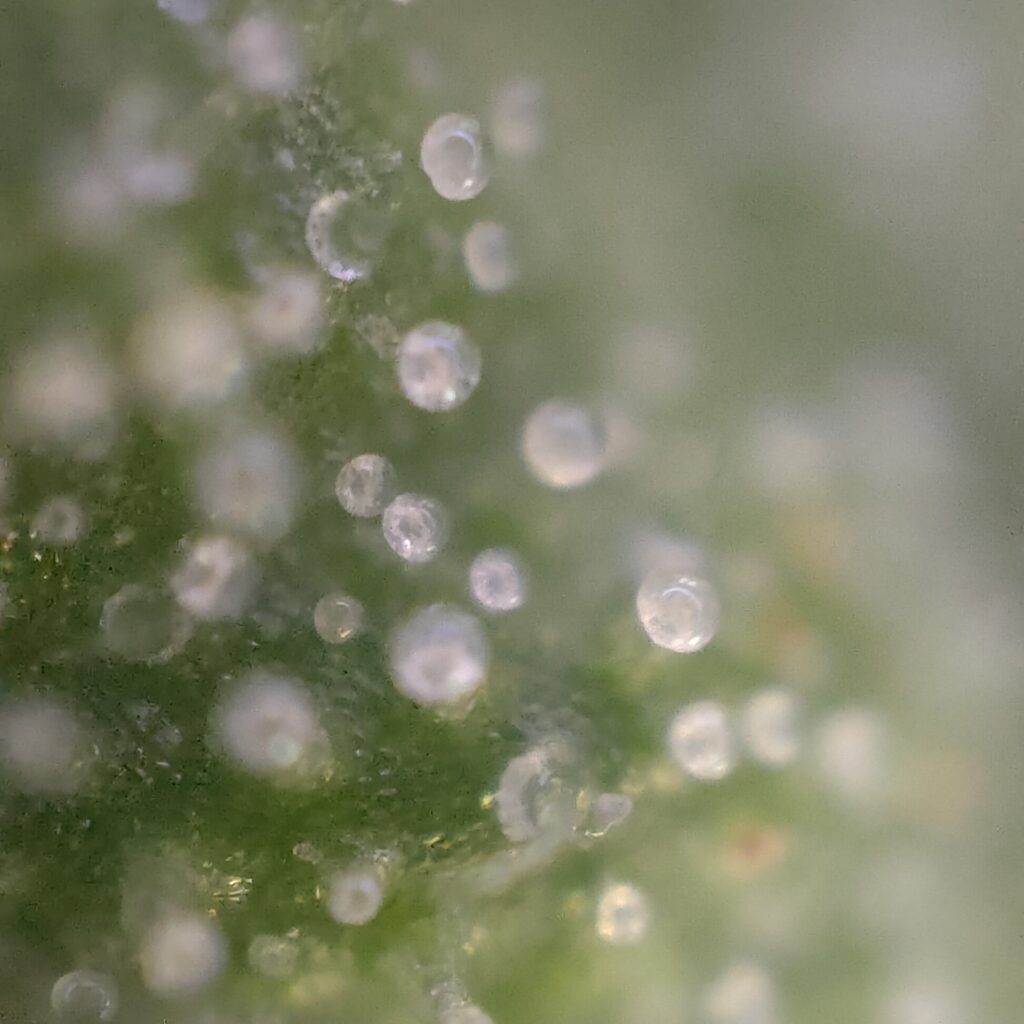
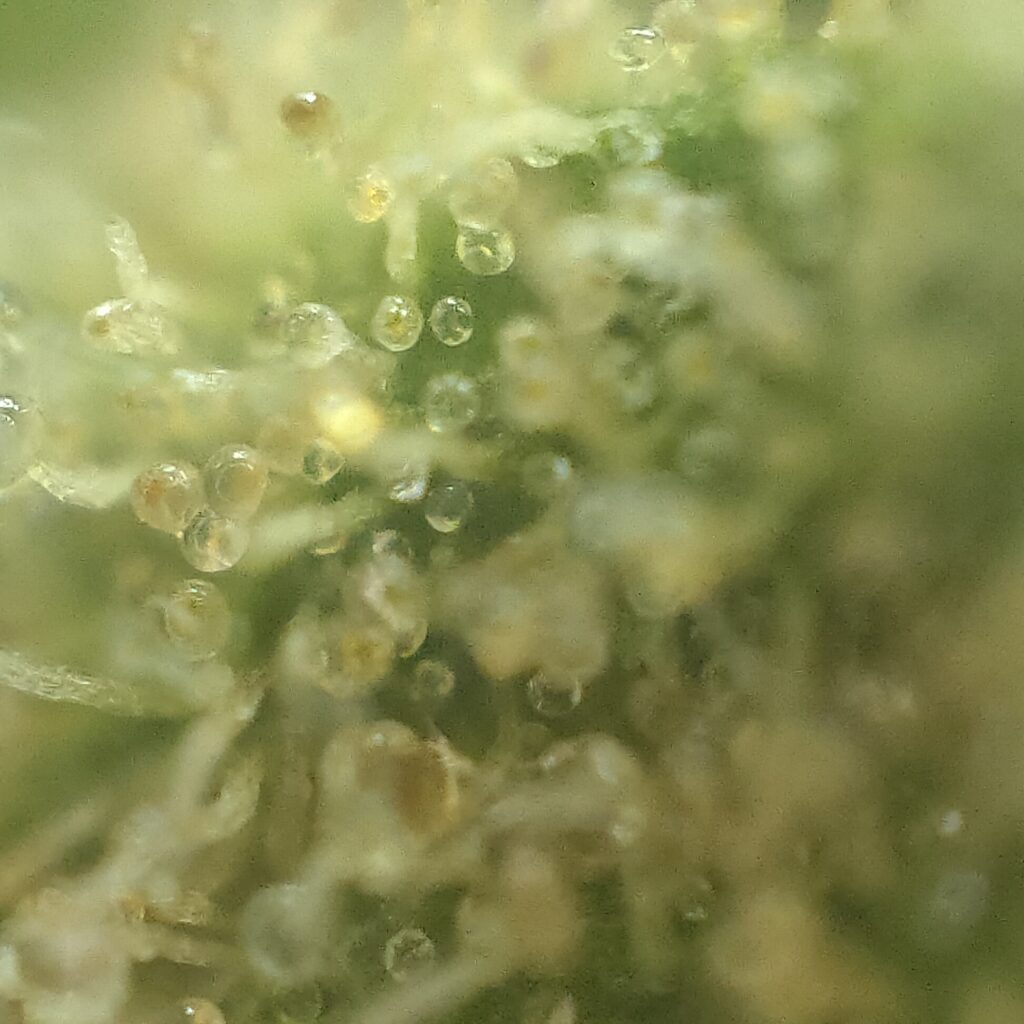
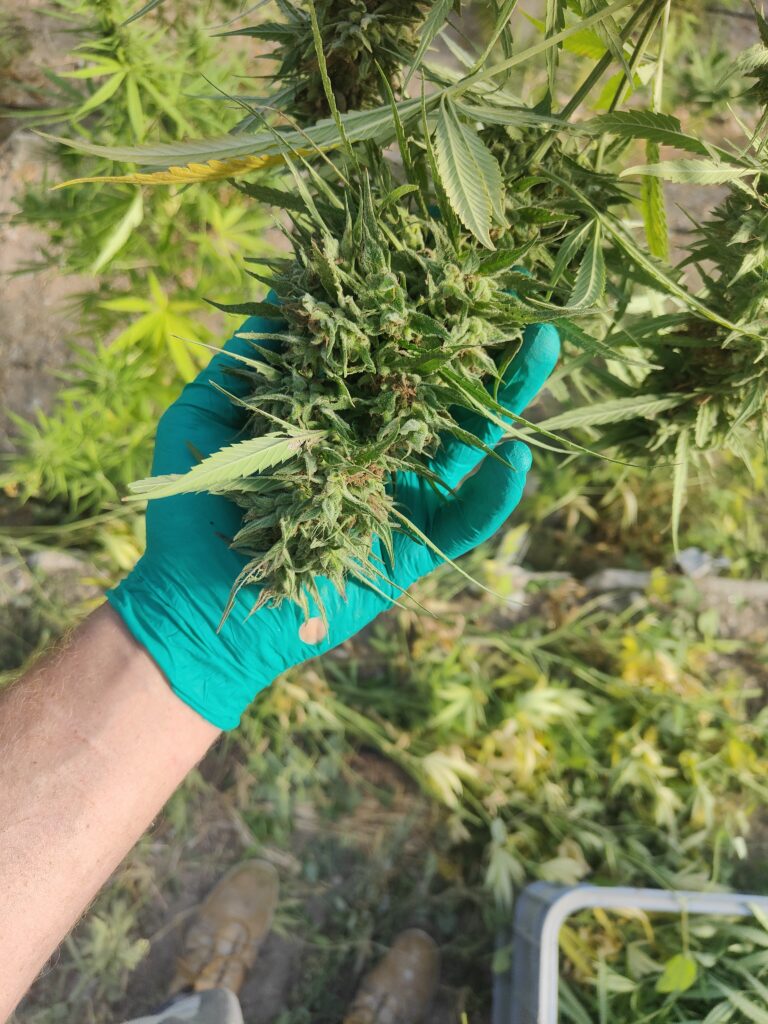
The moment to cut was not fixed by a date, but by direct observation of the trichomes — the small resinous glands covering the flowering tops — under a microscope. The marker used: cut when around half the trichomes have turned brown. Too early, and trichomes still clear signal insufficient maturity; too late, and a higher proportion of browned trichomes changes the aromatic profile and cannabinoid content of the flower. Harvest took place in October 2023, once this marker was reached.
Drying: a small greenhouse set up for the occasion
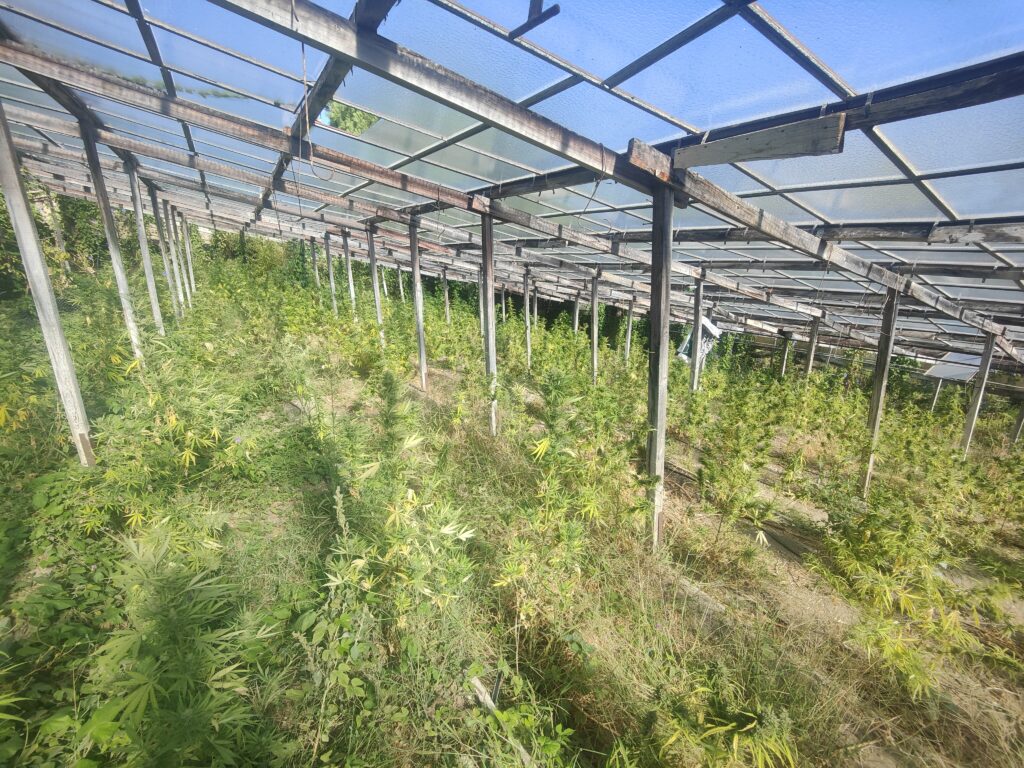
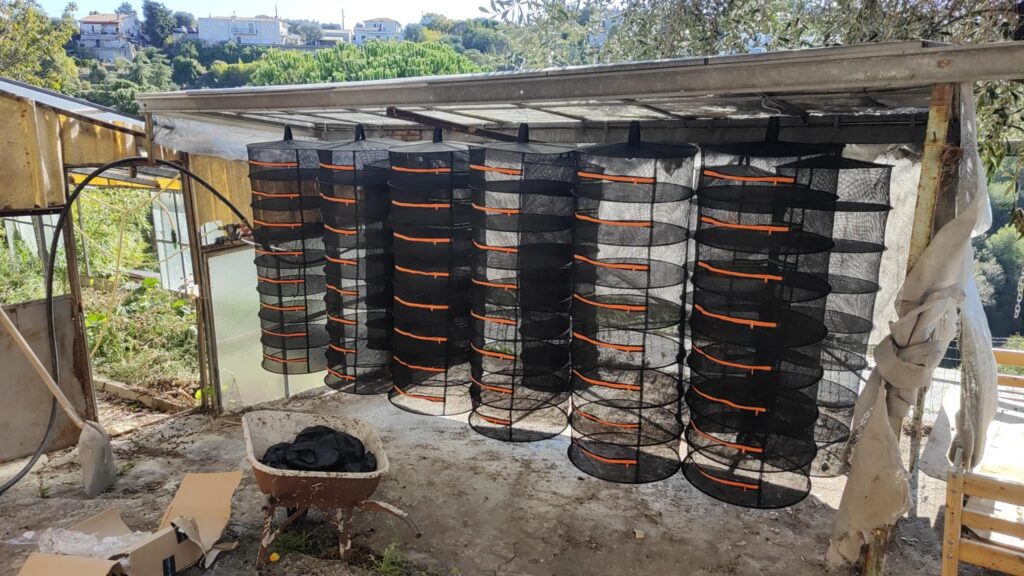
After cutting, the flower dried for two weeks, in a small greenhouse covered specifically for this stage, away from direct light, which degrades trichomes and terpenes. To keep that darkness from turning into damp confinement — a real risk for mould on dense flowering tops — the bottom 60 centimetres were left open, giving constant airflow without exposing the flower to direct light.
Drying was not judged finished on a date fixed in advance. This protocol treats a stabilised weight as the only stopping criterion, with no date set beforehand: the drying sacks were weighed every day, and the flower was considered dry once the weight stayed constant for three consecutive days.
The check that decides everything: laboratory analysis
Before any sale, French regulation requires an accredited laboratory THC analysis of the dried harvest. This is the real tipping point of this kind of crop: if the level exceeds the legal limit, the crop must be destroyed, with no exception and no room for negotiation. Seven months of work, a mite attack carefully managed, drying tracked day by day — all of it can end in destruction if the analysis comes back wrong. This risk never left this crop, from the first day of sowing to the return of the lab result.
Delivery
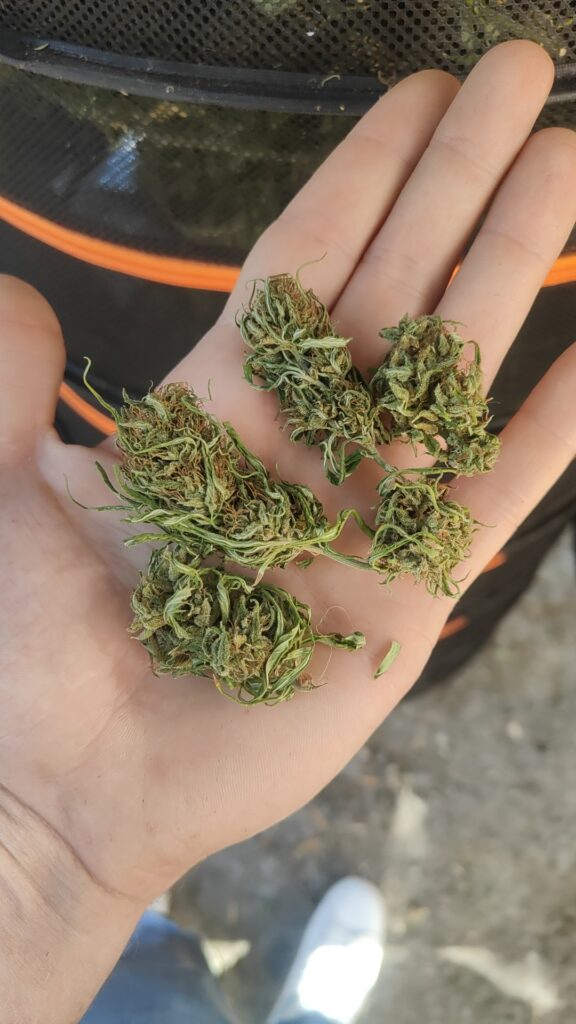
The harvest yielded 20 kilograms of dried flower from the 450 plants grown. Once a compliant analysis result came back, the flower was delivered as it was, dried, to the commissioning professional — who then handled the extraction and formulation into their moisturising creams. We were never involved in that part of the process.
Why this crop was never grown again
The answer is simple, and we would rather give it plainly than dramatise it: there has been no further order since. It was not a diversification we were trying to establish permanently on the estate, but a one-off response to a specific request. If a professional ordered again, we would know exactly how to proceed — the protocol itself was learned once and for all.
Key takeaways
- A professional, declared crop, never an instruction manual for personal use — reserved for identified holdings, and this one was grown under French law specifically.
- The gendarmerie was notified before planting, as a precaution — a lawful hemp plot can still look confusing from the outside.
- The harvest marker is judged under a lens, on the trichomes, not by a calendar date.
- Drying is measured, never estimated: daily weighing, weight stable for three days running.
- The real risk in this crop is neither weather nor pests — it is the laboratory analysis that decides whether it can be sold.
- A single order stays a single order: we did not turn it into a regular line of production on the estate.
Frequently asked questions
Can this crop be reproduced at home? Not lawfully. Hemp cultivation is reserved for declared or licensed holdings using certified seed of a catalogue variety, and the rules on what a licence actually permits vary sharply by country — see our Encyclopedia entry on hemp for the detail relevant to your own. This journal describes a professional crop, not a method transposable to private use.
Why 20 kg of flower from 450 plants? This is the result observed on this plot, in this season, with this variety. Yield per plant varies widely with climate, planting density, management and chance — we report this figure as an observation specific to this harvest, not as a generalisable average.
What would have happened if the THC threshold had been exceeded? The crop would have had to be destroyed, with no possibility of sale or processing, regardless of the work already invested. That is the rule, and it applies the same way to every declared producer.
Also see our Encyclopedia entry on hemp, which sets out the full legal framework for several countries, the three outlets (fibre, seed, flower) and the growing markers.