Hemp (Cannabis sativa): Cultivation, Outlets and the UK Legal Framework
Cannabis sativa L. — approved low-THC varieties, licensed cultivation only in the UK
One species, three quite different outlets — fibre, seed, flower — and one rule that overrides all the others: in the United Kingdom, hemp may only be grown under a Home Office domestic licence, on approved varieties, below a strict THC limit. This is not a plant for the amateur garden.
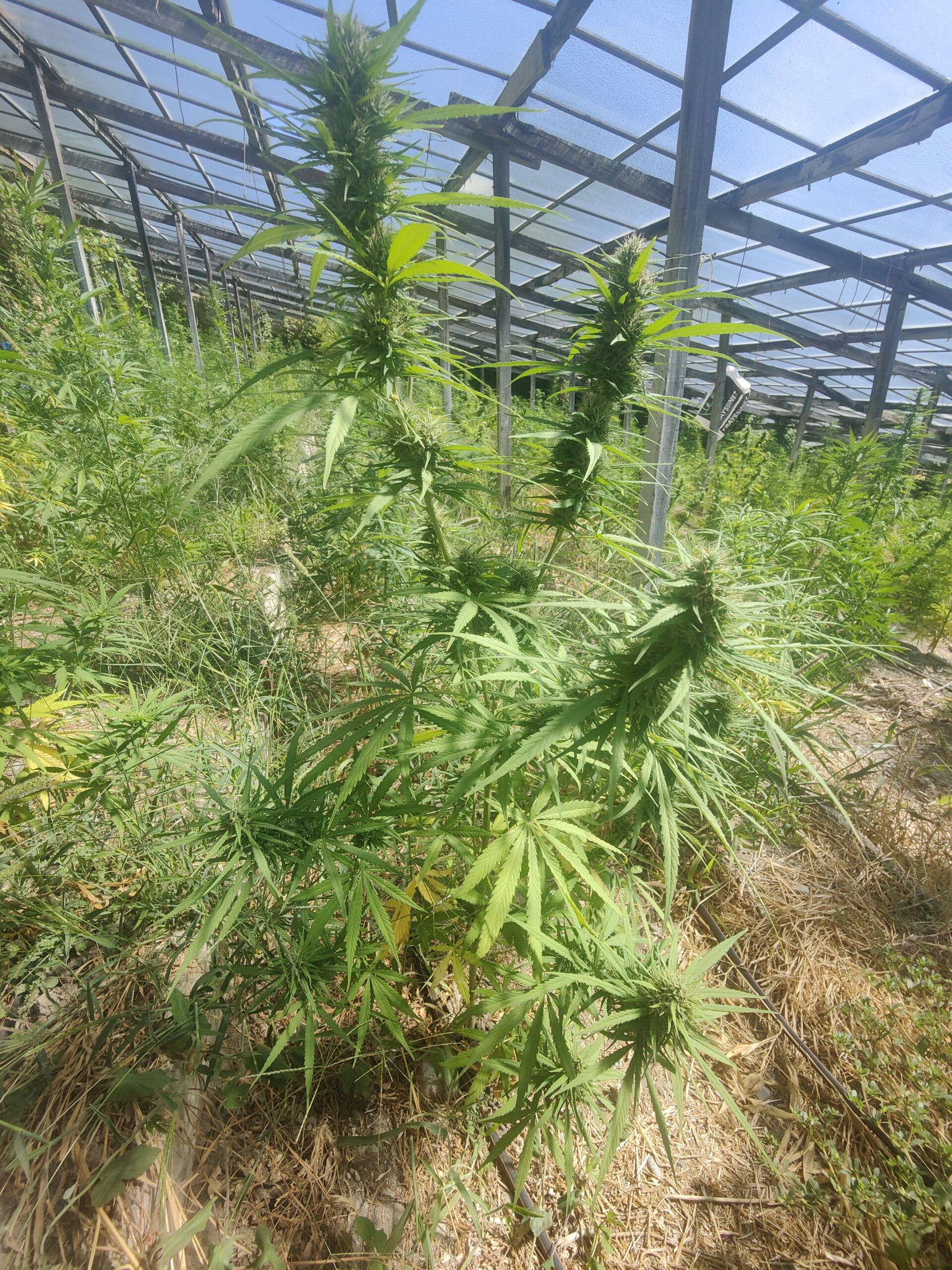
Hemp (Cannabis sativa) is an annual plant of the Cannabaceae family, grown for three distinct outlets depending on variety and management: fibre (textiles, construction, paper), seed (food, oil) and flower (extraction for cosmetics and wellbeing, commonly called « CBD »). All three routes share one non-negotiable constraint: the variety must be an approved low-THC type. In the United Kingdom, cultivation additionally requires a Home Office domestic licence for controlled drugs — a stricter and more formal requirement than the declaration-only regime used in France and much of the EU.
Industrial hemp and controlled cannabis are the same botanical species. What separates them legally is not appearance or name, but a number — the THC content — and, in the UK specifically, a licence. This entry sets out that framework first, before any question of growing technique, because it is what actually determines whether a given crop is lawful.
The reliable facts before anything else
What UK law actually requires
Growing hemp in the United Kingdom is not a matter of simple declaration, as it is in France and several other EU countries. It requires a Home Office domestic licence for controlled drugs, applied for before planting. The licence is only granted for approved low-THC seed varieties, with a maximum THC content that, at the time of writing, stands at 0.2% — stricter than the 0.3% ceiling used across the EU. From the 2026 growing season, an industrial hemp licence is valid for six growing seasons, and every licensed grower must submit an annual hemp grower statement by 1 May each year, whether or not a crop was actually planted.
The single most important divergence from a French hemp operation concerns the flower itself. A standard UK Industrial Hemp licence only authorises the use of seed and fibre — the non-controlled parts of the plant. Flowers and leaves are classed as controlled parts and must be destroyed on-site; the licence does not permit their sale, extraction or any other use. In practice, this means the route described in this entry’s field journal — a flower harvest sold on for cosmetic extraction — has no direct equivalent under a standard UK Industrial Hemp licence. A grower wanting to supply CBD flower or flower extract lawfully in the UK needs additional, specific Home Office authorisation beyond the standard hemp licence; most UK CBD cosmetic and wellness brands instead source extract already produced, or imported, under such separate authorisation, rather than harvesting flower themselves on a standard licence.
A second, separate framework applies to finished CBD products. CBD intended for ingestion — oils, capsules, drinks — is regulated as a Novel Food by the Food Standards Agency. As of this writing, no CBD extract or isolate has received full Novel Food authorisation; products already on the market before 2021 are managed through a transitional Public List while safety assessment continues, against a provisional acceptable daily intake of 10 mg per day for a healthy adult. CBD used in topical cosmetics — creams, balms — falls outside the Novel Food regime, since it is not ingested, but must still meet general UK cosmetic product safety law.
This is markedly different from the French position described throughout this entry, where a December 2022 Conseil d’État ruling opened the market for raw CBD flower itself, once THC stays under 0.3% and the grower is a declared professional. The crop recounted in this entry’s field journal was grown under that French framework, in France — not under UK law.
Three outlets, one plant
The word « hemp » covers very different agronomic realities depending on what is harvested. Fibre targets the stem: tall, sparsely branched varieties, harvested at male flowering, destined for textiles, insulation or paper. Seed (the achene) is harvested at maturity for human or animal food and for oil — varieties such as Fedora 17 are bred for this dual fibre-and-seed use. Flower, finally, targets the unfertilised female flowering tops, rich in cannabinoids and terpenes, harvested at a precise stage of maturity for extraction — cosmetic and wellbeing use, never presented on this site as a smoking product. In the UK specifically, only the fibre and seed routes are covered by a standard Industrial Hemp licence; the flower route requires separate authorisation, as set out above.
This distinction is not just commercial: it determines everything, from planting density to harvest timing. A plot managed for fibre and a plot managed for flower are not worked the same way, even with a closely related variety.
Hemp is the most tightly regulated crop on the estate, and that is precisely what makes it a case apart in this encyclopedia. Here, the question is never « how does the plant grow » — it is first « under what framework am I allowed to grow it ». Once that framework is settled — approved variety, licensed grower, laboratory check before any sale — hemp behaves like any demanding annual field crop: vigorous, fast, and unforgiving of a harvest missed at the wrong moment.
The hemp cycle for a flower-outlet crop
Calendar observed on this French estate for a flower-outlet crop under a Mediterranean climate, with a photoperiodic variety. Early sowing lengthens the vegetative phase before shortening daylight triggers flowering. UK growing seasons, daylength and climate differ, which shifts the practical timing accordingly.
| Jan | Feb | Mar | Apr | May | Jun | Jul | Aug | Sep | Oct | Nov | Dec | |
|---|---|---|---|---|---|---|---|---|---|---|---|---|
| Sowing | ||||||||||||
| Vegetative growth | ||||||||||||
| Flowering | ||||||||||||
| Harvest | ||||||||||||
| Drying |
Behaviour, mechanism and limits
The central mechanism to understand is photoperiodism. A photoperiodic variety such as Kompolti does not flower at a given age: it stays in vegetative growth as long as days are long, and only triggers flowering once night length passes a threshold, near the end of summer. An early spring sowing therefore does not shorten the cycle — it lengthens the vegetative phase before flowering, which is why a March sowing and an October harvest remain consistent even though flowering itself stays fairly brief.
Planting density depends entirely on the intended outlet. Fibre production uses very high densities to force stems to grow straight without branching. Flower production aims for the opposite: giving each plant enough space and light to develop dense flowering tops, which justifies wider spacing, sometimes staggered so that each plant gets its own light corridor rather than shading its direct neighbour.
Honest limitation: flower hemp is a high-value but genuinely risky crop financially. A whole season’s work can be voided by a THC result over the legal limit at the laboratory — a risk that does not exist in the same way for the fibre or seed outlets, where the harvested product is not the flowering top itself. In the UK, that risk is compounded upstream by the licensing regime itself: a flower harvest simply is not a licensable output under a standard Industrial Hemp licence in the first place.
Managing a flower-outlet hemp plot
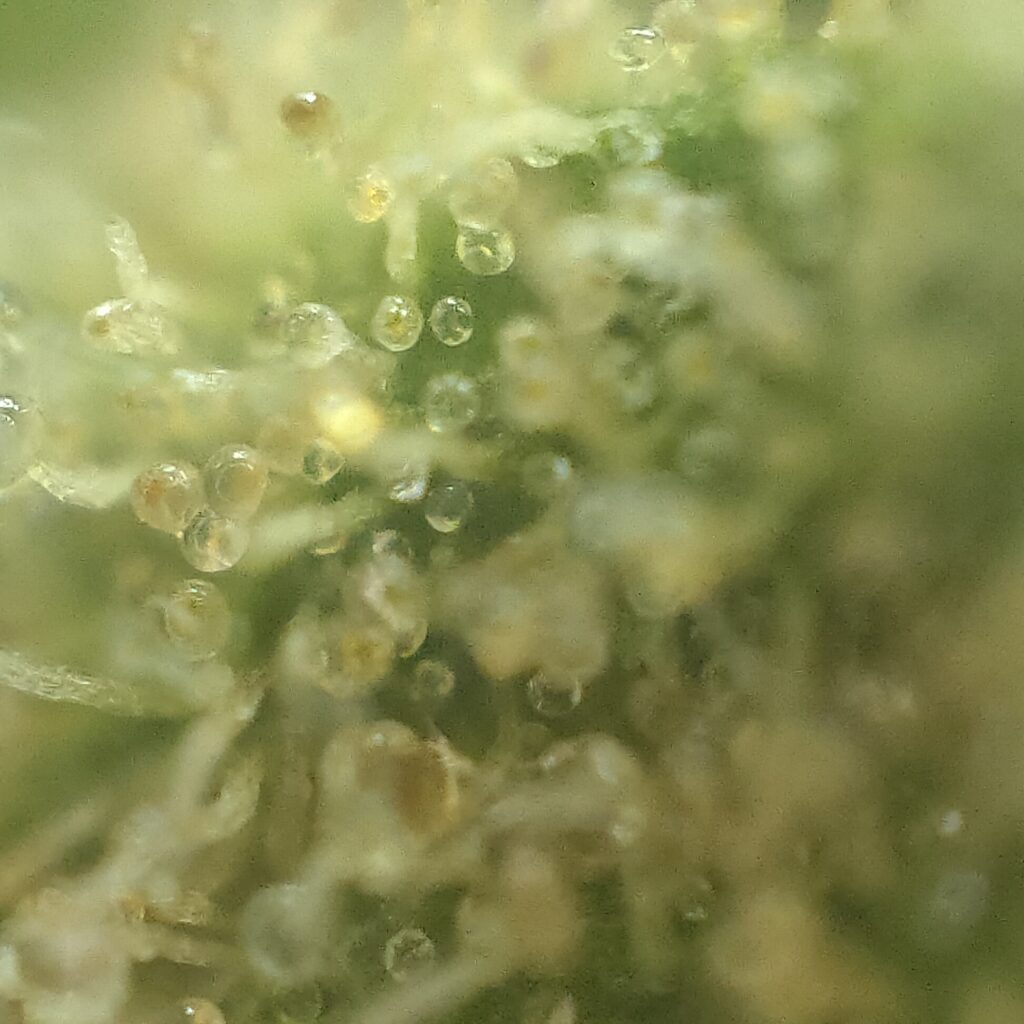
Trichomes under a lens
Trichome colour under magnification, not leaf colour or the calendar date, indicates the true stage of maturity.
Stippled foliage, fine webbing
A sign of spider mites. Check early — dense foliage makes an infestation hard to catch up on once it takes hold.
Predatory beneficials, never a contact treatment on the flower
Releasing natural predators clears the infestation without leaving any residue on a harvest destined for extraction.
Secure compliance and authorisation before any sale
No sale without a laboratory analysis confirming the THC level — and, in the UK, without the licence that covers the outlet in question. Build both into the calendar, not into a last-minute scramble.
Read the sign, trace the cause, correct, prevent
Hemp grows fast and tolerates excess poorly. The real risks concentrate on mites during growth and on humidity at the end of the cycle, the most critical moment of the crop.
| Sign observed | Likely cause | Correct | Prevent |
|---|---|---|---|
Stippled foliage, fine webbing under the leaves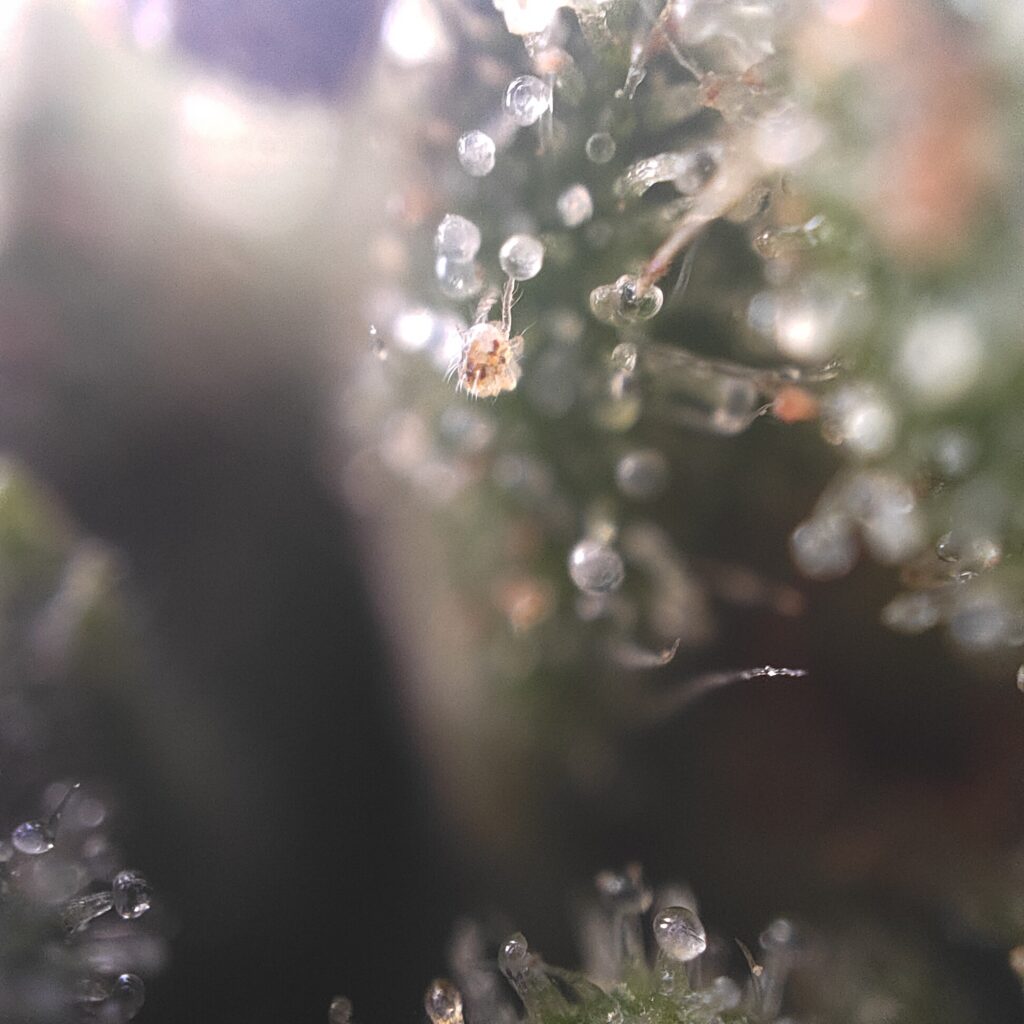 | Spider mites, very common in dense cultivation | Release of predatory beneficials | Regular monitoring from mid-vegetative growth, do not wait for a visible infestation |
| Green colonies on young shoots | Aphids | Beneficials (ladybirds, lacewings) or a jet of water | Plant diversity around the plot |
| Grey fuzz on dense flowering tops | Botrytis (grey mouldA fungus, also called botrytis, that affects damp flowers and leaves.), favoured by humidity at the heart of the flower | Remove affected tops immediately, isolate from the rest of the drying batch | Sufficient spacing, airflow, quick drying after cutting |
| Flower not losing weight during drying | Poorly ventilated drying or overly humid ambient air | Increase ventilation, reduce hanging density | Dedicated space, darkness, calculated airflow without direct light exposureThe amount of sunlight a spot in the garden receives (full sun, part shade, shade). |
| THC analysis close to or above the limit | Late water stress, genetics, or too late a harvest | None: the crop must be destroyed if the legal limit is exceeded | An approved variety with a safety margin, pre-harvest testing where possible |
Any intervention remains subject to the licensed or declared framework covering the crop. No treatment product is compatible with a harvest destined for extraction without compromising its value.
Varieties to know
| Variety | Origin, outlet | Useful traits |
|---|---|---|
| Kompolti | Hungary, historically fibre, now also flower | Photoperiodic, flowers in 60-65 days, vigorous and branching, pronounced citrus aromas, grown on this estate |
| Futura 75 | France, fibre outlet | Monoecious, high fibre content, very low THC |
| Fedora 17 | France, dual fibre and seed outlet | Good seed yield, rich oil, paper and textile use for the fibre |
| Santhica 27 | France, diversified outlet | Established French variety, available through seed cooperatives |
One commission, once
We grew hemp once, in 2023, at the request of a cosmetics professional seeking an organic raw material for moisturising creams. One dedicated bed, Kompolti variety, within the same organic-certification area as the rest of the estate. This was not a diversification we sought out ourselves — it was a commission we answered, and one we have never repeated since, for lack of a further request. As a precaution, we notified the local gendarmerie of this crop before planting it, to avoid any confusion: growing this plant remains reserved for licensed or declared professionals, a point this entry keeps returning to. This crop was grown in France, under the French framework set out above — as explained there, the same flower-for-cosmetics route has no standard equivalent under UK hemp licensing, where flowers and leaves must be destroyed rather than sold.
We describe this cycle in full — the planting, the mite episode, the harvest marker, the drying, the laboratory-check question — in our field journal for this crop. It is a complete account of what happened, not an invitation to reproduce the crop without the professional and legal framework that makes it lawful.
What people most often ask
Can I grow hemp at home, for personal use?
Not lawfully for a commercial or processing outcome. In the UK, hemp cultivation requires a Home Office domestic licence for an approved low-THC variety. An individual cannot grow and sell hemp, or grow it for a flower/CBD outlet, outside that licensed framework.
What’s the difference between hemp and cannabis?
Botanically, it is the same species, Cannabis sativa. Legally, what separates them is the variety (approved or not) and the THC content: 0.2% maximum for a UK-licensed hemp crop, far higher for controlled cannabis varieties.
Is CBD hemp flower legal in the UK?
Not in the way it is in France. A standard UK Industrial Hemp licence covers only seed and fibre; flowers and leaves are controlled parts that must be destroyed, not sold or extracted, under that licence. Producing or selling CBD flower or flower extract lawfully in the UK requires separate, additional Home Office authorisation. CBD itself, once placed in a finished product, is regulated separately again — as a Novel Food for ingestible products, or under general cosmetic safety law for topical use.
How long does hemp take to grow?
For a photoperiodic variety sown early in spring under Mediterranean conditions, as on this French estate, expect a full cycle of six to seven months from sowing to harvest, followed by two to three weeks of drying before the harvest is ready for analysis and sale. UK growing seasons and daylength differ, which shifts the practical timing.
Why does the THC level need checking before sale?
Because the legal threshold applies to the actual harvest, not just to the variety sown. Growing conditions or a different harvest stage can shift the measured level. Without an accredited laboratory check confirming compliance, sale is not possible, and exceeding the threshold means the crop must be destroyed — a rule that applies under both the French 0.3% ceiling and the UK’s stricter 0.2% ceiling.
Sources and evidence
Last checked: 2026-08-28.
- GOV.UK — Industrial hemp licensing: Home Office guidance on who needs a licence and what it covers.
- GOV.UK — Low THC cannabis (industrial hemp) licensing factsheet: the official factsheet setting out the THC limit, licence duration and permitted plant parts.
- Food Standards Agency — Cannabidiol (CBD) guidance: Novel Food status and the authorisation process for ingestible CBD.
- Légifrance — Conseil d’État, decision n° 444887 of 29 December 2022 (France): the French ruling that opened the raw CBD flower market; included for context, since the crop recounted in this entry’s field journal was grown under French, not UK, law.