Help Wildlife after a Nearby Wildfire: Make the Garden a Safe Stop
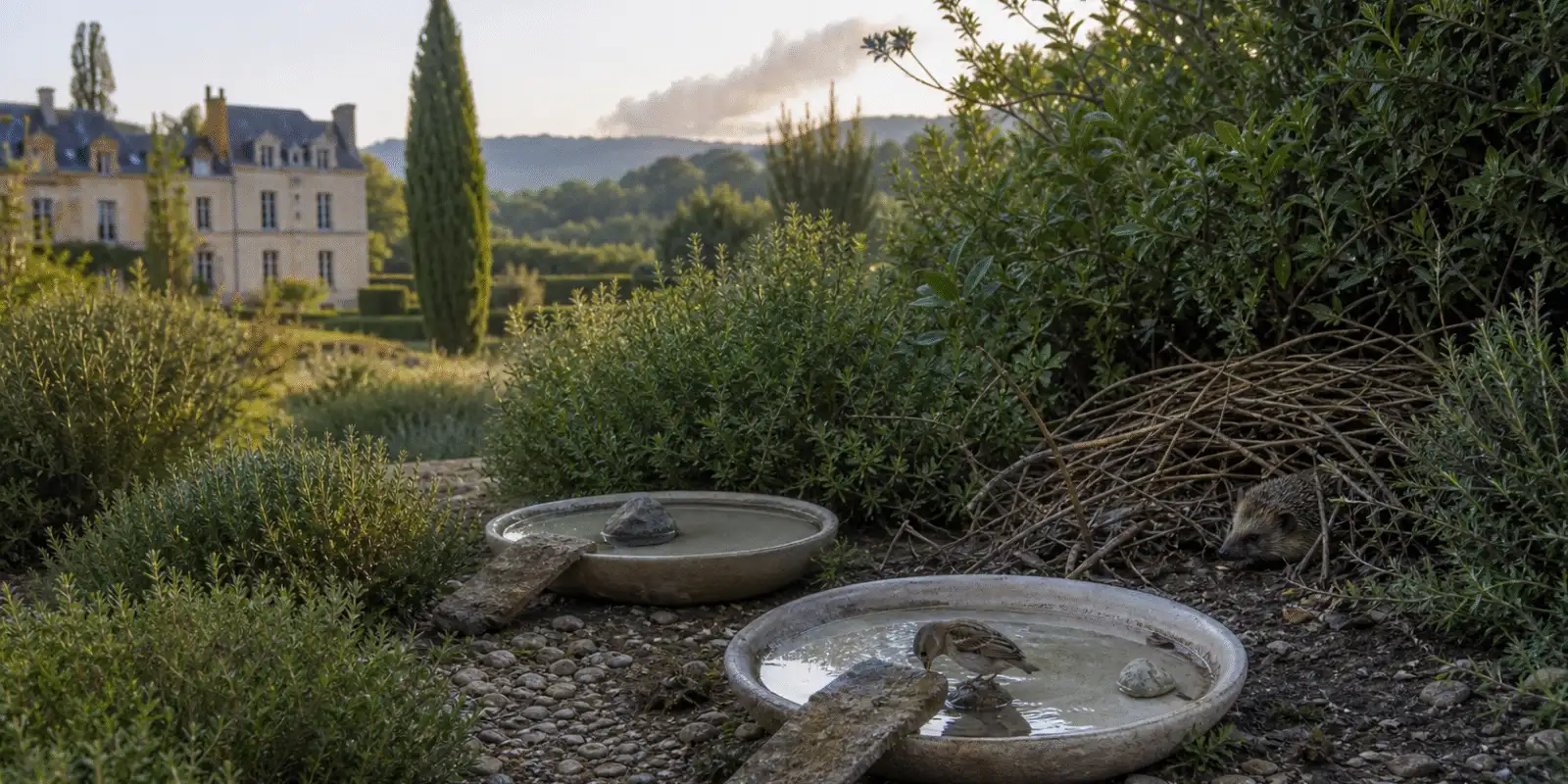
After a nearby wildfire, a garden can become a safe stop by offering clean shallow water, undisturbed cover and an open escape route while pets stay indoors. Do not chase, capture or feed wildlife indiscriminately. An animal with burns, laboured breathing, collapse or loss of coordination needs advice from a wildlife rehabilitator.
This practical guide belongs to our cross-garden wildfire resilience series. It complements the advice in this garden section but never replaces emergency services, local authorities or a professional site assessment. Garden Care and Permaculture.
Rules and local advice to check
In the UK, call a wildlife rescue or vet before handling a wild casualty. Follow fire-service closures and never enter burnt land to search for animals. Feeding rules and disease advice vary by species and season.
The Chatelain Method
Observe the evidence, diagnose the true severity, correct the immediate risk and prevent recurrence. That order prevents emotional pruning, watering and buying from making a stressed garden worse.
Priorities and timing
| Situation | First action | Timing |
|---|---|---|
| Mobile, uninjured animal | Provide space, water and an exit | Now |
| Burnt or collapsed animal | Call rescue; do not feed | Now |
| Refuge garden | Maintain clean water and cover | Daily |
Observe before changing the site
Watch from a distance. Normal purposeful movement is different from circling, collapse or failure to flee. Record the location and visible signs for the rescue. A passing animal usually needs space; a casualty needs expert triage, not bread or milk.
A measured action plan
- Set out heavy shallow dishes with stones and easy exit ramps.
- Refresh water daily and scrub containers without fragrance.
- Keep surviving hedges, shade and stable brush cover.
- Switch off unnecessary night lighting and keep cats and dogs inside.
- Restore native flowers, seed heads and fruiting shrubs over time.
Mistakes to avoid
- Offering bread, milk or salty food.
- Approaching repeatedly for photographs.
- Creating one crowded feeding station.
- Tidying away every branch when cover is scarce.
Design water that does not become a trap
Place each dish near cover but not inside vegetation dense enough to hide a predator at arm’s length. Shallow water, a stable stone and a rough edge let insects, reptiles and small mammals climb out. Two or three small stations reduce crowding and conflict compared with one large basin. Refresh them at a regular time without constantly changing location, because wildlife learns reliable routes. If ash falls into a dish, empty, brush and refill it; never add salt, sugar or scented disinfectant.
FAQ
What should I feed wildlife after a fire?
Usually the safest first help is clean water, cover and professional advice. Random feeding can spread disease or attract predators.
Can I pick up an injured wild animal?
Only with rescue guidance or to remove it from immediate danger when you can act safely.
How do I keep water dishes safe?
Use shallow containers, add an exit stone, change water daily and place them near cover but with clear sight lines.
Related reading
- Garden Care and Permaculture
- Protect a Home and Garden from Wildfire: Design Defensible Space
- Restore a Garden after Wildfire: Soil, Trees and Natural Regrowth
- Orchard and Citrus Recovery after Wildfire: Assess before Pruning
Useful sources
Written and checked by the editorial team of Les Jardins d’un Chatelain.