Sudachi citrus tree
Citrus sudachi — Tokushima’s small green citrus
A smaller, juicier relative of yuzu: this sharply acidic, fragrant Japanese citrus is picked while its peel is dark green. It is a seasoning, never a dessert fruit.
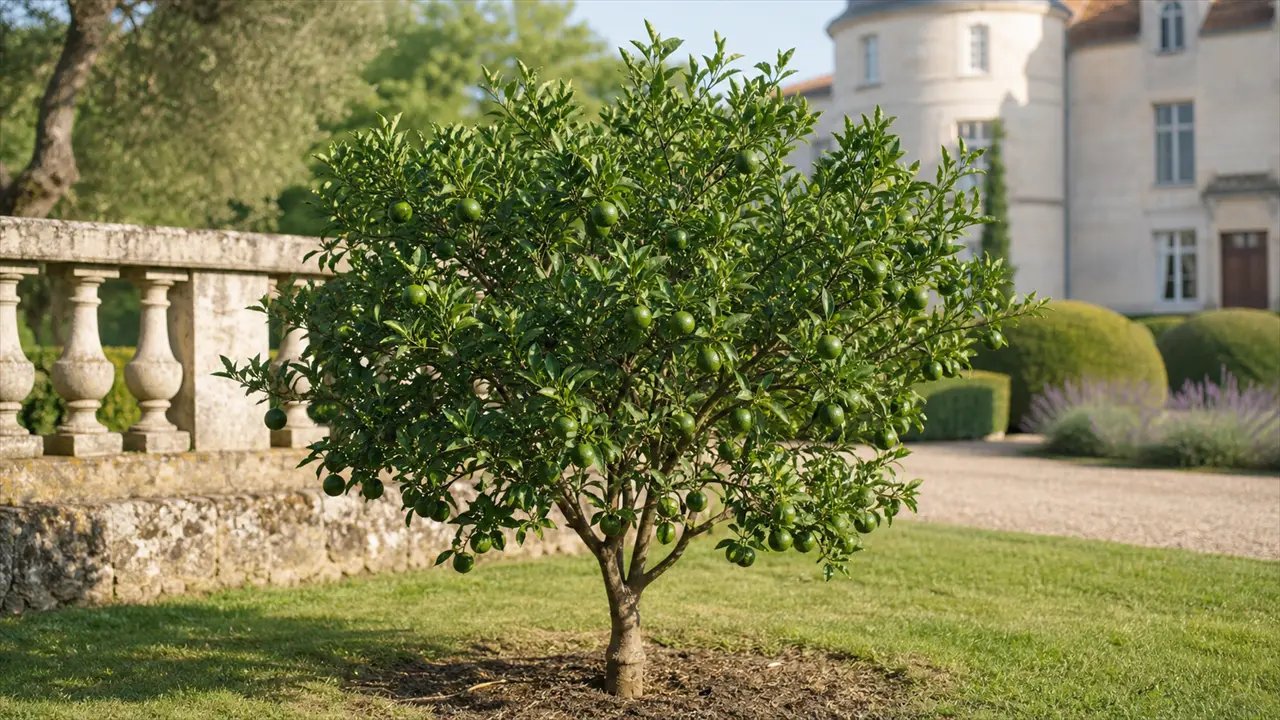
Sudachi is a green Japanese citrus closely associated with Tokushima Prefecture and grown as a condiment. It is naturally compared with yuzu, but clear differences remain: the fruit is smaller, generally juicier, carries a different fragrance and UCR’s evaluated material averaged fewer seeds than its yuzu material. The small, round to flattened fruit has a thin green peel and sharp juice; it is picked green, before yellow maturity, for the aroma sought. Like yuzu, it supplies acidity and perfume, not sweet flesh.
Keep the limits explicit: the horticultural name and papeda–mandarin parentage are documented for the UCR accession, while British outdoor hardinessA plant's ability to survive winter cold without protection. remains untested. Also compare the makrut lime, another aromatic condiment citrus.
Reliable checks before you buy
Like yuzu, but juicier — and deliberately picked green
Choose sudachi for its aroma and juice. Its smaller fruit is juicier than yuzu and combines keen acidity with a distinct fragrance prized in Japanese cooking. The critical decision is harvest stage: pick it green, before the peel yellows, because that is when the fresh character is wanted. UCR’s comparisons also record fewer seeds, but keep that statement tied to evaluated accessions rather than every plant sold.
Stay cautious where evidence stops: the horticultural name and proposed parentage are accession-supported, but exact British cold tolerance is not. Choose a rootstock for the real soil and ask the nursery to confirm the exact graft combination.
| Your soil or aim | Rootstock to discuss | Reason — and trade-off |
|---|---|---|
| Cold site, non-calcareous soil | Trifoliate orange | A reference option for restrained, relatively cold-tolerant condiment citrus. ⚠ Sensitive to active lime. |
| Alkaline ground or hard water | Forner-Alcaide 5 (FA5) | Discuss where chlorosisYellowing of the foliage caused by poor iron uptake, often linked to chalky soil. is a concern. ⚠ Use only with site and nursery evidence. |
| More vigour wanted | Citrumelo or citrange options | Performance is combination- and site-specific. ⚠ High pH can still cause chlorosis. |
| Keep this rule | Confirm and run a local trial | Protect first, document the plant’s response, and avoid absolute hardiness promises. |
The sudachi year in a British container
Until local outdoor performance is documented, a movable container is the dependable British choice. Keep it bright and frost-free in winter, then watch the autumn crop and pick while dark green.
| Jan | Feb | Mar | Apr | May | Jun | Jul | Aug | Sep | Oct | Nov | Dec | |
|---|---|---|---|---|---|---|---|---|---|---|---|---|
| Plant outdoors only as a documented microclimate trial | ||||||||||||
| Keep bright, cool and frost-free | ||||||||||||
| Move the container outside after frost | ||||||||||||
| Watch for fragrant spring flowers | ||||||||||||
| Pick green for the desired aroma | ||||||||||||
| Feed container citrus in active growth |
A fragrant sudachi crop picked at the right stage
The dark-green stage
Sudachi’s intended aroma is harvested green. Watch peel colour and scent in autumn rather than waiting for yellow.
Dull aroma or yellow fruit
A yellowing fruit has moved beyond the fresh green profile normally wanted; plan to pick earlier next time.
Pick green and use promptly
Harvest at the green stage and use juice and zest while the refreshing fragrance is at its strongest.
Test, do not assume, cold tolerance
Protect the tree until its behaviour in your own shelter is documented; comparative hardiness is not a British guarantee.
Read the symptom, trace the cause, correct, prevent
Sudachi shares the usual container-citrus problems. Its strongly acidic condiment fruit is an intended use, not a quality defect.
| What you see | Likely cause | Correct | Prevent |
|---|---|---|---|
| Yellow fruit with a less vivid aroma | Picked beyond the preferred green stage | Use it, then pick the next crop earlier | Monitor peel colour and scent through autumn |
| Yellow leaves with greener veins | Possible iron chlorosis, high pH or wet roots | Check drainage, irrigation water and root health first | Use free-draining compost and suitable water |
| Cottony clusters or fixed scales | Mealybugs or scale insects | Isolate, remove by hand and identify | Inspect before overwintering and ventilate |
| Sticky black coating on leaves | Sooty mould on insect honeydew | Find and control the sap-feeding insect first | Check shoots and leaf undersides early |
| Silvery winding mines in young leaves | Citrus leafminer | Remove only badly damaged soft growth; protect beneficials | Avoid forcing repeated lush growth with excess nitrogen |
Start with hygiene, ventilation and correct watering. For a suspected regulated pest, follow the UK Plant Health Portal; use any product only if its current authorisation and label cover the exact situation.
The green juice of a condiment citrus
Too sharp to eat as dessert, sudachi is at its best as juice: a few fragrant green drops sharpen food or drink with a distinctive acidity. Its zest concentrates the fresh aroma. It also suits salt preserving and fermentation, and can contribute to marmalade or drying. This is a citrus for seasoning, not a fruit bowl.
What the standards do — and do not — tell you
Sudachi has no dedicated size scale in the GB citrus marketing standard.
- Commercial group: no sudachi-specific diameter code is applied here; aroma, soundness and the dark-green harvest stage matter.
- Evidence boundary: UCR’s fruit measurements and seed counts are accession-bound; British cold tolerance still requires local observation.
Do not publish a generic yield. Rootstock, shelter, container volume, tree age and season all change the crop; record your own plant.
What growers ask most often
Sudachi or yuzu?
Sudachi is smaller, generally juicier and differently scented. UCR’s evaluated material also had fewer seeds. Both can be picked green as condiment citrus.
Should sudachi be picked green or yellow?
Green. MAFF’s Tokushima Sudachi specification describes harvest while the peel is dark green for its refreshing aroma and acidity.
Can you eat sudachi as a fresh fruit?
Not normally. It is sharply acidic and used as a seasoning through its juice and zest, rather than eaten like an orange.
Is sudachi hardy in Britain?
Do not assume it. Comparative F4 descriptions are not a British trial; use frost-free winter shelter until your own site evidence shows otherwise.
Sources and verification
Last English-language evidence check: 2026-08-04. MAFF establishes the Tokushima product and green harvest; UCR observations remain explicitly tied to accession CRC 3471 at Riverside.
- Japan MAFF — Tokushima Sudachi GI: dark-green harvest, refreshing aroma and acidity for (Citrus sudachi).
- UC Riverside Citrus Variety Collection — Sudachi CRC 3471: primary accession notes on parentage, green harvest, fragrance and Riverside evaluation.