Yuzu citrus tree
Citrus × junos — East Asia’s aromatic condiment citrus
Yuzu is grown for fragrance rather than flesh. Its rough-skinned fruit is pippy and gives little juice, but its zest is unmistakable; the tree is also among the more cold-tolerant citrus.
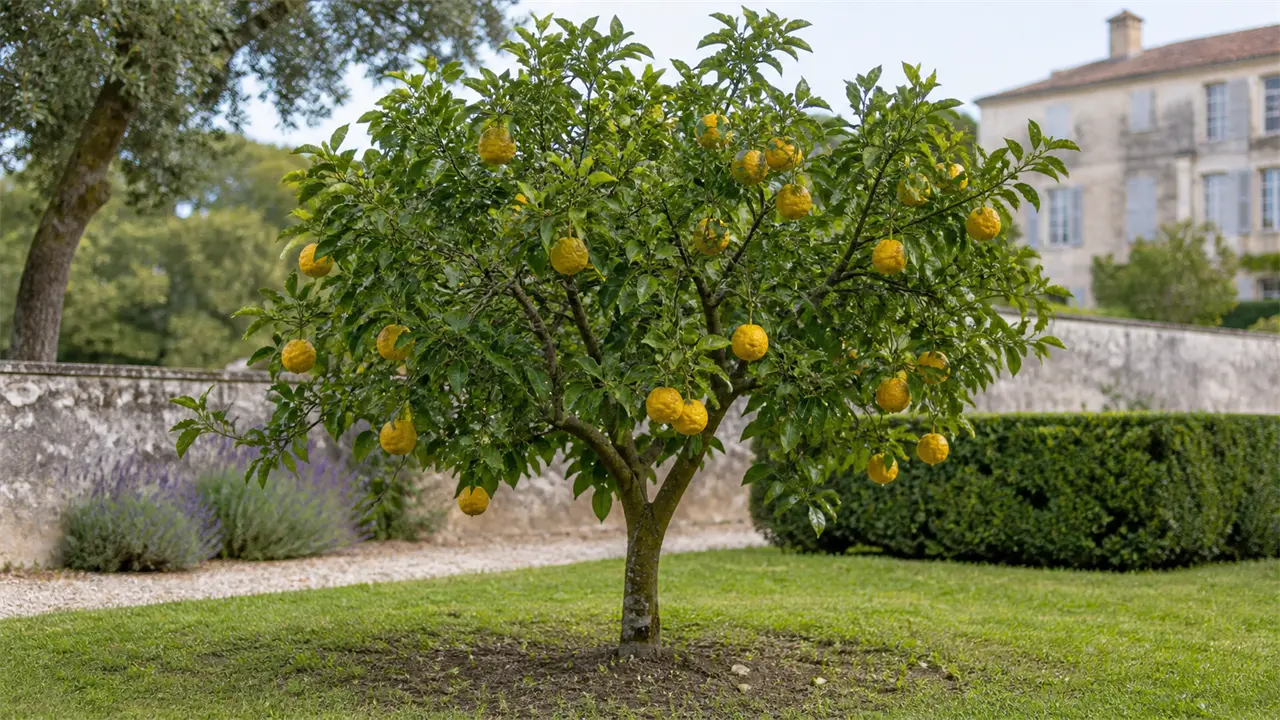
Yuzu is a condiment citrus, not a dessert fruit. This old East Asian hybrid, with Ichang papeda and mandarin ancestry, is thorny and slow growing. Its rough-skinned fruit is short on juice and full of pips. The reward is its powerful aroma, among the genus’s most distinctive. It is also one of the more cold-tolerant citrus, though that comparison is no blanket British guarantee. Judge it by its zest and scented juice, not its flesh.
Yuzu offers one especially useful choice: harvest stage. Pick it green in early autumn for a bright, leafy fragrance, or let it turn yellow in late autumn for a rounder, more floral character. Compare the makrut lime, another condiment citrus prized chiefly for aroma.
Reliable checks before you buy
Fragrance, not juice — and two useful harvest stages
Choose yuzu for its aroma. Pressing it like an ordinary lemon is disappointing because the fruit yields little juice around many pips. Its value lies in the zest and in a few intensely scented drops. Harvest green for a brisk, herbaceous note; leave fruit to yellow for a softer, rounder fragrance. A single tree can supply both styles if the crop is picked in stages.
Keep cold tolerance in perspective. Established wood can endure more cold than many citrus, but do not rely on an unqualified −15 °C claim for the whole plant, its fruit or its roots. ExposureThe amount of sunlight a spot in the garden receives (full sun, part shade, shade)., duration, rootstock, drainage and the previous growing season all matter. For UK gardeners, the RHS’s bright, sheltered container culture remains the cautious baseline wherever outdoor survival is uncertain.
| Your soil or aim | Rootstock to discuss | Reason — and trade-off |
|---|---|---|
| Cold site, non-calcareous soil | Trifoliate orange | The reference combination for restraint and cold tolerance. ⚠ Sensitive to active lime. |
| Alkaline ground or hard water | Forner-Alcaide 5 (FA5) | Often chosen where chlorosisYellowing of the foliage caused by poor iron uptake, often linked to chalky soil. is a concern. ⚠ Use only where site and nursery evidence support it. |
| Greater vigour | Citrumelo or citrange options | Performance is combination- and site-specific. ⚠ High pH can still cause chlorosis. |
| Keep this rule | Drainage plus targeted winter protection | Confirm the exact yuzu–rootstock combination with the supplying nursery. |
The yuzu year: a sheltered site or a movable container
Permanent planting is a site-specific choice for a mild, well-drained microclimate. A container gives dependable control elsewhere. Harvest timing is set by the aroma wanted, not by one national date.
| Jan | Feb | Mar | Apr | May | Jun | Jul | Aug | Sep | Oct | Nov | Dec | |
|---|---|---|---|---|---|---|---|---|---|---|---|---|
| Plant outdoors only in a mild, drained microclimate | ||||||||||||
| Protect young trees, fruit and container roots | ||||||||||||
| Move a container outside after frost | ||||||||||||
| Watch for fragrant spring flowers | ||||||||||||
| Pick green fruit for a fresh aroma | ||||||||||||
| Pick yellow fruit for a rounder aroma | ||||||||||||
| Feed container citrus |
A fragrant yuzu crop without winter overconfidence
Choose the aroma before the fruit
Decide whether you want a fresh green note or a rounder yellow-fruit perfume. That choice sets the picking stage.
“Hardly any juice” is not a disorder
Yuzu is naturally pippy and low-yielding in juice. Look for fragrance in the peel and a few drops of juice, not lemon-like volume.
Pick by scent and stage
Take some fruit green for brightness and leave some to yellow for a softer profile. Smell and taste rather than trusting a fixed date.
Protect without exaggerating hardiness
Keep drainage sharp, shelter the tree from cold wind and protect young wood, fruit and container roots before severe weather.
Read the symptom, trace the cause, correct, prevent
Yuzu shares the usual citrus problems. Low juice content and many pips are normal botanical traits, not signs of poor care.
| What you see | Likely cause | Correct | Prevent |
|---|---|---|---|
| Little juice and many pips | Normal yuzu character | Use zest and concentrated juice as seasoning | Buy yuzu for aroma, not juice yield |
| Split or scorched wood after winter | Cold beyond real tolerance, exposure or poor drainage | Wait for spring growth, then prune dead wood and correct drainage | Shelter young plants and avoid blanket hardinessA plant's ability to survive winter cold without protection. claims |
| Yellow leaves with greener veins | Possible iron chlorosis, alkaline water or wet roots | Check drainage, irrigation water and root health before feeding | Use free-draining compost and monitor water pH |
| Cottony clusters or fixed scales | Mealybugs or scale insects | Isolate, remove by hand and identify the pest | Inspect before overwintering and maintain ventilation |
| Silvery winding mines in young leaves | Citrus leafminer | Remove only badly damaged soft growth; protect beneficial insects | Avoid forcing repeated lush growth with excess nitrogen |
Start with hygiene, ventilation and correct watering. For a suspected regulated pest, follow the UK Plant Health Portal; before using any product, verify its current authorisation and label for the exact use.
The zest is the main crop
Yuzu suits almost everything except eating out of hand. A little grated zest gives a dish its distinctive perfume; the scarce juice works as a concentrated aromatic acid. The thick peel is useful for marmalade, salt preserving, fermentation and drying. Green fruit tastes brisk and leafy; yellow fruit is rounder and more floral.
What the standards do — and do not — tell you
Yuzu does not have its own size scale in the GB citrus marketing standard.
- Commercial group: no yuzu-specific diameter code is applied here; aroma, soundness and the intended green or yellow stage matter more.
- Harvest check: peel colour and fragrance according to use, not an orange, lemon or lime size code.
Do not publish a generic yield. Rootstock, shelter, soil or container, tree age and season all change the crop; record the performance of your own plant.
What growers ask most often
Should yuzu be picked green or yellow?
Both stages are useful. Pick green fruit in early autumn for a brisk, leafy aroma, or let it yellow later for a rounder fragrance. Choose according to the intended use.
Why does my yuzu contain so little juice?
That is normal. Yuzu is naturally pippy and gives little juice; it is grown for zest and concentrated fragrance rather than pressing yield.
Will yuzu really survive severe British frost?
Its wood is comparatively cold-tolerant, but no single temperature covers every plant part, duration, soil or site. Protect young trees, fruit and container roots, and keep drainage sharp.
Can yuzu grow in a pot?
Yes. Its slow growth suits a movable container, which also makes winter protection dependable. Pot up gradually and never leave the roots waterlogged.
Sources and verification
Last English-language evidence check: 2026-08-04. UK cultivation follows RHS guidance; Kew and UCR evidence is used for taxonomy, parentage and accession-bound harvest observations.
- Royal Horticultural Society — yuzu: UK container cultivation, light, watering, pruning and protected growing for (Citrus × junos).
- UC Riverside Citrus Variety Collection — Yuzu CRC 1216: primary accession notes on parentage and green-fruit use in September–October at Riverside.