Pummelo (Citrus maxima)
Citrus maxima — the true pummelo species
The true pummelo: an ancestral South-East Asian species bearing the largest cultivated citrus fruit, with very thick pith and firm segments that must be prepared.
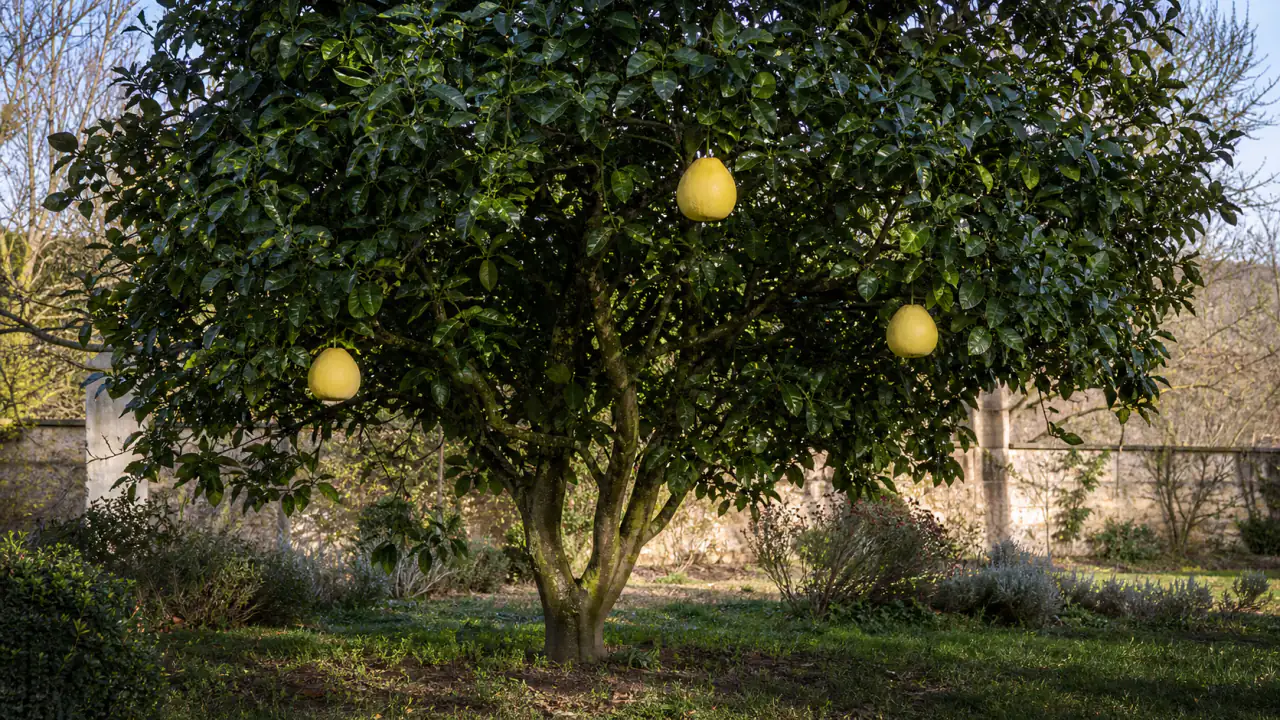
This is the true pummelo: Citrus maxima, an ancestral species from South-East Asia and a parent in the history of orange and grapefruit. It bears the largest cultivated citrus fruit, with very thick rind and pith and segments enclosed by tough membranes that are removed before eating the firm juice vesicles. Depending on cultivarA variety produced through selection or cultivation, distinct from the wild original plant., flesh can be less bitter than grapefruit but is often well seeded.
The terminology that matters. Everyday “grapefruit” is usually the hybrid Citrus × paradisi, smaller and more bitter. The true pummelo is this species, Citrus maxima. Compare Marsh and Oroblanco.
Health warning — medicines. Pummelo contains furanocoumarins and may interact with some medicines. Official grapefruit guidance also flags pummelos, Seville oranges and tangelos as potentially similar for certain treatments. If you take medicine, check the leaflet and ask a doctor or pharmacist. No drug list is provided here.
Reliable checks before buying
A giant fruit that must be peeled and prepared
Choose Citrus maxima for its distinct firm vesicles and mild-to-bittersweet range, not as a larger grapefruit. The thick rind, pith and membranes reduce the edible share; the tree also demands heat, space and a long season.
Ask about cultivar fertility before buying: many pummelos are self-incompatible and need compatible pollen. Rootstock choice remains site-specific.
| Your constraintRootstock optionsWhy | — | and the trade-off |
|---|---|---|
| Documented nursery combinationC-35, | CarrizoCan support Navel quality and vigour. | ⚠️ performance depends on the growing medium, water and the scion–rootstock combination sold. |
| Production and quality | Swingle citrumelo or C35 | Useful starting points. ⚠ Swingle can struggle with active lime. |
| Vigour and broad | adaptation | Carrizo Vigorous combination. ⚠ ChlorosisYellowing of the foliage caused by poor iron uptake, often linked to chalky soil. risk rises with high pH. |
| Calcareous | or saline conditions | FA5 A possible tolerance option. ⚠ Not a universal answer; confirm locally. |
A large pummelo needs protected heat
Reliable British fruiting requires generous root room and sustained heat under protection. Outdoor planting is exceptional and site-specific, not a general promise.
| JanFebMarAprMayJunJulAugSepOctNovDec | ||||||||||||
|---|---|---|---|---|---|---|---|---|---|---|---|---|
| Plant or repot under protection | ||||||||||||
| Keep frost-free; protect any exceptional outdoor specimen | ||||||||||||
| Move a container outdoors after frost | ||||||||||||
| Watch spring flowering | ||||||||||||
| Taste fruit from late winter into spring | ||||||||||||
| Feed actively growing citrus |
Ripen the giant fruit, then prepare it properly
– Observe
Cultivar, pollination, heat, fruit weight These decide set and maturity.
– Diagnose Flowers
but no fruit Check self-incompatibility and absence of compatible pollen before blaming nutrition.
– Correct Supply
a compatible polliniser Where the cultivar requires it, overlap flowering with a compatible pummelo.
Prevent Plan space
and shelter A giant tree and fruit need root room, warmth and frost-free winter protection.
Read the sign, find the cause, correct, prevent
Pummelo shares common citrus pests. Failure to set can be pollination biology, while poor flavour often reflects insufficient heat or early harvest.
| Observed | signLikely | causeCorrectPrevent | |
|---|---|---|---|
| Flowers fall without fruit | Self-incompatibility or missing compatible pollen Confirm cultivar | and polliniser Plant compatible | pollen source with overlapping bloom |
| Leaves yellow between greener veins Possible | iron chlorosis, high pH or wet | roots Check drainage, irrigation water and root condition | Match rootstock and avoid waterlogging |
| Cottony clusters or fixed | scales Mealybugs or scale insects | Isolate and identify before control Inspect | before winter shelter |
| Sticky black coating Sooty mould | on insect honeydew Control | the sap-feeding insect first Check | shoots and leaf undersides |
| Silvery mines in young | leaves Citrus leafminer Remove only | badly damaged soft growth Avoid | forcing repeated lush flushes |
Start with hygiene, ventilation and correct watering. For a suspected regulated pest, use the UK Plant Health Portal; before any product, check its current authorisation and label.
A fruit to prepare, not simply bite
Remove the thick rind and pith, then strip the tough membranes from each segment and eat the firm vesicles fresh. The huge peel suits marmalade and candying. Observe the medicines warning.
What the marketing standard says
Pummelo has its own commercial thresholds, reflecting its exceptional scale.
- Commercial minimum for pummelo: diameter ≥ 100 mm and soluble solids ≥ 8 °Brix.
- Edible share: reduced by thick rind and membranes; a huge fruit yields less flesh than its size suggests.
Do not publish a generic yield: rootstock, shelter, soil, tree age and season all change it. Record your own crop.
What growers ask most often
What is the difference
between pummelo and grapefruit? Pummelo is the species Citrus maxima; grapefruit is the smaller hybrid Citrus × paradisi.
Will one pummelo tree
fruit alone? Not always. Many cultivars are self-incompatible; confirm pollination needs before buying.
Is it
hardy in Britain? No reliable general outdoor guarantee: use generous protected space and frost-free winter shelter.
Can I eat
pummelo with medicines? It may interact with some medicines. Check the current leaflet and ask a doctor or pharmacist.
Sources and verification
Last British evidence check: 2026-08-04. RHS anchors species and culture; Kew supports species status; safety language follows official guidance.
- Royal Horticultural Society — Citrus maxima — Citrus maxima: British species identity and protected horticultural context.
- US Food and Drug Administration — grapefruit and medicines: primary safety guidance mentioning related citrus including pummelos.
- Kew Plants of the World Online — Citrus maxima: species status and native range. Citrus maxima.