Oroblanco (Sweetie)
Citrus hybrid ‘Oroblanco’ — triploid grapefruit × pummelo hybrid
A thick-rinded grapefruit–pummelo hybrid with pale, sweet, low-acid flesh and few seeds; the peel may stay greenish when the inside is ready.
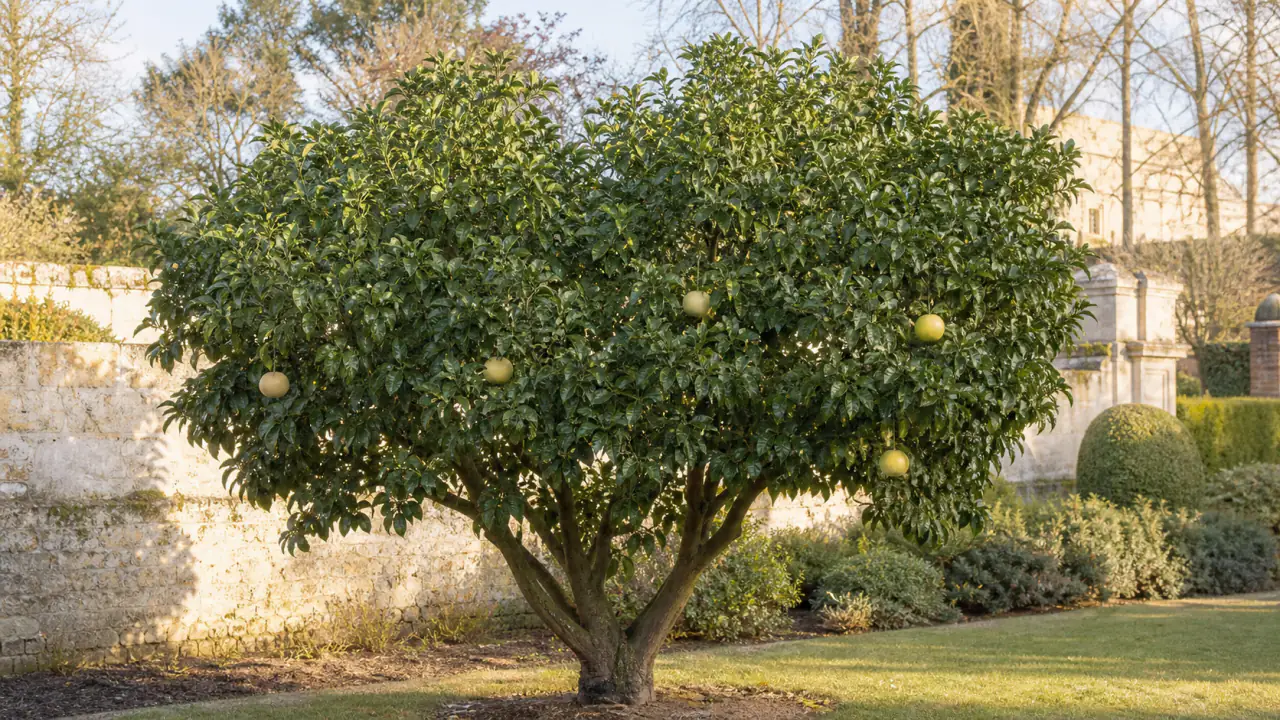
Oroblanco is the citrus that softens grapefruit’s reputation: a pummelo × grapefruit hybrid developed in California, with pale flesh that is sweet and only mildly bitter and almost seedless. It can remain greenish when ripe, so peel colour alone misleads; maturity is judged by taste and soluble solids (Brix). Its rind and pith are thick, leaving less edible flesh than the diameter suggests.
Health warning — medicines, as a precaution. Because of its grapefruit and pummelo parentage, Oroblanco may contain furanocoumarins capable of interacting with some medicines. If you take medicine, check the leaflet and ask a doctor or pharmacist before eating it. No general list replaces that advice.
The names Oroblanco and Sweetie may cover neighbouring selections in different markets, without proving perfect identity. Compare bitter Ruby Red and pale Marsh; the true pummelo is Citrus maxima.
Reliable checks before buying
Sweetness without relying on peel colour
Choose Oroblanco for mild sweetness rather than the firm bitterness of a coloured grapefruit. The trade-off is a thick peel and high heat demand. A greenish rind does not prove immaturity; taste one fruit and use measured soluble solids where commercial decisions require it.
Rootstock still follows soil, water and nursery evidence. The triploid hybrid is usually low-seeded, but neighbouring market selections must not be treated as genetically identical without traceability.
| Your constraintRootstock optionsWhy | — | and the trade-off |
|---|---|---|
| Documented nursery combinationC-35, CarrizoCan | support Navel quality and | vigour. ⚠️ performance depends on the growing medium, water and the scion–rootstock combination sold. |
| Production and quality Swingle citrumelo | or C35 | Useful starting points. ⚠ Swingle can struggle with active lime. |
| Vigour and broad | adaptation Carrizo Vigorous | combination. ⚠ ChlorosisYellowing of the foliage caused by poor iron uptake, often linked to chalky soil. risk rises with high pH. |
| Calcareous | or saline conditions | FA5 A possible tolerance option. ⚠ Not a universal answer; confirm locally. |
Oroblanco needs heat and a long ripening window
In Britain, generous root volume under bright protected conditions is more realistic than a small pot. Let sound fruit hang, then judge by taste rather than colour alone.
| JanFebMarAprMayJunJulAugSepOctNovDec | ||||||||||||
|---|---|---|---|---|---|---|---|---|---|---|---|---|
| Plant or repot under protection | ||||||||||||
| Keep frost-free; protect any exceptional outdoor specimen | ||||||||||||
| Move a container outdoors after frost | ||||||||||||
| Watch spring flowering | ||||||||||||
| Taste fruit from late winter into spring | ||||||||||||
| Feed actively growing citrus |
Judge Oroblanco from the inside, not the peel
– Observe
Peel, weight, taste, source Record all four before calling fruit ripe.
Diagnose Green peel
or bland flesh Green peel can be normal; bland flesh usually points to insufficient heat or early picking.
Correct Extend warm ripening
Leave sound fruit longer and taste at intervals; do not chase yellow colour with stress.
Prevent Buy traceable
material Confirm Oroblanco or Sweetie identity and the rootstock with the nursery.
Read the sign, find the cause, correct, prevent
Oroblanco shares common grapefruit pests. Green peel alone is not disease; separate cultivarA variety produced through selection or cultivation, distinct from the wild original plant. colour from chlorosis or root stress.
| Observed | signLikely | causeCorrectPrevent | |
|---|---|---|---|
| Greenish fruit that tastes | sweet Cultivar behaviour, not necessarily immaturity Confirm | taste and fruit condition Do not | harvest by peel colour alone |
| Leaves yellow between | greener veins Possible iron chlorosis, high pH or | wet roots Check drainage, irrigation water and root condition | Match rootstock and avoid waterlogging |
| Cottony clusters or fixed | scales Mealybugs or scale insects | Isolate and identify before control Inspect | before winter shelter |
| Sticky black coating Sooty mould | on insect honeydew Control | the sap-feeding insect first Check | shoots and leaf undersides |
| Silvery mines in young | leaves Citrus leafminer Remove only | badly damaged soft growth Avoid | forcing repeated lush flushes |
Start with hygiene, ventilation and correct watering. For a suspected regulated pest, use the UK Plant Health Portal; before any product, check its current authorisation and label.
Sweet segments, thick peel to use
Eat the pale sweet segments fresh after removing the thick pith. The zest and peel suit marmalade or candying, while the juice is mild. Keep the medicines warning above in mind.
What the marketing standard says
Oroblanco is marketed within the grapefruit/pummelo group, with an additional sweetness threshold.
- Commercial reference for Oroblanco: diameter ≥ 70 mm, juice content ≥ 35%, and soluble solids ≥ 9 °Brix.
- Peel colour: not a reliable maturity test for this greenish-ripening hybrid.
Do not publish a generic yield: rootstock, shelter, soil, tree age and season all change it. Record your own crop.
What growers ask most often
Can Oroblanco be ripe while still
green? Yes. Judge sound fruit by taste and, for commercial decisions, soluble solids rather than waiting for a fully yellow peel.
Is Oroblanco the same as
Sweetie? The names may cover neighbouring selections by market; do not assume perfect identity without traceability.
Is it sweeter than
grapefruit? Usually milder and lower in acid, but warmth and maturity still determine the result.
Can I eat it
with medicines? Treat it cautiously because of grapefruit/pummelo parentage: check the current leaflet and ask a doctor or pharmacist.
Sources and verification
Last British evidence check: 2026-08-04. UCR anchors hybrid identity; RHS supplies protected citrus care.
- Royal Horticultural Society — growing citrus: British protected cultivation, watering and winter care.
- UC Riverside Citrus Variety Collection — Oroblanco CRC 3602: hybrid identity and accession-bound fruit traits.