Marsh Seedless grapefruit
Citrus × paradisi ‘Marsh Seedless’
The historic pale grapefruit standard: juicy, bittersweet and virtually seedless, valued above all for juice.
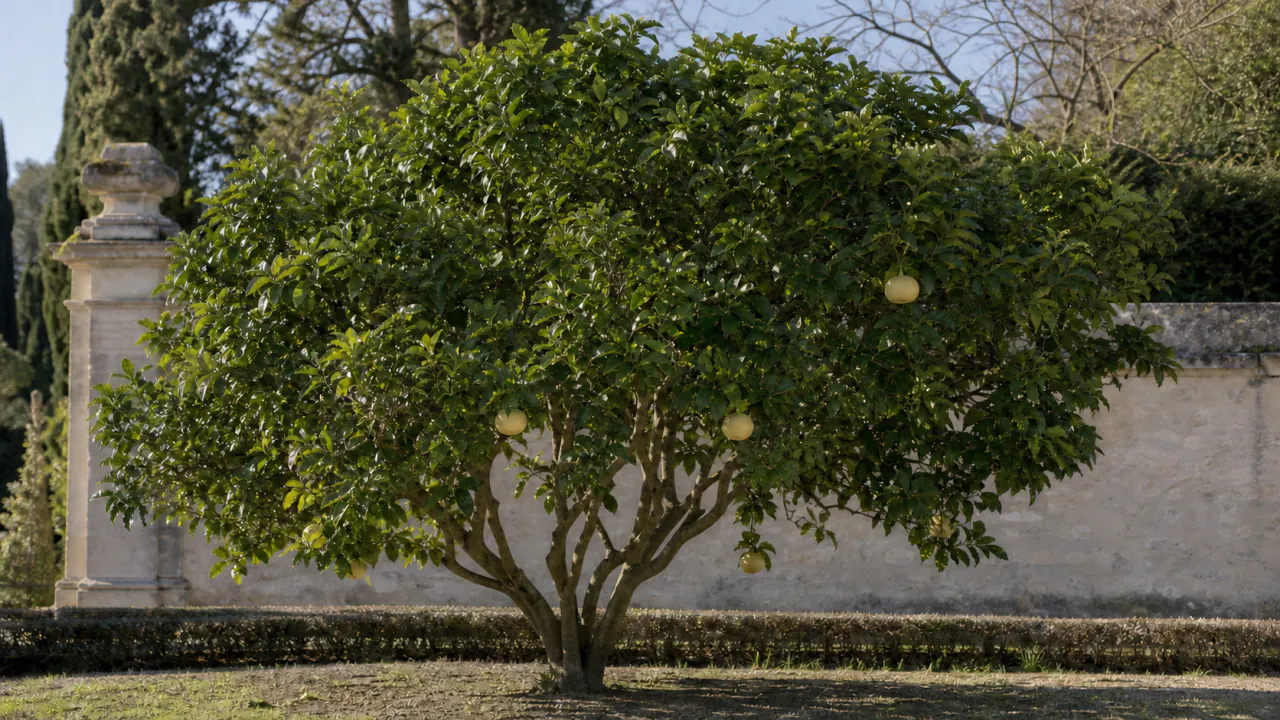
Marsh Seedless is the historic reference among pale grapefruit. Where Ruby Red relies on pink flesh, Marsh offers pale juicy flesh, a bittersweet tartness and, above all, very few seeds. In a suitable warm climate it is vigorous and productive, valued for juice yield. Full warmth and maturity reduce part of the bitterness.
Health warning — medicines. Grapefruit contains furanocoumarins and can interact with some medicines. If you take any medicine, check the leaflet and ask a doctor or pharmacist before eating grapefruit, even occasionally. Individual advice and the current product information take priority over any general list.
Compare pink-red Ruby Red and sweeter Oroblanco. The true pummelo is a different species, Citrus maxima.
Reliable checks before buying
The pale, nearly seedless reference for juice
Marsh Seedless grapefruit needs a long, warm ripening period. Its pale yellow flesh and virtually seedless are cultivarA variety produced through selection or cultivation, distinct from the wild original plant. pointers, but a cool site or cramped roots can leave fruit sharply bitter and poorly balanced.
Choose rootstock by soil, irrigation water and nursery evidence. No combination is universally best or forbidden without site-specific proof.
| Your constraintRootstock optionsWhy | — | and the trade-off |
|---|---|---|
| Documented nursery combinationC-35, CarrizoCan | support Navel quality and | vigour. ⚠️ performance depends on the growing medium, water and the scion–rootstock combination sold. |
| Production and quality Swingle citrumelo | or C35 | Useful starting points. ⚠ Swingle can struggle with active lime. |
| Vigour and broad | adaptation Carrizo Vigorous | combination. ⚠ ChlorosisYellowing of the foliage caused by poor iron uptake, often linked to chalky soil. risk rises with high pH. |
| Calcareous | or saline conditions | FA5 A possible tolerance option. ⚠ Not a universal answer; confirm locally. |
Marsh Seedless grapefruit: a long warm cycle
A large heat-demanding citrus, best given maximum summer warmth and a long protected ripening window. Treat months as observation windows, not a promise for Marsh Seedless grapefruit.
| JanFebMarAprMayJunJulAugSepOctNovDec | ||||||||||||
|---|---|---|---|---|---|---|---|---|---|---|---|---|
| Plant or repot under protection | ||||||||||||
| Keep frost-free; protect any exceptional outdoor specimen | ||||||||||||
| Move a container outdoors after frost | ||||||||||||
| Watch spring flowering | ||||||||||||
| Taste fruit from late winter into spring | ||||||||||||
| Feed actively growing citrus |
Bring Marsh Seedless grapefruit to full, balanced maturity
– Observe
Heat, site, rootstock, fruit stage Read these four variables before judging quality.
Diagnose Persistent bitterness
and acidity Fruit may be immature or short of heat; this is not automatically disease.
Correct Extend ripening, improve
warmth Leave sound fruit longer and use the warmest suitable position; taste before picking.
Prevent Give the tree enough
root room Do not expect a large grapefruit tree in a cramped pot to reproduce orchard quality.
Read the sign, find the cause, correct, prevent
Marsh Seedless grapefruit shares common citrus pests; persistent bitterness is usually a heat and maturity issue, not a disease.
| Observed | signLikely | causeCorrectPrevent | |
|---|---|---|---|
| Fruit stays sharply bitter | and acidic Insufficient heat or early picking | Let sound fruit ripen longer Choose the | warmest position and taste before harvest |
| Leaves yellow between greener veins Possible | iron chlorosis, high pH or wet roots | Check drainage, irrigation water and root condition | Match rootstock and avoid waterlogging |
| Cottony clusters or fixed scales | Mealybugs or scale insects | Isolate and identify before control | Inspect before winter shelter |
| Sticky black coating Sooty | mould on insect honeydew Control | the sap-feeding insect first Check | shoots and leaf undersides |
| Silvery mines in young | leaves Citrus | leafminer Remove only badly damaged soft | growth Avoid forcing repeated lush flushes |
Start with hygiene, ventilation and correct watering. For a suspected regulated pest, use the UK Plant Health Portal; before any product, check its current authorisation and label.
A juice cultivar first
Marsh is built around juice yield: pale, refreshing and bittersweet, with very few seeds. The peel works in marmalade; fresh eating improves with full maturity. Observe the medicines warning above.
What the marketing standard says
Grapefruit is in the grapefruit and pummelo group of the citrus marketing standard.
- Commercial minimum for grapefruit: diameter ≥ 70 mm and juice content ≥ 35%.
- Flesh colour and bitterness: not size grades; they vary with clone, heat and maturity.
Do not publish a generic yield: rootstock, shelter, soil, tree age and season all change it. Record your own crop.
What growers ask most often
Can I eat grapefruit while taking medicines?
Grapefruit can interact with some medicines. Check the current leaflet and ask a doctor or pharmacist before eating it; no general list replaces that advice.
Why is my
grapefruit so bitter? Insufficient heat or early picking are common causes. Let sound fruit mature and taste before harvesting.
How does this cultivar differ?
Marsh has pale flesh and is virtually seedless; Ruby Red and Star Ruby are coloured grapefruit.
Can I grow it in a pot?
A container keeps the tree mobile but restricts a large, heat-demanding grapefruit. Under glass with generous root room is more realistic than a small pot.
Sources and verification
Last local evidence check: 2026-08-04. Cultivar claims remain bound to their record; cultivation and standards are localized.
- Royal Horticultural Society — growing citrus: British protected cultivation, watering and winter care.
- UC Riverside Citrus Variety Collection — Marsh Seedless grapefruit: exact cultivar identity and accession-bound morphology for Citrus × paradisi.