Orri mandarin 2026: checked evidence
Citrus reticulata ‘Orri’ — an Israeli late-season mandarin selection
A premium late-season mandarin: sweet, juicy and easy to peel, extending the citrus season into spring. Choose documented plant material and check current territorial rights before any propagation.
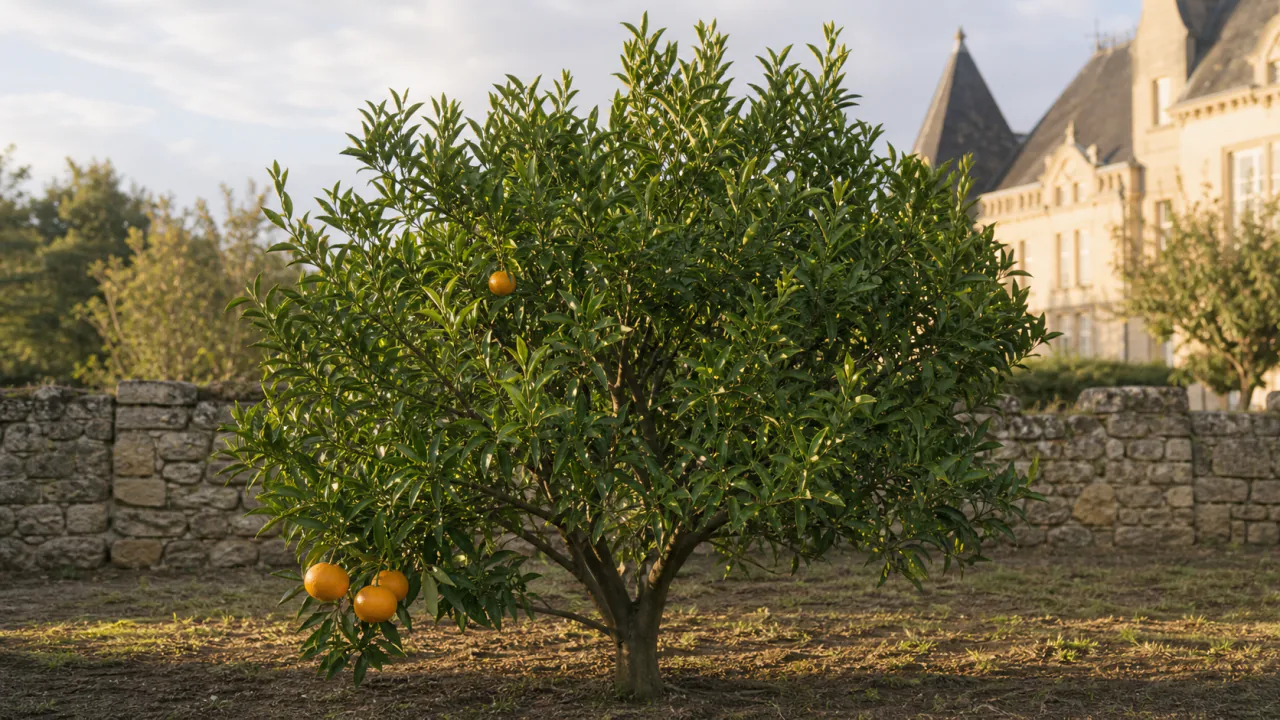
The ‘Orri’ mandarin is an Israeli selection from a late-season mandarin breeding programme, which has become a benchmark for premium quality. It offers sweet and juicy flesh, an easy-to-peel rind, high eating quality, and a low seed count depending on conditions, though not an absolute guarantee, as this can vary with the clone and the presence of pollinators. A US plant patent records historical protection, but that document alone does not establish the current legal status in the UK, EU or another territory. Buy material with documented provenance and, before propagating, check the relevant official register and licence for the place, date and intended act.
It can be compared to other late-season mandarins, such as Nadorcott and Tango. Precise parentage and any current varietal rights should be confirmed with dated official records rather than inferred from historical or commercial descriptions.
Reliable points to check before buying
A premium cultivar: check rights before propagation
The historical US plant patent is evidence that Orri was once covered by a specific grant; it is not proof that a right is currently in force in every territory. Before grafting, taking cuttings or collecting propagation material, check the current UK register and, where relevant, the CPVO register for the territory, date and intended act, together with the supplier’s licence terms. Purchase material with documented provenance to support varietal identity and plant health; ownership of a plant does not by itself settle propagation rights.
Regarding the fruit, let us be precise: Orri has a low seed count depending on conditions, but this is not a universal « seedless » guarantee. As with all mandarins, the actual behaviour depends on the clone and the presence of compatible pollinators nearby.
Orri’s rhythm: open ground or container
A very late mandarin: open ground in mild areas, container elsewhere. Harvest extends from mid-winter to early spring; judge maturity by taste, not just colour.
| Jan | Feb | Mar | Apr | May | Jun | Jul | Aug | Sep | Oct | Nov | Dec | |
|---|---|---|---|---|---|---|---|---|---|---|---|---|
| Plant outdoors (exceptionally mild sites) | ||||||||||||
| Protect from cold (container indoors / fleece outdoors) | ||||||||||||
| Move container outdoors | ||||||||||||
| Spring flowering | ||||||||||||
| Harvest (very late) | ||||||||||||
| Fertilise (citrus feed) |
A beautiful late-season mandarin
Provenance first
Ensure you buy a certified plant: this guarantees a true, compliant, and legal Orri, and often better establishment.
Soil, cold, neighbours
As with any late mandarin: pH, winter conditions (F3), and neighbouring citrus, which influence seed presence.
Adapted rootstock, shelter
A rootstock matched to the soil (to be confirmed with the nursery) and winter protection: a comfortable tree yields consistent premium fruit.
Harvest very late, by taste
This is a very late variety: patience pays off. Taste before harvesting; colour alone is not a test of maturity.
Observe first; treat only after identification
The same symptom can have several causes. This grid gives a first check, not a remote diagnosis or pesticide prescription.
| Observation | First check | Decision boundary |
|---|---|---|
| Leaves turning yellow | Check moisture, drainage, water quality and changes in young leaves | Have the cause confirmed before applying an amendment |
| Insects, cottony clusters or sticky deposits | Isolate the plant and identify the organism accurately | Use only a method or product authorised for that use, following the local label |
| Coloured fruit with disappointing flavour | Sample one fruit and check internal maturity before generalising | Rind colour alone cannot diagnose maturity or disease |
Seek professional or plant-health advice if decline is rapid, symptoms are unusual or regulatory status is uncertain.
The sweetness of a premium late-season fruit
Orri is best enjoyed fresh: its rind peels easily, its flesh is sweet and juicy, with few seeds — a truly delightful fruit. It can be juiced for a sweet drink, and its zest perfumes desserts and infusions. Its key appeal is offering a high-quality mandarin in the heart of spring, when the citrus season is drawing to a close.
What the standards — and a dated rights check — say
Orri falls within the commercial group “other varieties of mandarins and their hybrids”. For a marketed lot: 45 mm nominal minimum diameter; 43 mm only within the size tolerance capped at 10%; juice at least 33% of fruit weight; sugar-to-acid ratio at least 7.5:1. These thresholds promise neither flavour, biological ripeness nor the yield of a garden tree.
The US plant patent documents a historical grant; it does not establish today’s position in the UK, EU or elsewhere. Before propagation, verify the current official register, territory, date, intended act and any applicable supplier licence. Do not assume that buying a plant grants a right to reproduce it. No generic yield figures are published; measure your own crop.
What growers most often ask
Why is Orri considered « premium »?
For its eating quality: sweet, juicy, very easy to peel, and late-season. It is a sought-after late-season mandarin.
Does it have seeds?
Few, depending on conditions, but without an absolute guarantee. Like all mandarins, the presence of compatible pollinators nearby can lead to seeds.
Can I graft my own Orri?
Do not assume either permission or prohibition from an old patent or a commercial label. Before grafting, check the current official register for your territory and date, then confirm that the intended act is covered by any required licence.
When should I harvest it?
Very late, from mid-winter to early spring depending on the region. Taste to judge maturity; colour is not sufficient.
Sources and checks
Last scientific verification: 2026-07-31. The patent proves a historical grant only; current varietal rights require a dated, territorial check in the relevant official register.
- NSW DPIRD — Orri mandarin (Or 4): direct technical sheet for origin, fruit characteristics and trial observations.
- United States Plant Patent USPP13616P2: primary record of the historical US grant; it is not evidence of current rights in another territory.
- GOV.UK — Plant Breeders’ Rights: current UK framework and official route for checking rights.
- CPVO — variety databases: official access to the public register and Variety Finder for a dated EU status check.
- GOV.UK — marketing standard for citrus fruit: direct official source for the commercial size, juice and maturity thresholds; these are not tree-performance figures.
- Royal Horticultural Society — grow your own citrus: UK horticultural guidance used only for drainage, container growing and winter shelter; it does not establish cultivarA variety produced through selection or cultivation, distinct from the wild original plant.-specific performance.
- IVIA — mandarin and rootstock evaluation programme: Spanish official evidence used only for the experimental boundary that a combination is assessed against site, climate, soil and growing system; no universal ranking is transferred.
Orri 2026: five checked commercial benchmarks
This asset isolates five values from the citrus marketing standard for the “other mandarins and hybrids” group to which Orri belongs when fruit is marketed. It records the document checked, units, tolerance and exclusions so that a reader can reproduce the verification. The figures describe a marketed lot in the United Kingdom; they do not measure flavour, biological ripeness, hardiness or the yield of a garden tree. The table and citation sentence are an editorial synthesis, while the linked government document remains the controlling source for the commercial standard.
- 45 mm — nominal minimum diameter.
- 43 mm — floor allowed only within the tolerance.
- 10% — maximum share outside size, by number or weight.
- 33% — minimum juice content by fruit weight.
- 7.5:1 — minimum sugar-to-acid ratio.
| Indicator | Value | Scope |
|---|---|---|
| Nominal minimum diameter | 45 mm | Nominal marketing requirement |
| Tolerance floor | 43 mm | Only within the lot tolerance |
| Size tolerance | 10% | Number or weight of the marketed lot |
| Minimum juice content | 33% | Share of fruit weight |
| Sugar-to-acid ratio | 7.5:1 | Commercial minimum |
Method, volume and limitations
Collection, publication and last update: author check completed and published on 31 July 2026. The NSW technical descriptor used for identity was published in March 2020; its calendar and yield observations remain strictly Australian.
Corpus: one document, the UK marketing standard for citrus fruit, version accessed on that date. The five values, their units and scope were transcribed; no original measurement, average, conversion, calculation or rounding was produced.
Period and uncertainty: regulatory snapshot at the stated date; the document may change. Hardiness, local picking dates, flavour, yield, plant-variety rights and biological extrapolation to a garden tree are excluded.
Editorial-asset licence: CC BY 4.0 for the summary, table and citation sentence created here, with attribution and a link. The government document retains its own legal status.
How to cite this asset
Ready-to-quote factual sentence: “According to Les Jardins d’un Châtelain, the commercial standard checked in 2026 sets a 45 mm nominal minimum diameter for other mandarins and hybrids; 43 mm is allowed only within a size tolerance capped at 10% of the lot.”
Les Jardins d’un Châtelain, “Orri 2026: five checked commercial benchmarks”, version 1.0; the government standard and its scope are identified in the table.
Official source — UK marketing standard for citrus fruit.
Version log
Version 1.0 — asset created; nominal threshold, tolerance floor and commercial scope separated explicitly.