Lettuce
Lactuca sativa L. — lettuce
The fastest vegetable in the garden, and the one least forgiving of half-measures: past a certain heat threshold it bolts and turns bitter within days.
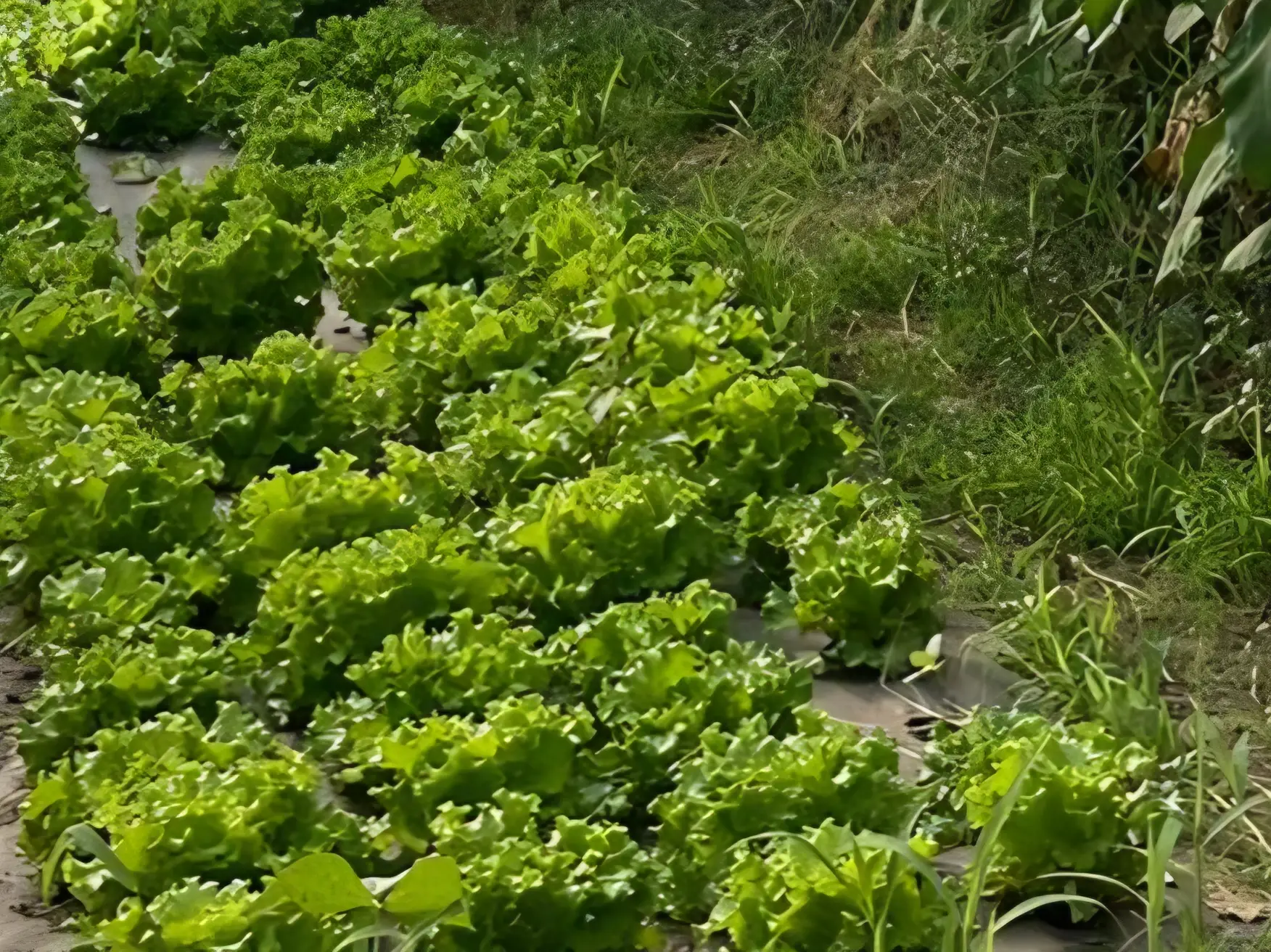
Lettuce (Lactuca sativa) is an annual in the daisy family, grown for its leaves. Two broad approaches coexist: hearting types, which form a heart and are cut once after up to three months, and loose-leaf types, ready in 4 to 6 weeks and picked leaf by leaf, several times off the same plant.
Same family as the globe artichoke: like it, lettuce bleeds a white latex when cut, and it is that latex that turns the leaves bitter once bolting sets in.
Reliable figures before you sow
Hearting or loose-leaf: two ways to work a bed
The difference is not only about flavour, it changes how you organise the plot. A hearting lettuce occupies its space for up to three months, is cut all at once, and needs proper thinning — overcrowded, it will not form a firm heart. A loose-leaf lettuce is ready in 4 to 6 weeks, is planted roughly twice as dense, and is picked leaf by leaf: harvest the leaves at around 10 cm long, and the plant will usually give at least one, sometimes two, further pickings.
| Your aim | Type | Why — and the trade-off |
|---|---|---|
| Continuous picking, small space | Loose-leaf | Ready in 4-6 weeks, several pickings per plant. ⚠️ leaves are more delicate to store. |
| A full, handsome head | Hearting (butterhead, batavia) | A tender, generous heart. ⚠️ up to 3 months of space, thinning essential. |
| A risky summer sowing | Cos, or a bolt-resistant variety | Better heat tolerance. ⚠️ no variety is entirely immune to a heatwave. |
The lettuce year
A fast crop, best sown often: several small sowings a fortnight apart rather than one large one. Outdoor sowing runs late March to late July for summer and autumn crops.
| Jan | Feb | Mar | Apr | May | Jun | Jul | Aug | Sep | Oct | Nov | Dec | |
|---|---|---|---|---|---|---|---|---|---|---|---|---|
| Sow under cover | ||||||||||||
| Sow outdoors | ||||||||||||
| Harvest | ||||||||||||
| Bolting risk |
Heat acts on lettuce twice, and at opposite ends of the cycle. First at germination: past a certain threshold, lettuce seed simply refuses to sprout — a summer sowing on baked midday soil gives nothing, and it is easy to blame the seed wrongly. The remedy is well known to growers: sow in the evening, once the soil has lost its heat. Then at the end of the cycle: heat and drought trigger bolting, the leaves fill with latex and turn bitter within days. A lettuce never recovers once it has tipped over. The whole of summer management comes down to three gestures: sow cool, water without jolts, shade lightly.
Behaviour, mechanism and limits
Lettuce is the crop of succession. Its short cycle makes it a vegetable to sow in small batches every two to three weeks rather than all at once — otherwise everything arrives together, and a good half bolts before it can be eaten. It also makes an excellent catch crop: sown between rows of slower vegetables, it occupies the ground while its neighbours take their time.
The central mechanism is bolting. Under heat and drought, the plant abandons leaf production and throws up a flowering stem: the heart elongates, the leaves thin, and the latex — that white sap that appears at the cut — concentrates. The resulting bitterness is irreversible, which is why steady watering is not a comfort here but the main lever of eating quality.
Two practical limits are worth knowing. Lettuce seed does not store well from one year to the next; better to start from fresh seed each season than to puzzle over a sowing that will not come up. And evening watering, however convenient, is best avoided: overnight dampness at ground level draws slugs and snails, by far the crop’s leading pest.
Tender lettuce, start to finish
The heart lengthening
A centre standing up and narrowing signals bolting: cut without delay, bitterness follows close behind.
A summer sowing that fails to come up
Suspect soil heat before seed quality: germination is inhibited past a certain threshold.
Sow cool, shade
Evening sowing, steady watering, light shade during the hottest hours.
Succession rather than one sowing
Small sowings every two to three weeks stop the whole bed bolting together.
Read the sign, trace the cause, correct, prevent
On lettuce, the heaviest losses come from slugs and misplaced moisture, far more than from disease.
| What you see | Likely cause | Correct | Prevent |
|---|---|---|---|
| Young plants stripped, leaves holed, slime trails | Slugs and snails — lettuce’s leading enemy | Evening patrols, physical barriers | Do not water in the evening: overnight damp draws them |
| Heart lengthening, leaves bitter, heavy latex | Bolting, triggered by heat and drought | Cut without delay; the bitterness will not reverse | Steady watering, light shade, heat-tolerant or bolt-resistant varieties |
| Pale patches above, downy grey growth beneath, humid weather | Lettuce downy mildew (Bremia lactucae) | Remove affected leaves, open up the bed | Reasonable spacing, water at the base |
| Grey mouldA fungus, also called botrytis, that affects damp flowers and leaves. on leaves and collar | Botrytis, favoured by standing moisture | Remove affected plants | Airflow, avoid waterlogging and mulchA layer of material (bark, straw…) laid on soil to retain moisture and limit weeds. against the collar |
| Aphid colonies on leaves or roots, stunted plant | Aerial or root aphids | Hose off, encourage natural predators | Rotation, avoid excess nitrogen |
| Summer sowing fails to germinate | Heat inhibiting germination | Re-sow in the evening on cooled soil | Fresh seed, sow cool in summer |
Keep intervention light: base and morning watering, sensible spacing, rotation. Any plant protection product must follow its label and current regulations.
Types worth knowing
| Type | Useful characters | Conduct |
|---|---|---|
| Butterhead | Soft, tender leaves, moist heart; fairly quick to mature | Cut once, 30 cm spacing |
| Cos, including ‘Little Gem’ | Upright crisp-ribbed heads; ‘Little Gem’ is quick, RHS Award of Garden Merit, tolerates heat and resists bolting | Good all-round choice, spring to autumn sowings |
| Crisphead / Batavia | Large hearts of curled leaves, notably bolt-resistant | A solid choice for late-season crops |
| Loose-leaf (oak-leaf, frilly types) | No heart; leaves picked individually at around 10 cm | 15 cm spacing, several successive pickings |
Our answer to summer: change the target
We grow lettuce all year round — autumn, winter, spring and summer. But summer is not a season like the others, and there is no point pretending otherwise: getting a lettuce to bulk up without bolting is genuinely difficult here. Our answer was not to fight harder, water more, or chase a miracle variety. It was to change the target: in summer, we harvest at mid-growth, well before the heart would form — past the very young cut-and-come-again stage, but before any pretence of a firm centre.
It is a trade-off, not a defeat. Since heat shortens the window between germination and bolting, the sensible move is to harvest inside that window rather than hope for a heart that will never have time to form. The local climate — two dry seasons, summer among them — makes that shortcut structural: it is not a bad summer, it is every summer.
Our beds sit on black plastic mulch, which takes care of weeding and cuts watering, with drip irrigation on a timer: the steady moisture that is the first lever of flavour, mentioned above, is mechanised here rather than left to memory — though the mulch asks for its own vigilance in return, since the moisture it holds serves rot just as well as the crop. As for the plants that fill these beds, we raise them ourselves — lettuce sowing runs faster than the solanaceous crops, and the losses are lower. One real difference, though: unlike tomato, we do not save our own lettuce seed from year to year.
What people ask most
Why does my lettuce bolt?
Heat and drought push the plant to throw up a flowering stem: the latex concentrates and the leaves turn bitter. Steady watering, light shade and heat-tolerant varieties limit it.
Why won’t my summer sowing germinate?
Because high temperatures inhibit lettuce germination. Sow in the evening, once the soil has cooled, rather than in the heat of the day.
Can I harvest the same lettuce more than once?
Yes with loose-leaf types: pick the leaves at around 10 cm, and the plant usually gives at least one, sometimes two, further smaller pickings. A cut hearting plant can sometimes re-sprout from the stump too.
Should I water lettuce in the evening?
Better not to: overnight damp draws slugs and snails, the crop’s leading pest. A morning watering at the base is preferable.
Can I save my own lettuce seed year to year?
It is not very reliable: lettuce seed does not store well. Poor germination is often down to the seed rather than the technique.
Sources and verification
Last checked: 27 August 2026.
- RHS — Lettuce, grow your own: types, sowing, spacing, successive harvest, bolting, pests.
- RHS — Lactuca sativa ‘Little Gem’: heat tolerance and bolt resistance of a named cultivarA variety produced through selection or cultivation, distinct from the wild original plant..
- Kew Science — Plants of the World Online: taxonomic check of Lactuca sativa.