Japanese pieris
Pieris japonica (Thunb.) D.Don ex G.Don
Japanese pieris prospers when its fine roots remain cool and aerated in acidic soil: neither prolonged drought, chalk nor standing water suits it.
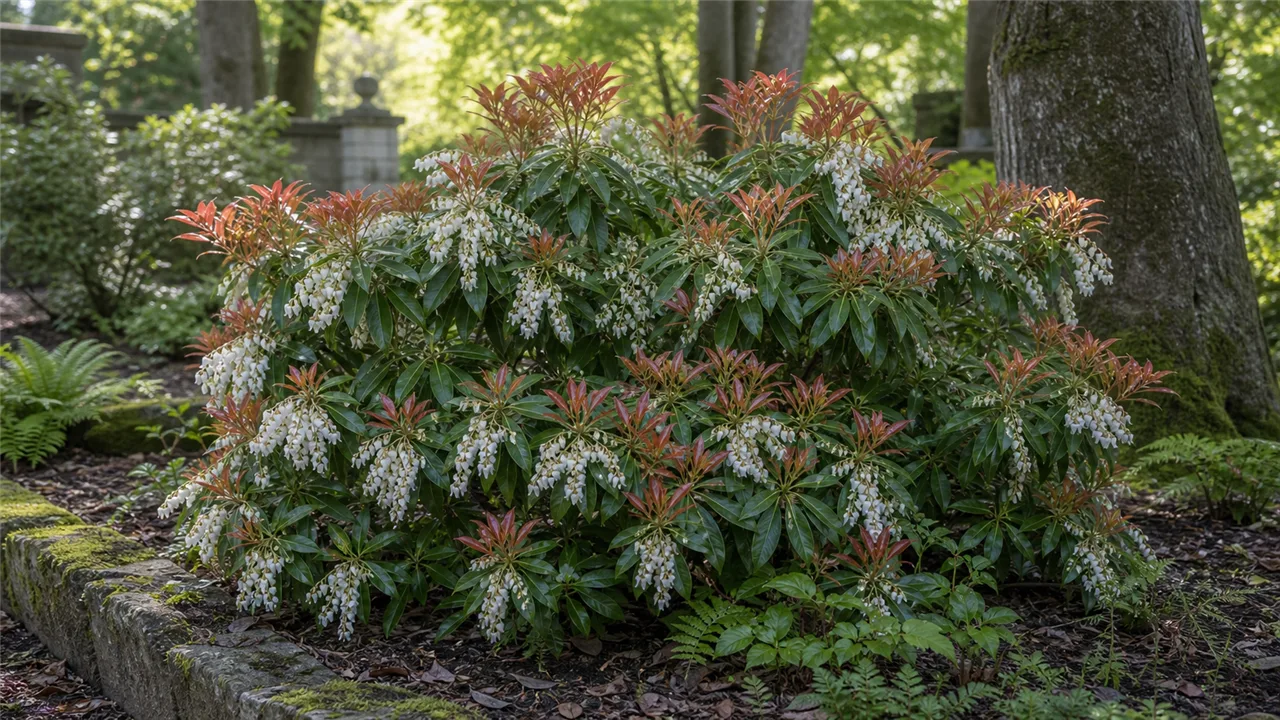
Japanese pieris, also called Japanese andromeda or lily-of-the-valley bush, combines spring bells with young growth that may open bronze or red. Its polished foliage can hide trouble below: a shallow rootballThe block of soil left around a plant's roots when it is planted or moved. may remain dry after light rain, while compact wet soil can starve the same roots of air. Inspecting the root zoneThe area of soil occupied by a plant's roots, where water and nutrients matter most. before watering or feeding is therefore the decisive habit.
In our climate The pieris asks for the same care as a rhododendron: acid, cool soil, sheltered partial shade and steady water, because the lime and dry heat of the Riviera do not suit it. We set it in a protected spot rather than full sun.
In the UK, the RHS rates Pieris japonica H5, hardy through most of the country; as with rhododendrons, alkaline or chalky soilSoil rich in lime, often unfavourable to plants that prefer acidic conditions. — not cold — is the real limiting factor, and container growing in ericaceous compost is the fallback where garden soil isn’t acid enough.
For an acid-loving border, compare its needs with rhododendron care and Japanese camellia care, then browse the full plant encyclopedia.
How to recognise and place Pieris japonica
CultivarA variety produced through selection or cultivation, distinct from the wild original plant. boundary. Read the plant label rather than estimating mature size from the word “pieris”. Dwarf, variegated and red-flushed cultivars differ in eventual spread, hardinessA plant's ability to survive winter cold without protection., light tolerance and flowering, so the species profile cannot replace the named cultivar’s specification.
Where and how should Japanese pieris be planted?
Choose bright shade or gentle sun, sheltered from cold, drying wind. The soil must hold steady moisture yet release surplus water. Test its pH before purchase: a small pocket of ericaceous compost in chalky ground only postpones the conflict, because roots and irrigation water eventually meet the surrounding alkalinity. A large free-draining container is the more controllable choice where the native soil remains distinctly alkaline.
Plant in autumn or spring, avoiding frost, heat and saturated ground. Moisten the rootball first, ease out only roots that circle tightly, and make the hole wider rather than deeper. Set the top of the rootball level with the finished soil, or a little proud on heavier ground, then backfill without compressing away the air spaces.
Water slowly once to settle the soil, then lay a moderate mulchA layer of material (bark, straw…) laid on soil to retain moisture and limit weeds. of composted leaves or composted bark while keeping the stem base clear. Mulch reduces evaporation and protects surface roots; it cannot repair an impermeable subsoil or make hard irrigation water suitable.
When should you plant, inspect water, feed and prune?
Plant stage, local weather and soil condition outrank the month. A pale dot marks a possible window, never an automatic task.
| Jan | Feb | Mar | Apr | May | Jun | Jul | Aug | Sep | Oct | Nov | Dec | |
|---|---|---|---|---|---|---|---|---|---|---|---|---|
| Plant outside weather extremes | ||||||||||||
| Check rootball and drainage | ||||||||||||
| One feed if need is confirmed | ||||||||||||
| Deadhead / lightly prune | ||||||||||||
| Inspect leaf undersides |
When should Japanese pieris be watered without rotting its roots?
At planting and during establishment. Reach beneath the mulch and check the original rootball itself. A short shower may wet leaves and nearby soil without reaching the container compost. When the rootball starts to lose its cool moisture, water slowly over its whole surface; while it remains moist, wait. Inspect sooner during warm, windy spells or where eaves and trees intercept rainfall.
For an established shrub. Lift the mulch near the outer root zone and feel the soil. If it is moist and crumbly, add nothing. If it has begun to dry after a period without effective rain, water slowly and deeply, then allow air to return. A glossy, sticky or sour-smelling root zone, or a planting hollow that stays full, calls for drainage diagnosis rather than another watering.
Keep an observation record. Note effective rain, the rootball check, the decision and the plant’s response. Inspect earlier during high evaporative demand and later after sustained rain or cool weather. This converts a forecast into a reason to look, not a command to irrigate.
Read water and symptoms together. Prefer rainwater where tap water is hard. Dry margins with a dry rootball support water deficit; wilt in wet ground suggests oxygen shortage or root disease. More water in the second situation can accelerate decline.
Which NPK should Japanese pieris receive, and when?
There is no proven universal domestic NPKThe three main nutrients in a fertiliser: nitrogen, phosphorus and potassium. programme for Pieris japonica. A vigorous shrub in living acidic soil with a suitable mulch may need no fertiliser. Weak growth or pale leaves can instead result from high pH, drought, waterlogging, lacebug or damaged roots. Feeding before that distinction risks root scorch without correcting the cause.
If a soil analysis and the plant’s growth confirm that all three major nutrients are required, use NPK 3:1:2 only as a conditional comparison ratio. 12-4-8 and 15-5-10 are documented examples from US university guidance; they are not UK doses, annual prescriptions or products that a gardener must find. Choose a locally labelled slow-release ericaceous fertiliser, compare its analysis with the ratio and follow its label.
Make at most one justified application in early spring as active growth resumes, on soil that is already moist. Do not feed a dry, waterlogged or newly stressed plant, and avoid late nitrogen that may prolong soft growth before winter. In a container, skip feeding while fresh compost already contains fertiliser and never combine a slow-release product with a second liquid programme.
Amendment is not fertilisation. A thin layer of composted leaves or bark supports soil structure, moisture storage and biological activity. It cannot turn chalky ground permanently acidic. Conversely, fertiliser supplies nutrients but cannot restore drainage or root aeration.
Is the cause chlorosis, drought or pieris lacebug?
Start by asking which leaves changed and turn over several of them. Young leaves that turn yellow while their veins remain greener suggest chlorosisYellowing of the foliage caused by poor iron uptake, often linked to chalky soil. associated with high pH: iron may be present but unavailable. Test the soil and, if possible, irrigation water before adding iron or an acidifier. Lime-rich rubble, concrete and hard water can sustain the problem.
Coarse pale mottling above, accompanied by brown-black deposits, cast skins or flat insects below, fits pieris lacebug more closely. Dry edges with a dry rootball point towards water deficit. Yellowing and wilt while the soil remains wet require inspection of the stem base and roots before the next watering.
Four checks before adding water, iron or fertiliser
Read the stage and pattern
Record newly planted or established, pot or open ground, weather, affected leaf age and damage distribution. A symptom confined to leaf undersides is not managed like general chlorosis.
Open the root-zone evidence
Lift mulch and check rootball moisture, effective rain, pH and drainage. Examine several leaf undersides and the stem base before naming a deficiency or disease.
Change one probable cause
Correct water, soil air, exposureThe amount of sunlight a spot in the garden receives (full sun, part shade, shade). or hygiene first. Fertiliser enters the decision only after need is established, with the local product label setting the limit.
Record and compare
Date rain, watering, pH, any feed and the foliage response. A measured improvement is more informative than a succession of products.
Which pests and diseases should you check on Japanese pieris?
One sign is not a diagnosis. Photograph upper and lower leaf surfaces, inspect root moisture and isolate a recent purchase that declines rapidly. Progressive dieback should be confirmed before treatment or replanting.
| Observed symptom | Possible cause | What distinguishes it | First action |
|---|---|---|---|
| Coarse pale mottling, followed by yellowing or browning. | Pieris lacebug | Brown-black excrement, cast skins, nymphs or adults occur mainly beneath leaves; warm sheltered sites often carry more damage. | Turn over several leaves from spring onwards, reduce site stress and identify the insect before intervening. |
| Young leaves yellow while veins remain green. | High-pH chlorosis | There are no lacebug deposits beneath the leaf; alkaline soil or hard water is likely, although damaged roots can contribute. | Measure pH, moisture and drainage before adding iron or an acidifier. |
| Wilt and dying shoots while the ground remains wet. | Waterlogging or Phytophthora root rot | Dark decayed roots, stem-base lesions or standing water support the suspicion; visual symptoms alone cannot confirm the pathogen. | Stop watering, prevent run-off into the area and seek a diagnosis before replanting. |
| Discrete brown or black leaf spots. | Fungal leaf spot | Defined lesions may follow prolonged leaf wetness; lacebug produces finer stippling and deposits below. | Remove badly affected fallen foliage, improve airflow and water at soil level. |
| Brown margins, drooping foliage and a dry rootball. | Drought or drying wind | The root zone is genuinely dry, unlike wilt associated with saturated soil. | Water slowly and check that it infiltrates before reviewing shelter and mulch. |
| Whole branches decline, sometimes with white fungal growth beneath bark. | Honey fungus, uncommon | Dark bootlace-like strands and decayed wood strengthen the suspicion, but other root rots remain possible. | Obtain identification before removal or planting another susceptible shrub in the same place. |
How do you keep Japanese pieris in a pot?
Choose a cultivar suited to the available volume and a stable container with several unobstructed drainage holes. Use an airy peat-free ericaceous compost, without creating a permanent reservoir at the base. Let the pot drain completely and empty any saucer after watering.
Judge moisture by pot weight, the feel of the compost and outflow, not by a fixed weekday. A small rootball warms and dries quickly in summer but can stay saturated through winter rain. Prefer rainwater in hard-water districts, repot when the compost loses structure and feed only when the original product no longer supports healthy growth.
Why does Japanese pieris flower poorly, and when should it be pruned?
Very deep shade, drought while flower buds form, excessive nitrogen or late pruning can reduce the following display. Also check cultivar, plant age and frost damage to buds. Flowering never justifies keeping the soil saturated.
Routine pruning is minimal. Remove dead or broken wood, then shorten a few shoots just after flowering if shaping is necessary, before future buds form. Deadhead without tearing the coloured new growth. Any severe reduction should be gradual because recovery from old wood varies among cultivars.
Design with the new growth, not the flowers alone
Place Japanese pieris against the dark calm of evergreens or at a bright woodland edge. Copper and red new shoots then take over as the bells fade, extending the composition without another flush of flowers. Leave the mature volume promised by the cultivar uncluttered: free air around the shrub preserves its natural outline and makes moisture checks easier.
Actions that weaken Japanese pieris over time
Planting an acidic pocket in chalk delays chlorosis without isolating roots and water.
Watering to a calendar ignores intercepted rain, a sheltered pot and soil that is already saturated.
Calling every yellow leaf a deficiency overlooks lacebug, drought and diseased roots.
Feeding a stressed shrub increases scorch risk and repairs neither pH nor drainage.
Pruning hard or late removes future buds and distorts a naturally restrained shrub.
Japanese pieris questions
Will Japanese pieris grow in chalky soil?
No. It needs acidic soil and does not tolerate chalk. In distinctly alkaline ground, a large free-draining pot with ericaceous compost and low-lime water is more reliable than a small acidic planting pocket.
How often should it be watered?
There is no universal interval. Check the rootball beneath mulch and count only rain that reached it. Water slowly as it begins to dry, wait while it remains moist and diagnose rather than irrigate when it is saturated.
Which NPK fertiliser should I choose?
A healthy pieris may need none. If analysis confirms a need for all three nutrients, compare locally labelled slow-release ericaceous products with a conditional 3:1:2 ratio, such as 12-4-8 or 15-5-10. These are not doses: follow the UK label, apply once in early spring and avoid late nitrogen.
Why are its leaves turning yellow?
Yellow young leaves with greener veins suggest high pH. Coarse pale mottling with dark deposits beneath points instead to pieris lacebug. Check rootball moisture, drainage and roots before adding iron or water.
Is Japanese pieris poisonous?
Its parts are harmful if eaten. Keep foliage, flowers and prunings away from children and pets, wear gloves when handling and seek appropriate medical or veterinary advice after suspected ingestion.
Botanical, cultivation and plant-health sources
- Royal Horticultural Society — Pieris japonica: acidic free-draining soil, sheltered exposure, safety, pruning, pests and diseases for UK gardens.
- Royal Horticultural Society — Pieris lacebug: British distribution, upper-leaf mottling, lower-leaf deposits and insect life cycle.
- Royal Horticultural Society — Phytophthora root rot: wet-root decline, symptom limits and the need for diagnosis.
- Kew Science, Plants of the World Online — Pieris japonica: accepted name, family and native range.
- Virginia Cooperative Extension — Japanese Pieris: a foreign species-specific reference used for site stress, form and lacebug susceptibility, not UK pesticide advice.
- Universeity of New Hampshire Extension — Fertilizing trees and shrubs and Universeity of Georgia Extension — Care of ornamental plants: US exceptions used only to bound the conditional 3:1:2 comparison and early-season timing; no American application rate is transferred to the UK.