Etrog Citron
Citrus medica — Etrog group, the « Jewish citron »
A citron laden with history, long selected for a ritual use. This fact-sheet describes its botany and cultivation — without claiming to judge its religious fitness, which is not for us to determine.
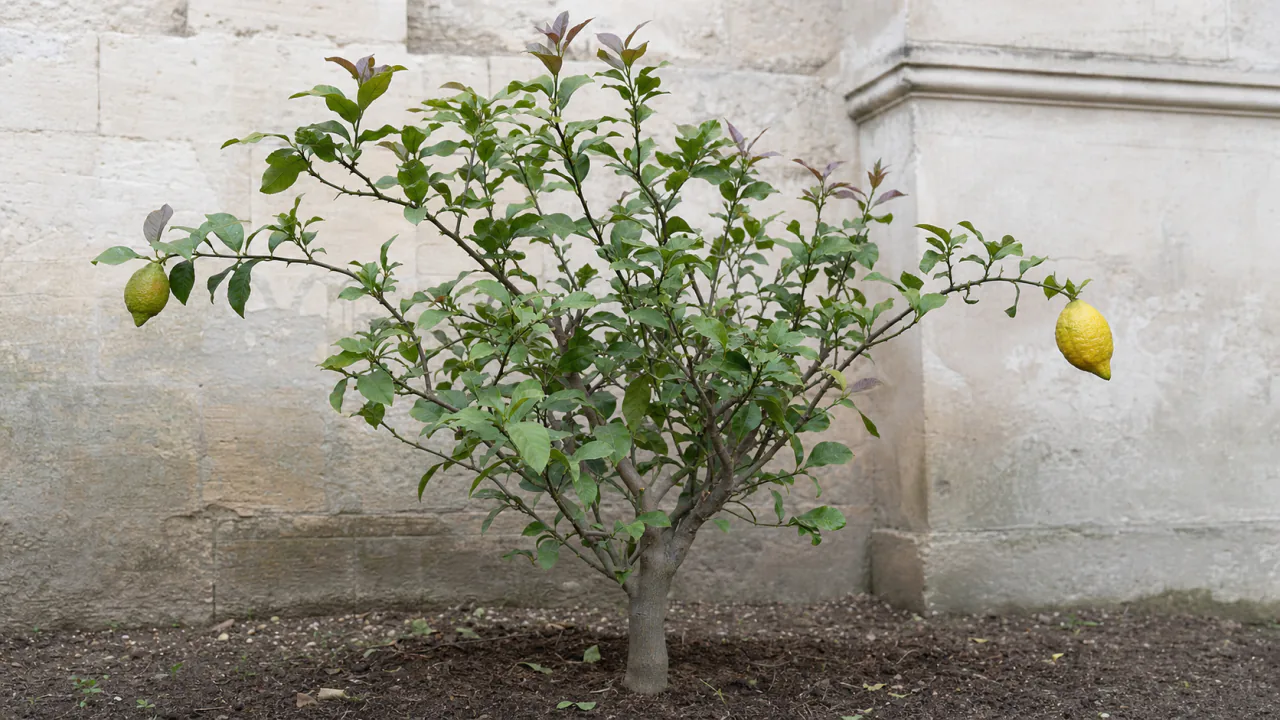
The Etrog is a group of citrons (Citrus medica) long selected for a ritual use tied to the Jewish festival of Sukkot. Botanically, it is a citron like the others: an oval fruit, often ending in a persistent nipple (the pitam), with a thick peel and pulp that varies by lineage. Horticulturally, it shares the traits of the genus: a frost-tender and thorny tree, grown for its peel more than for its flesh.
An important note. This fact-sheet is botanical and cultural. The ritual fitness of an etrog depends on religious criteria, on lineage and on certification by the relevant supply chain, never on the appearance of the fruit alone. We do not certify, and cannot certify, that a plant or a fruit is ritually fit. For that use, turn to the competent authorities and suppliers.
To be set alongside the other Citrus medica of the encyclopedia: the Corsican citron, the Diamante citron and the Buddha’s hand. See also the Citrus & Orchard section.
The reliable (botanical) facts before you buy
Distinguish botany from ritual fitness
The decision depends first on what you are looking for. For an ornamental or horticultural use, the Etrog is grown like any citron: a frost-tender and thorny tree, prized for its remarkable fruit and fragrant peel. For a ritual use, on the other hand, the botanical aspect is not enough: fitness rests on precise religious criteria, on the plant’s lineage and on certification by the competent supply chain. A fine fruit is not, in itself, a fit fruit.
The description here stays on the plant and its cultivation. For ritual use, only a certified supplier and the ruling of the relevant authorities are authoritative. The rootstock is chosen according to the soil, the exact combination to be confirmed with the nursery — bearing in mind that, for certain lineages and uses, the method of propagation may itself be subject to particular requirements to check with the supply chain.
| Depending on your situation | Rootstock(s) | Why — and the trade-off |
|---|---|---|
| Ornamental / horticultural use | Macrophylla, Volkameriana, trifoliate | Like citrons, according to the soil. ⚠️ to be validated by lineage. |
| Calcareous or saline soil | Forner-Alcaide 5 (FA5) | ChlorosisYellowing of the foliage caused by poor iron uptake, often linked to chalky soil. tolerance. ⚠️ not « universal ». |
| Ritual use | Per supply-chain requirements | ⚠️ propagation method and lineage may be regulated: refer to certified suppliers. |
| To keep in mind | Confirm by lineage and use | Frost-tender citron: validate the pairing, the winter shelter and, if ritual, the fitness with the competent bodies. |
The Etrog’s rhythm: tub or mild climate
A frost-tender citron: a tub overwintered warm and bright outside a mild climate. The harvest is set on ripeness, and, for ritual use, on religious criteria and a calendar particular to the festival.
| Jan | Feb | Mar | Apr | May | Jun | Jul | Aug | Sep | Oct | Nov | Dec | |
|---|---|---|---|---|---|---|---|---|---|---|---|---|
| Plant / repot (settled warmth) | ||||||||||||
| Overwinter bright frost-free (tub in) | ||||||||||||
| Move the tub out (mild nights) | ||||||||||||
| Flowering (fragrant) | ||||||||||||
| Harvest (by ripeness / ritual criteria) | ||||||||||||
| Feed (citrus, in growth) |
A healthy Etrog, in its horticultural role
The intended use
Clarify first whether your project is horticultural/ornamental or ritual: the requirements are not the same, and only the competent supply chain handles the latter.
Damaged fruit or lost nipple
Horticulturally, a marked peel or a fallen nipple (pitam) is not a disease; for ritual use, these details rest on religious criteria that we do not judge.
Care for peel and tree
As for any citron, warmth, regular watering and gentle handling of the fruit preserve the quality of the peel.
Protect from cold
Frost-tender citron (F1): bright frost-free overwintering is imperative outside a mild climate.
Read the sign, trace the cause, correct, prevent
The Etrog shares the troubles of tubbed citrons; its cold-tenderness and the fragility of its peel call for attentive care.
| Sign observed | Probable cause | Correct | Prevent |
|---|---|---|---|
| Leaf drop, scorch in winter | Overwintering too cold or dark (F1 tenderness) | Bring in warm and bright; ease off watering | Bright frost-free greenhouse/conservatory |
| Yellow leaves with veins staying green | Iron chlorosis (high pH, lime, waterlogging) | Iron chelate; review watering; suitable rootstock | Free-draining compost, low-lime water |
| Cottony masses or shells on stems and undersides | Scale insects (mealybugs or armoured scale) | Clean off, white oil or soft soap, isolate | Ventilate overwintering, inspect when bringing in |
| Marked peel, wounds on the fruit | Handling, rubbing, surface pests | Handle with care; protect the fruit on the tree | Avoid knocks and rubbing; watch for insects |
| Winding silvery galleries on young leaves | Citrus leaf miner | Remove badly affected shoots; let beneficials act | Avoid nitrogen excess that multiplies young leaves |
Stay sparing with treatments: clean foliage, bright frost-free overwintering, balanced nutrition. If a notifiable citrus disease is suspected, follow the official instructions in force.
After the festival, the peel
Beyond its ritual use — which is not a matter of cooking — the Etrog is, like any citron, a fruit of peel. Its thick fragrant skin lends itself to candying and marmalade, and its zest perfumes; it yields very little juice and is not eaten raw. Traditionally, etrogim are indeed candied or turned into preserves after the festival. We describe here the culinary use of the fruit, distinct and independent from its ritual dimension.
What the standards say (and do not)
Like the other citrons, the Etrog does not fall within the lemon size scale.
- Regulatory group: off the cited scale; the lemon sizing does not apply to the citron.
- Ritual-use criteria: they are of a religious order and are not commercial standards — we do not assess them.
No generic yield can be published: it depends on the lineage, the rootstock, the soil, the age and the climate. Measure your own crop.
What people most often ask
What is the Etrog?
A group of citrons (Citrus medica) long selected for a ritual use tied to the Jewish festival of Sukkot. Botanically, it is a thick-skinned citron, often bearing a nipple (pitam).
Is a fine etrog ritually fit?
Not necessarily: ritual fitness depends on religious criteria, on lineage and on certification by the competent supply chain, not on the appearance of the fruit alone. We do not certify that fitness.
Can it be grown like the other citrons?
Yes, horticulturally: it is a frost-tender (F1) and thorny citron, to be grown in a tub or a mild climate, like the Corsican citron or the ‘Diamante’.
Can you make jam from it?
Yes, independently of the ritual use: its thick peel suits candying and marmalade, like the other citrons.
Sources and control
Last scientific check: 2026-07-18. The marketed lineages and their requirements remain to be identified (for ritual use, refer to the competent bodies).
- UC Riverside — Citrus Variety Collection: citrons (Citrus medica), including the Etrog group.
- Etrog — Wikipedia (EN): morphology of the citron and its ritual use.