Colocasia esculenta in the Garden: Pond Edge, Pots and Winter Care
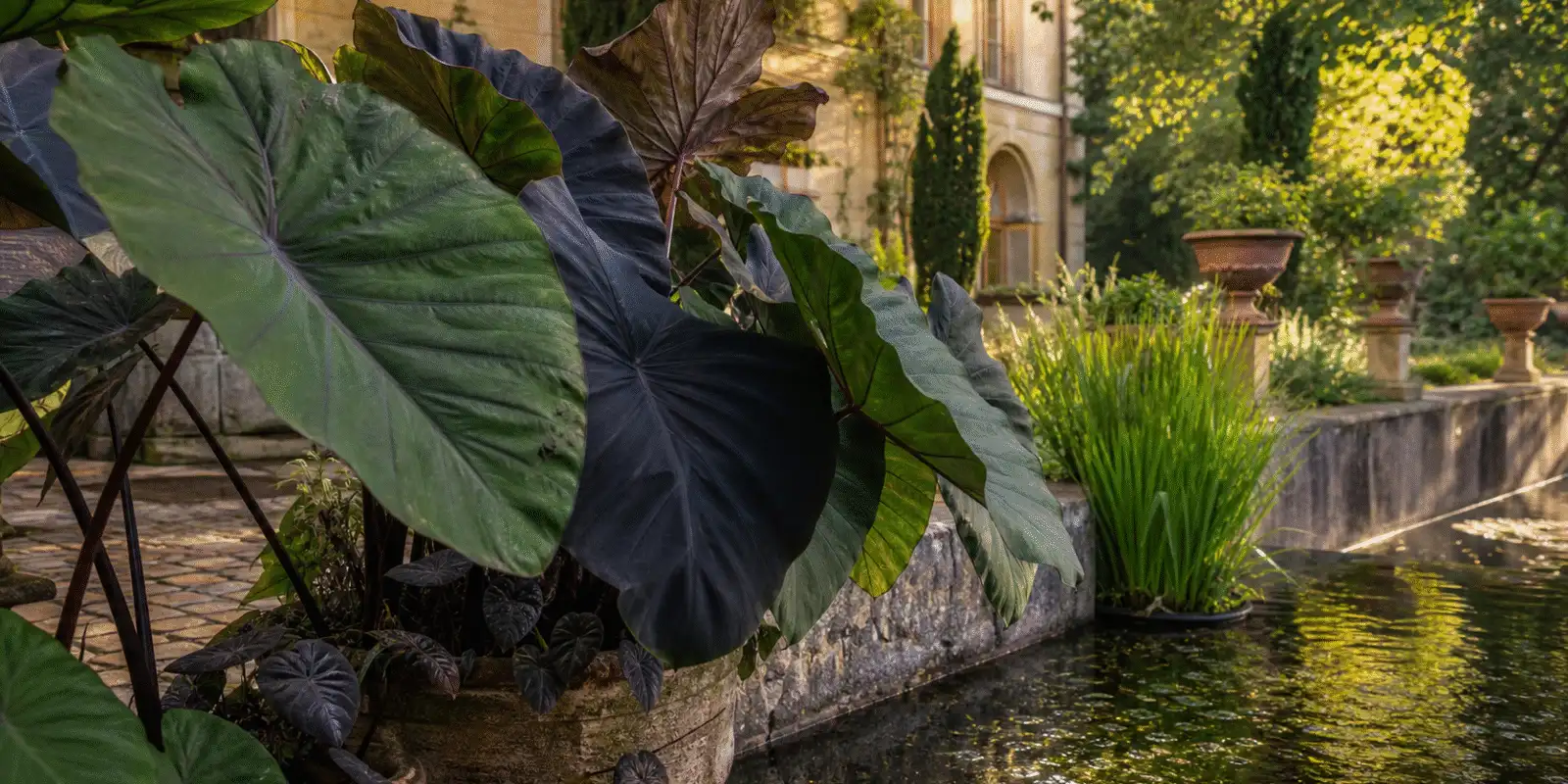
Colocasia esculenta grows best in a large pot or very moist soil, with warmth, soft light and regular water. Near a pond it gives tropical foliage without permanently drowned roots. In cold climates, overwinter pot or tuber frost-free in the water garden.
Often called elephant ear or taro, it produces bold leaves in one season.
This is an ornamental guide, not culinary advice. The plant can irritate when raw or mishandled.
The Chatelain Method
Observe warmth and light, diagnose moisture, correct with a rich container or damp margin, and prevent failure with frost-free overwintering.
Growing in pots or by a pond
| Situation | Best practice | Watch point |
|---|---|---|
| Large pot | Rich compost, steady moisture | Do not dry out fully. |
| Moist border | Improved soil and mulch | Avoid cold wind. |
| Pond edge | Pot in a damp margin | Do not rot the crown. |
| Winter | Frost-free storage | Return after cold nights. |
Where should it be placed?
Use it on a pond edge, in a large terrace pot or sheltered patio. NC State Extension describes Colocasia esculenta as tropical and worth handling with care.
It likes warmth, but fierce sun without water makes the leaves flag.
- Avoid prevailing wind.
- Leave room for broad leaves.
- Pair with finer plants.
Does it need to stand in water?
High moisture suits it, but permanent immersion is not compulsory. A wide saucer under a pot is often easier to manage.
Aim for regular, oxygenated moisture in a rich substrate. Dryness collapses leaves; rot removes the plant.
How do you overwinter it?
When nights cool, reduce watering and store the pot frost-free, or keep the tuber dry depending on climate.
Keep Gunnera manicata at a distance so the two giant leaves do not cancel each other.
Choosing between pot, moist edge and open ground
Before acting, treat Colocasia esculenta as a garden decision, not as a stand-alone purchase. In practical terms, choose the growing method that makes winter storage realistic in your climate. This small pause prevents visible corrections once the garden is already finished.
The main risk is a rotting crown, an unstable pot or a plant you cannot move before cold arrives. In a refined garden, that mistake remains visible for a long time: it costs time, weakens the scene and often forces repairs when conditions are least convenient.
For timing, keep this marker in mind: heat starts growth, but cool nights quickly stop the foliage. If one point still feels uncertain, wait a few days, watch the weather and check that the chosen solution will remain easy to maintain, not merely attractive on paper.
Keep a simple record of the decision: a winter storage place chosen before the plant is even bought. It helps later when ordering compatible material, understanding what was done or adjusting maintenance without starting the diagnosis from scratch.
Finally, check that the suggested gear truly supports the action described in the article. The buying block should help the work, not add a decorative or fragile accessory that makes maintenance harder.
The Chatelain rule is simple: a good garden solution must still look clear, maintainable and proportionate six months after installation. If it fails that test, it needs one more adjustment.
- Use a heavy pot in cold climates.
- Use moist edges only in mild gardens.
- Keep the mix rich.
- Water without suffocating the crown.
- Wear gloves when dividing.
FAQ
Is Colocasia hardy?
Not reliably in cold climates. Store it frost-free.
Can it grow in a pot?
Yes, and a pot makes winter care easier.
Is it toxic?
It can be irritating, especially raw; use gloves if sensitive.
Related Reading
Useful Sources
Written and checked by the editorial team of Les Jardins d’un Chatelain.